



Free written scope consultation - allowances, timeline, and change-order rules on paper before a single trade is scheduled
Styles & brands we work with
- Kitchen remodeling
- Bathroom remodeling
- Home additions & ADU
- Roofing
- Windows & doors
- Driveway & pavers
- Fence
See the difference
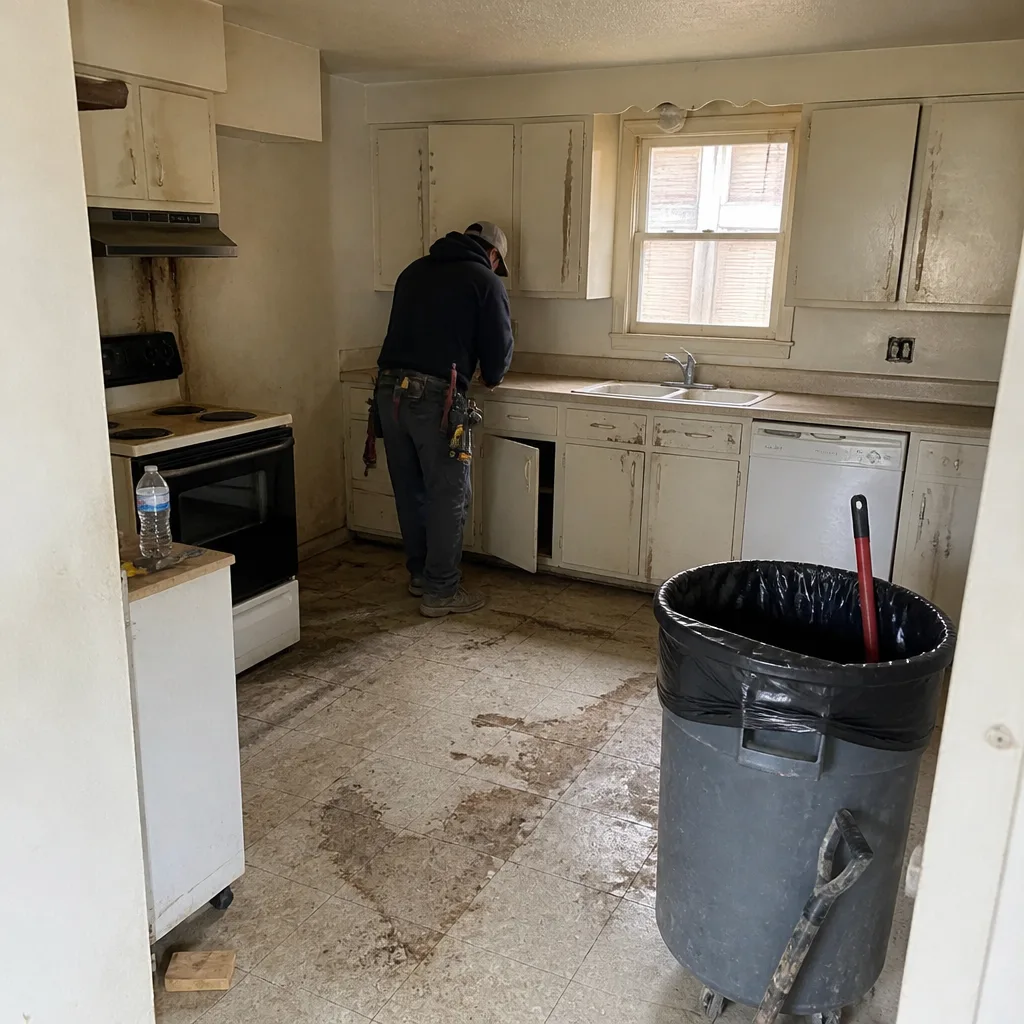 Before
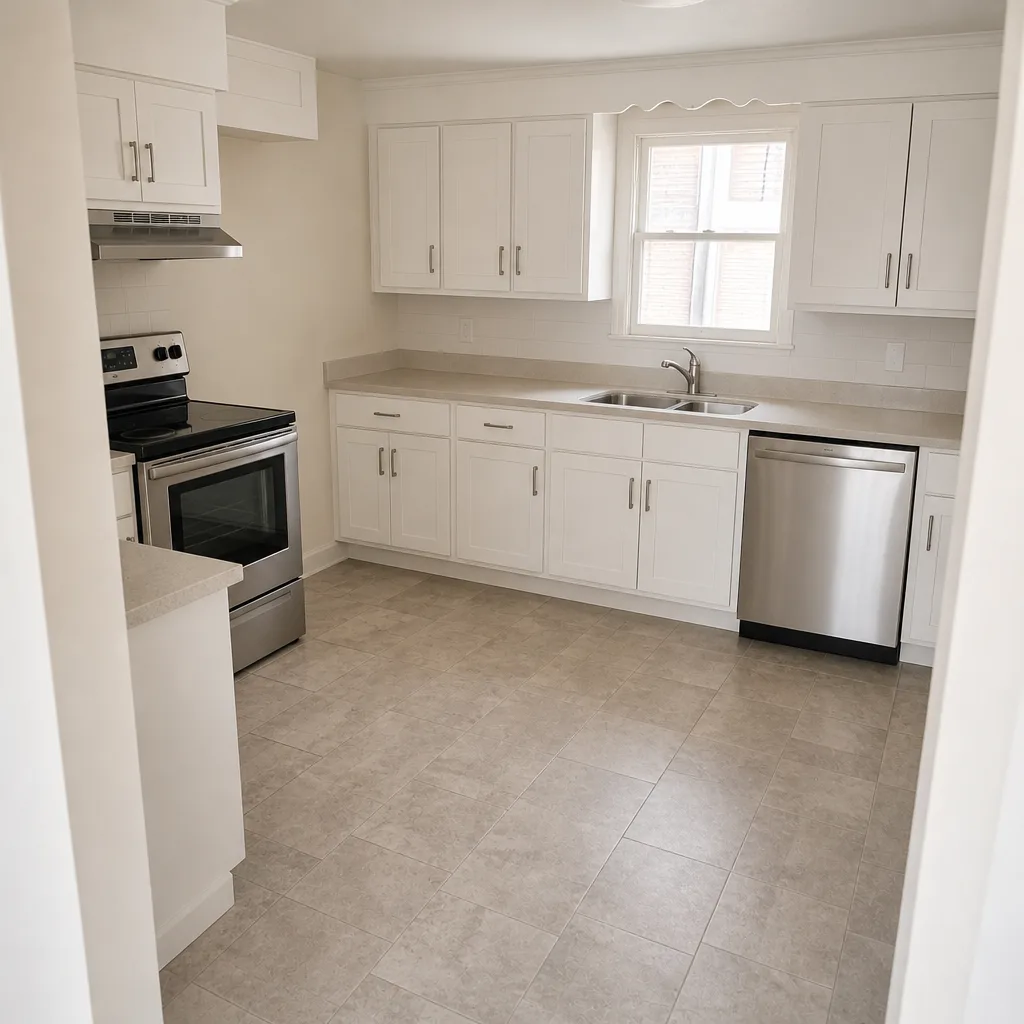 After
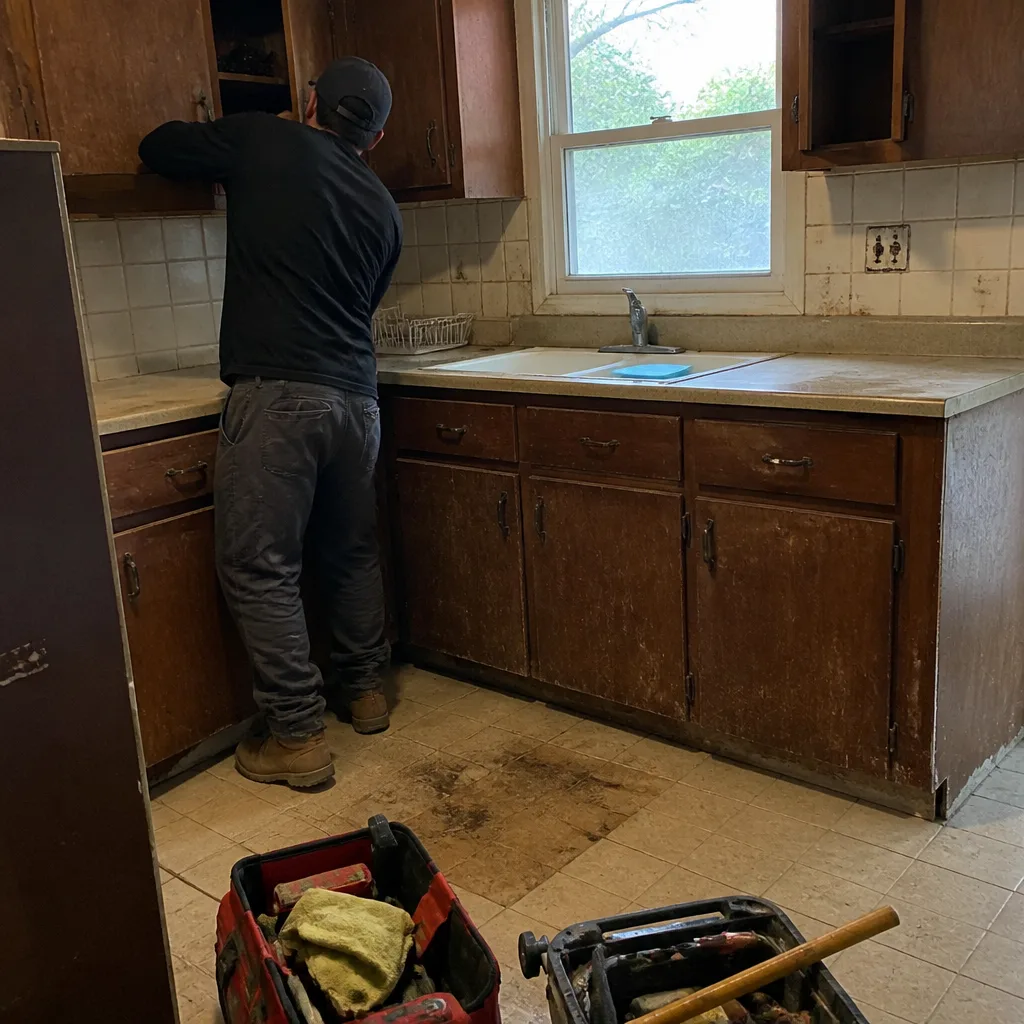 Before
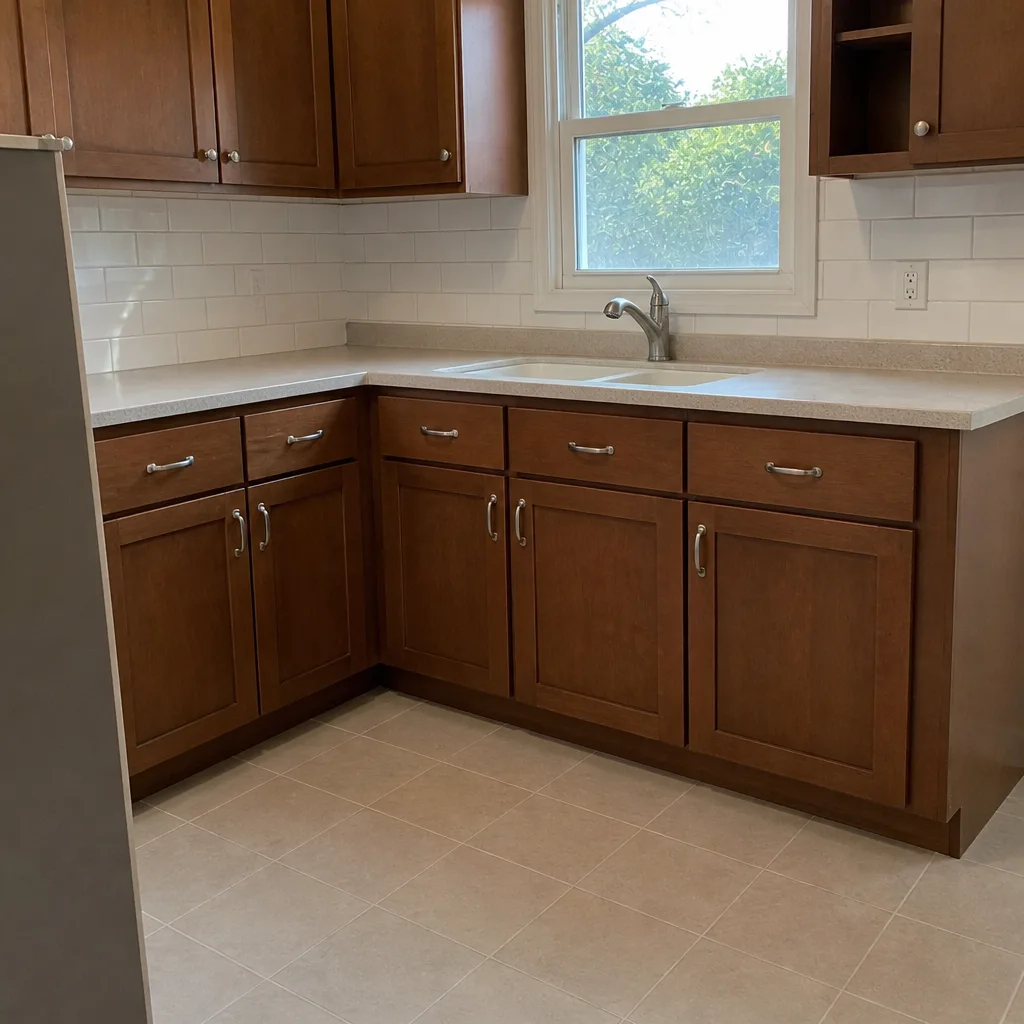 After
 Before
 After
How to Fix a Sinking Driveway in Lewisville, TX
The short answer: a sinking driveway is fixed by correcting the soil and base underneath it, not by patching or re-topping the slab. In Lewisville that means diagnosing what the black gumbo clay is doing – shrinking in drought, swelling after rain – and rebuilding a compacted, drained sub-base so the concrete or pavers have something solid to sit on. Surface-only repairs come back within two seasons. If you’ve patched the same low spot twice, it’s time to look six inches below grade. Call (844) 560-4467 and we’ll walk you through what we’re seeing.
Why Your Lewisville Driveway Keeps Sinking (It’s the Clay, Not the Concrete)
If your Lewisville driveway has a low spot that keeps coming back after patching, you’re not fixing a driveway – you’re losing a slow argument with the clay underneath it. Most of the metro sits on expansive clay that moves with every wet-dry cycle, and the lake-adjacent and river-corridor properties around Lewisville see some of the sharpest swings. When that clay shrinks, it opens voids under the slab. When it swells, it pushes. The concrete is usually just the messenger.
Three failure patterns show up over and over in this city, and each one needs a different repair:
- Drought shrinkage voids. A dry North Texas summer pulls moisture out of the clay and it contracts, leaving gaps under the slab. The concrete bridges the gap for a while, then sags into it. You’ll often see this as a single dip near the garage apron or the street.
- No gravel base on older pours. Many driveways built in the 1960s through the 1980s in the older core of Lewisville were poured directly onto native clay with no compacted gravel layer and no drainage path. There’s nothing between the slab and the shifting soil, so any movement goes straight into the concrete.
- Tree root displacement. The mature canopy in and around Old Town has roots that lift and heave slabs from below. This is a different animal – it lifts rather than drops, and it usually shows up as a tented section near a tree line.
Notice that none of those are “the concrete went bad.” That’s the whole point. A repair that only addresses the slab is treating a symptom.
Diagnose It Yourself: Is the Slab Failing or the Sub-Base?
You can often tell which layer is the problem before anyone shows up. Grab a straightedge or a level and a flashlight, and look at the crack pattern.
- One crack running roughly perpendicular to the slope, with a clean dip usually means a sub-base void. The slab is spanning a gap and cracking where it bends.
- Multiple cracks radiating from a single point usually means slab stress from a point load – a heavy vehicle, a dropped load, or a slab that was too thin to begin with. The sub-base may be fine.
- A section that’s lifted and tented near a tree points to root heave, not settlement.
- Water that pools and sits for days after rain signals a drainage problem that will keep feeding the movement no matter how many times you patch.
That crack pattern tells us which repair makes sense. It’s also why an honest diagnosis matters more than a fast quote.
Mudjacking vs. Polyurethane Foam vs. Full Base Replacement
There are three real options for lifting a settled driveway, and they are not interchangeable on active clay.
Mudjacking pumps a cement-and-soil slurry under the slab to fill voids and push it back up. It’s the traditional method and it works in stable soils. The problem here is weight – that slurry adds significant mass on top of clay that’s already moving, and on expansive soil the added load can trigger further shift. It’s often a short-lived fix in Lewisville.
Polyurethane foam lifting injects an expanding foam that fills voids and lifts the slab. It’s dramatically lighter than slurry, so it doesn’t load the clay the way mudjacking does. On active clay, that lighter footprint is why foam holds up longer – it corrects the void without pouring weight onto a moving base.
Full base replacement is the definitive fix when there’s no gravel layer to begin with, when drainage is broken, or when the slab is too far gone to lift. We remove the failed section, excavate to stable soil, compact a proper gravel base, add a drainage path, and pour or lay new surface. On older Lewisville driveways with no base, this is usually the only repair that actually solves it.
The honest rule: if the clay under your driveway is still moving and there’s no drainage layer, anything short of rebuilding that base is a temporary fix. We won’t sell you a lift on a driveway that needs a base.
What a Sinking Driveway Repair Costs in Lewisville
Upfront pricing means you see the surface number and the sub-base number separately, so you know exactly what you’re paying for and why. Here are the ranges we work with in this market:
| Repair | Typical Lewisville Range |
|---|---|
| Driveway sealing (preventive only) | $250 – $700 |
| Concrete driveway replacement of a failed section | $4,500 – $12,000 |
| Full driveway replacement with new base | $5,000 – $14,000 |
| Paver driveway installation | $7,000 – $18,000 |
Sealing is maintenance, not a fix for settlement – if the slab is already dropping, sealing just seals a sinking slab. The real cost driver is whether we’re correcting a small void, rebuilding a base, or replacing the full drive. That’s why the written scope separates surface work from sub-base correction. The number you see is the number you pay, and the finished repair is covered by our 730-Day Done Right Promise – if it’s not done right, we make it right.
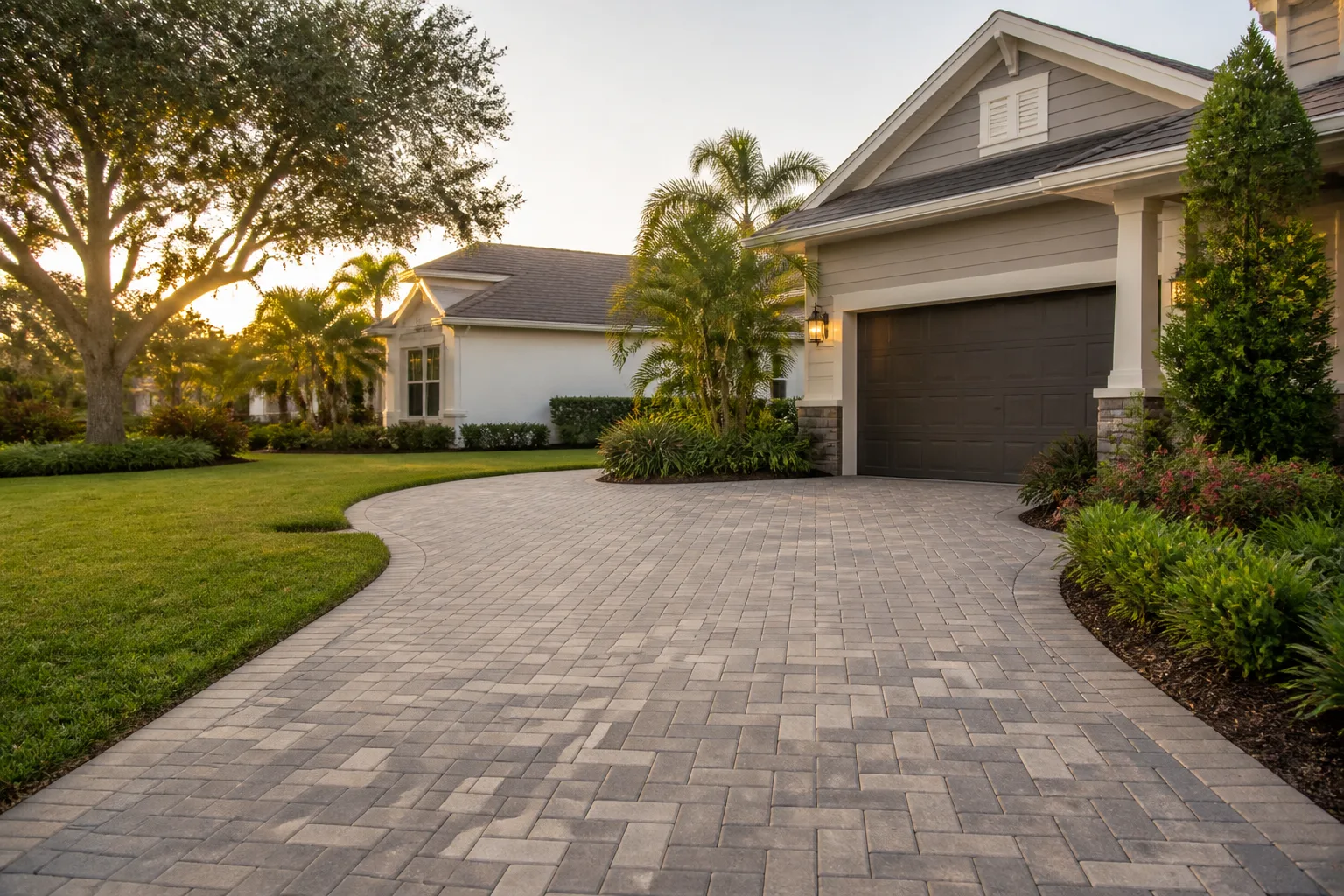
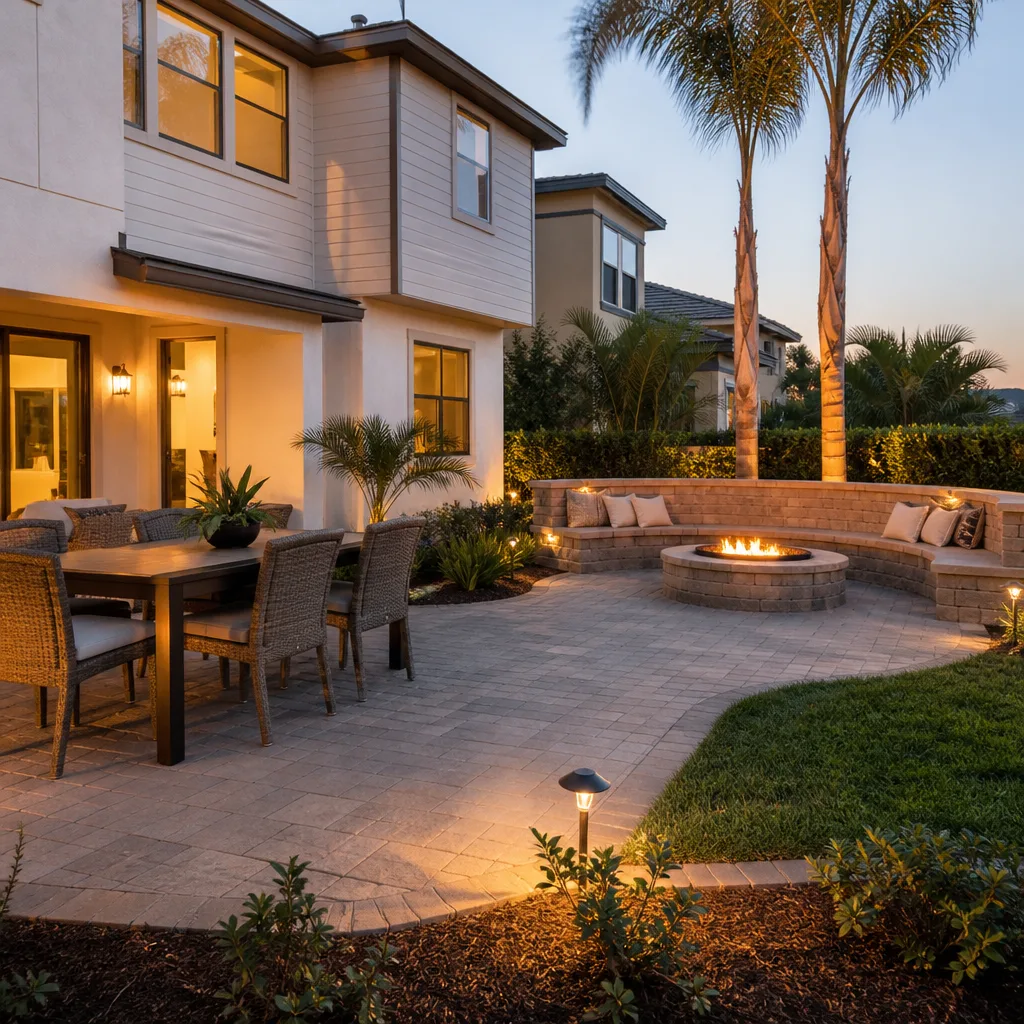
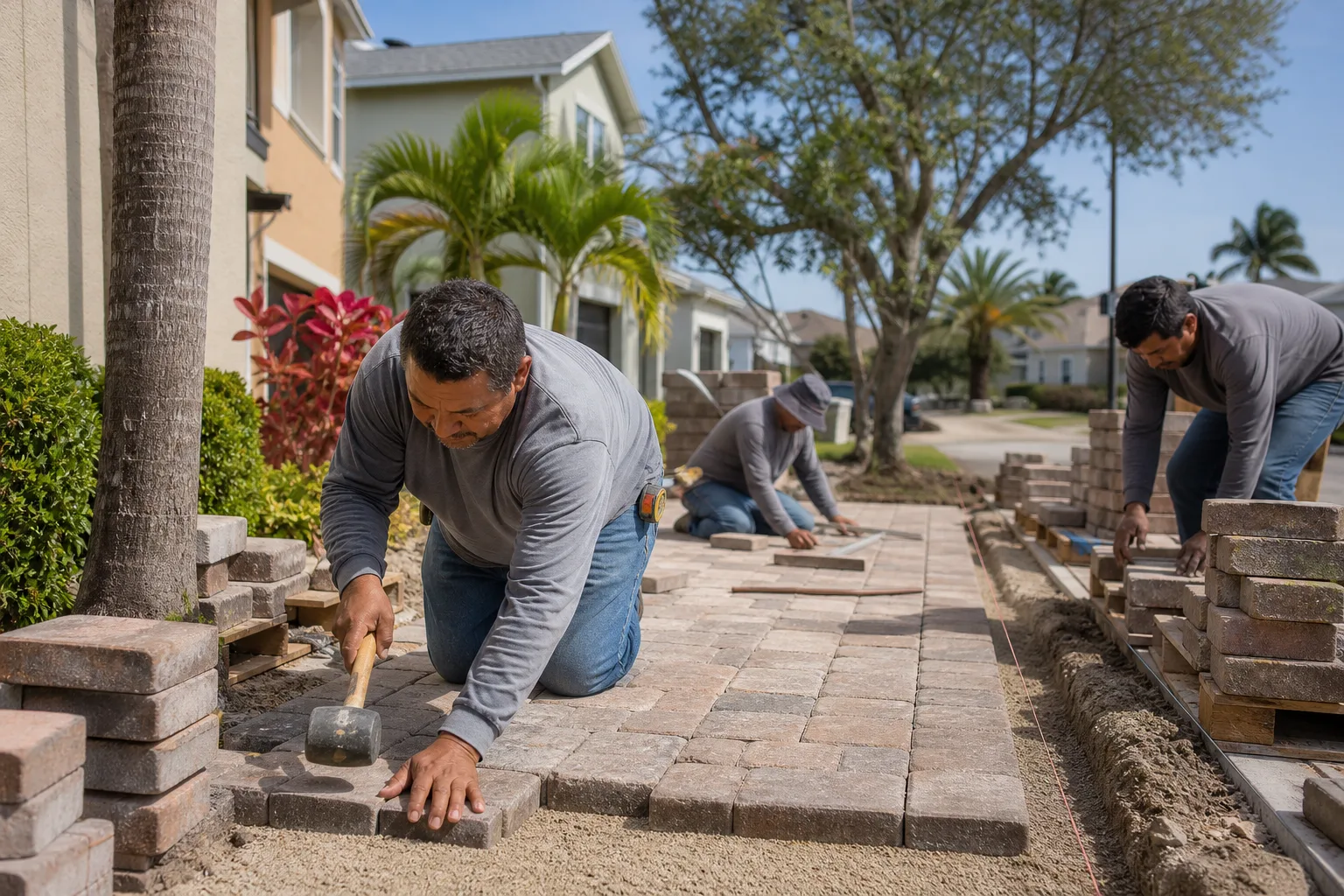
When we rebuild, we spec materials that hold on clay and drainage – Tremron and Techo-Bloc pavers are common choices here because a properly set paver surface flexes and drains instead of cracking like a slab. For more on surface options, see our Driveway & Pavers capabilities.
Common Local Scenarios We See in Lewisville
Every driveway tells you where it sits. A few patterns we run into here:
- The Old Town ranch with the original 1970s pour. No gravel base, one dip by the apron, patch marks from the last two owners. This one needs a base, not a lift.
- Lakeside and floodplain-adjacent properties. The wet-dry swing is sharper near the water, so settlement shows up faster. Drainage correction matters as much as the base.
- Newer northern-subdivision drives with a tree problem. A single mature tree rooting under a newer slab lifts a section. Here the fix is root management plus localized slab correction, not a full rebuild.
- Post-drought void under a garage apron. After a dry summer, a clean crack forms and the apron dips. Foam lifting handles this well because the void is contained.
None of these get the same quote, because none of them are the same problem.
When to Call a Professional
Cosmetic cracks and minor surface wear are fine to watch. But if you’ve patched the same low spot twice, if water pools against the foundation, or if a section has dropped more than an inch, it’s time to have it looked at. Correcting a sub-base means excavation, compaction, and drainage work – not a homeowner job, especially where the failed slab sits close to the house foundation. The technicians we connect you with are background-checked, arrive in uniform, and have up to 12 years of experience on local soil. Calls are answered by a live person 24/7.
If you want the full picture of what we handle, start at our home page, and for the wider repair and surface scope, see Driveway & Pavers in Lewisville.
FAQs
Most sinking driveway repairs in Lewisville run between $4,500 and $14,000 depending on whether it’s a localized correction or a full base rebuild, with preventive sealing at $250 – $700. The price hinges on whether we’re correcting a void or replacing a missing base layer. Call (844) 560-4467 for an exact written quote – estimates are free.
Sometimes – if the slab is sound and the problem is a contained void from drought shrinkage, polyurethane foam lifting can raise it without replacement. But if the driveway was poured on native clay with no gravel base or drainage, lifting won’t last, and a base rebuild is the real fix. We’ll tell you honestly which one you’re facing before any work starts.
Polyurethane foam is the better choice on active clay because it’s far lighter than mudjacking slurry and doesn’t add weight that can push a moving base further. On Lewisville’s expansive gumbo, that lighter footprint holds up longer. Foam still won’t fix a missing drainage layer, which is why the diagnosis comes first.
Because the patch fixes the surface while the clay underneath keeps moving – the void or missing base is still there, so the slab keeps dropping. Patching treats the symptom. Correcting the sub-base and adding drainage is what stops the cycle. Call (844) 560-4467 and we’ll diagnose which layer is failing.
Let’s Look at It Before You Patch It Again
If you’d rather have it looked at, Groundwork Construction Co. of Lewisville offers a no-pressure assessment in Lewisville – we diagnose the soil, the base, and the slab, then hand you a written scope with surface and sub-base costs separated. Call (844) 560-4467 and we’ll get it on the calendar.
Written by the team at Groundwork Construction Co. of Lewisville, serving Lewisville, TX.