Free written scope consultation - allowances, timeline, and change-order rules on paper before a single trade is scheduled
Styles & brands we work with
- Kitchen remodeling
- Bathroom remodeling
- Home additions & ADU
- Roofing
- Windows & doors
- Driveway & pavers
- Fence
See the difference
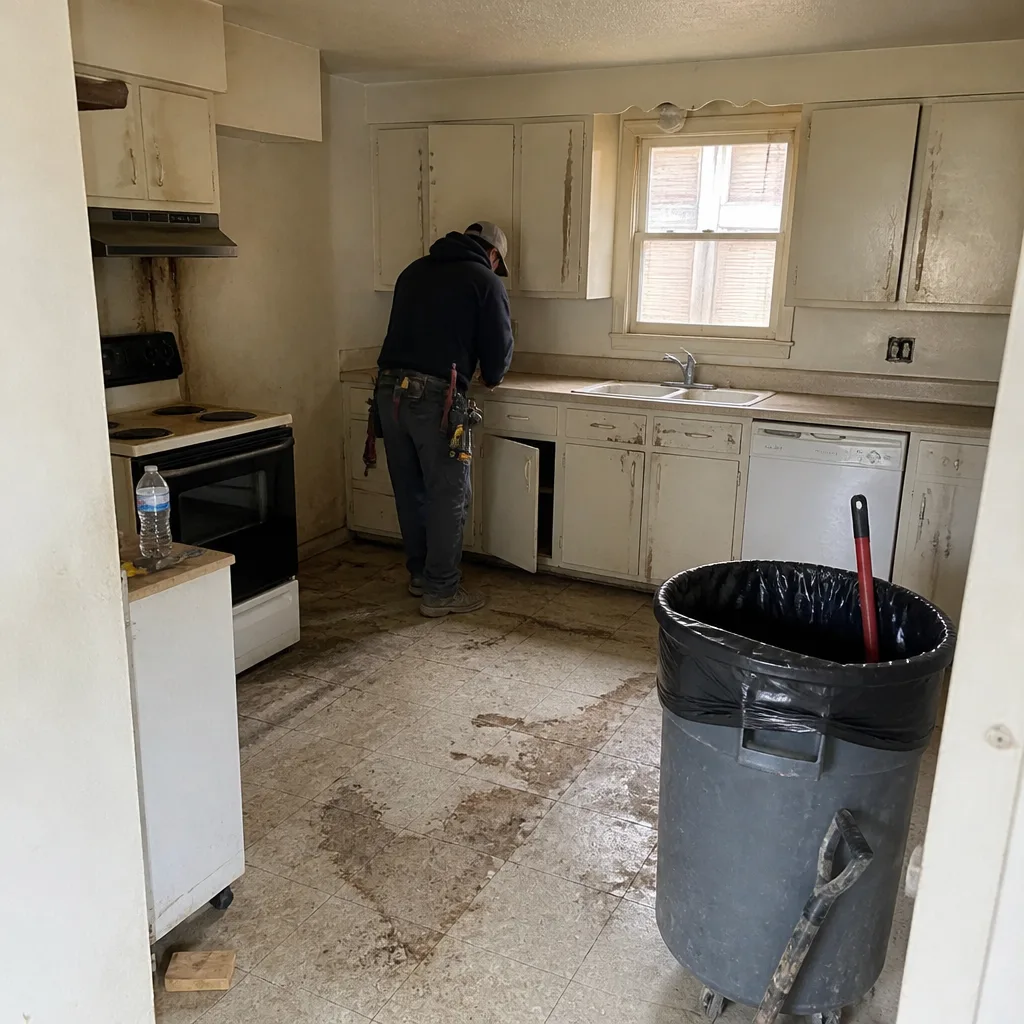 Before
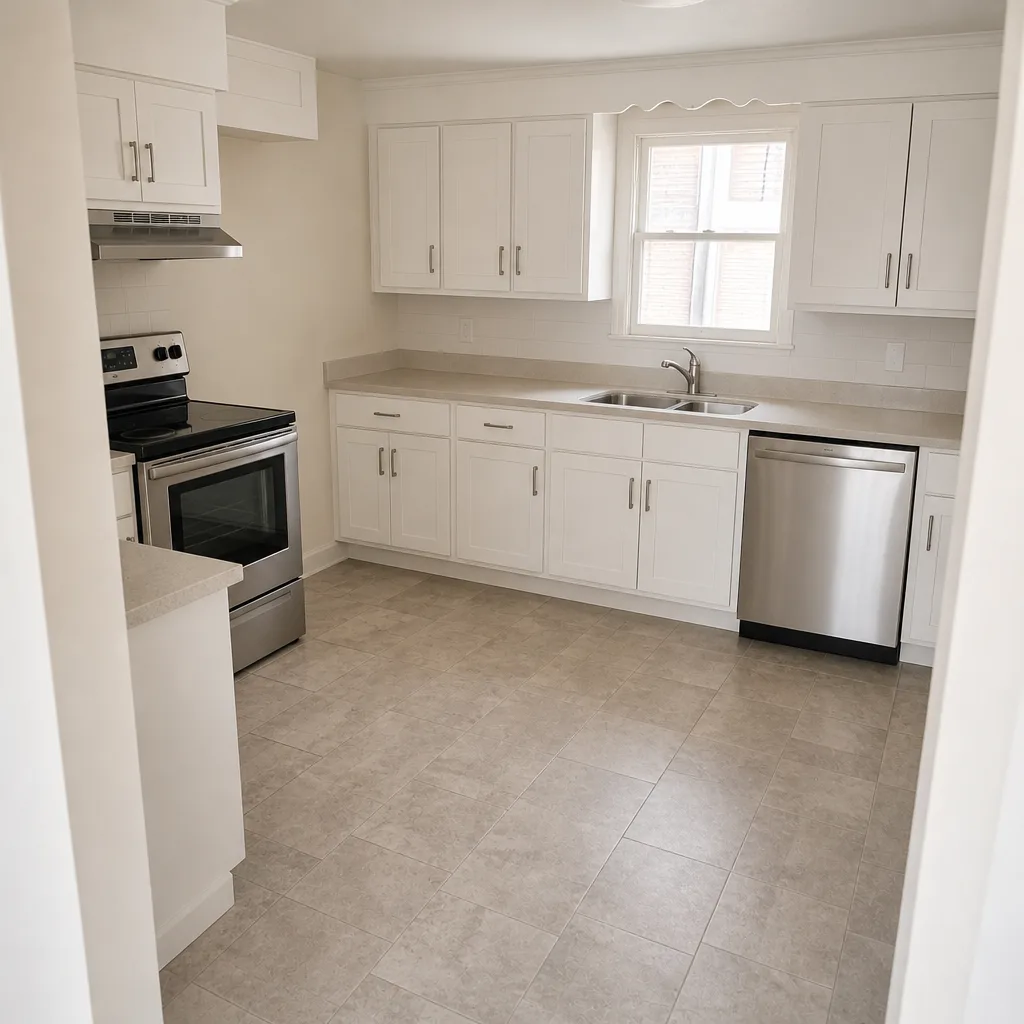 After
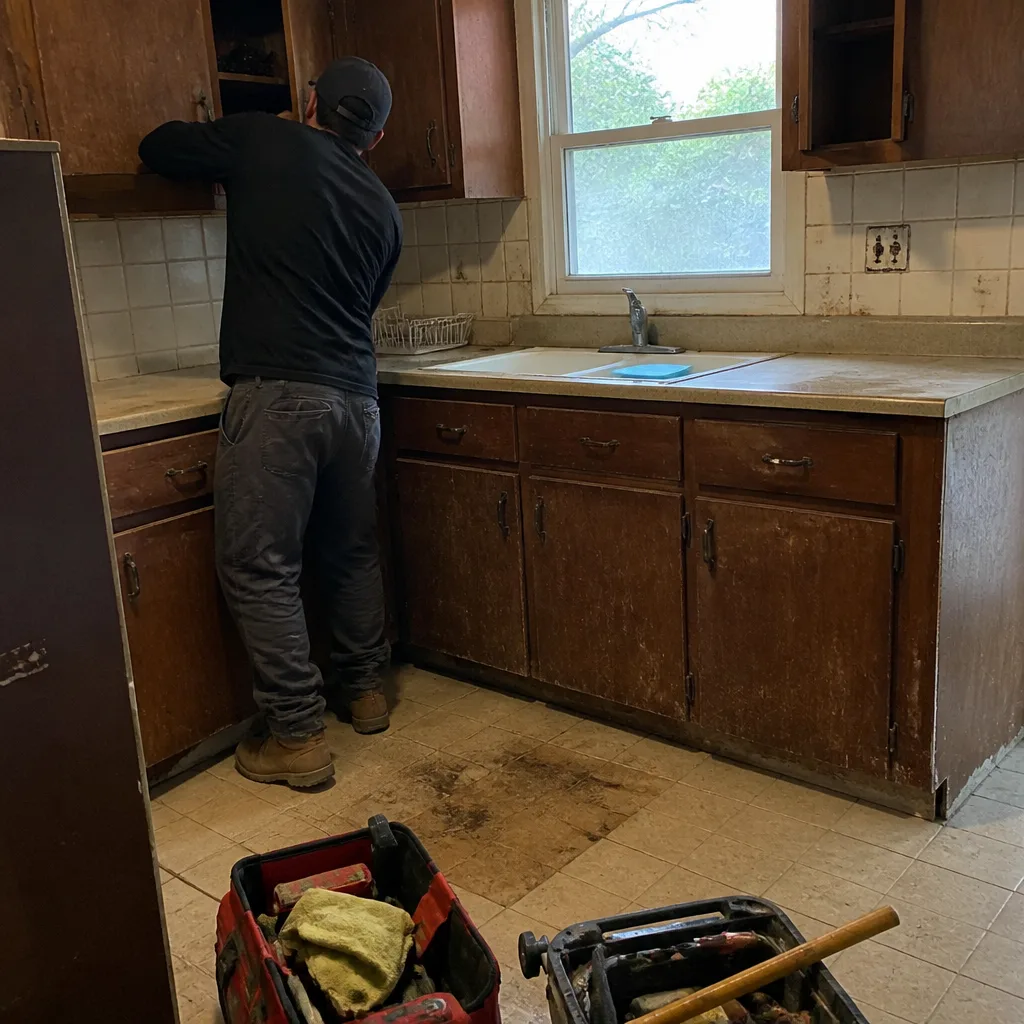 Before
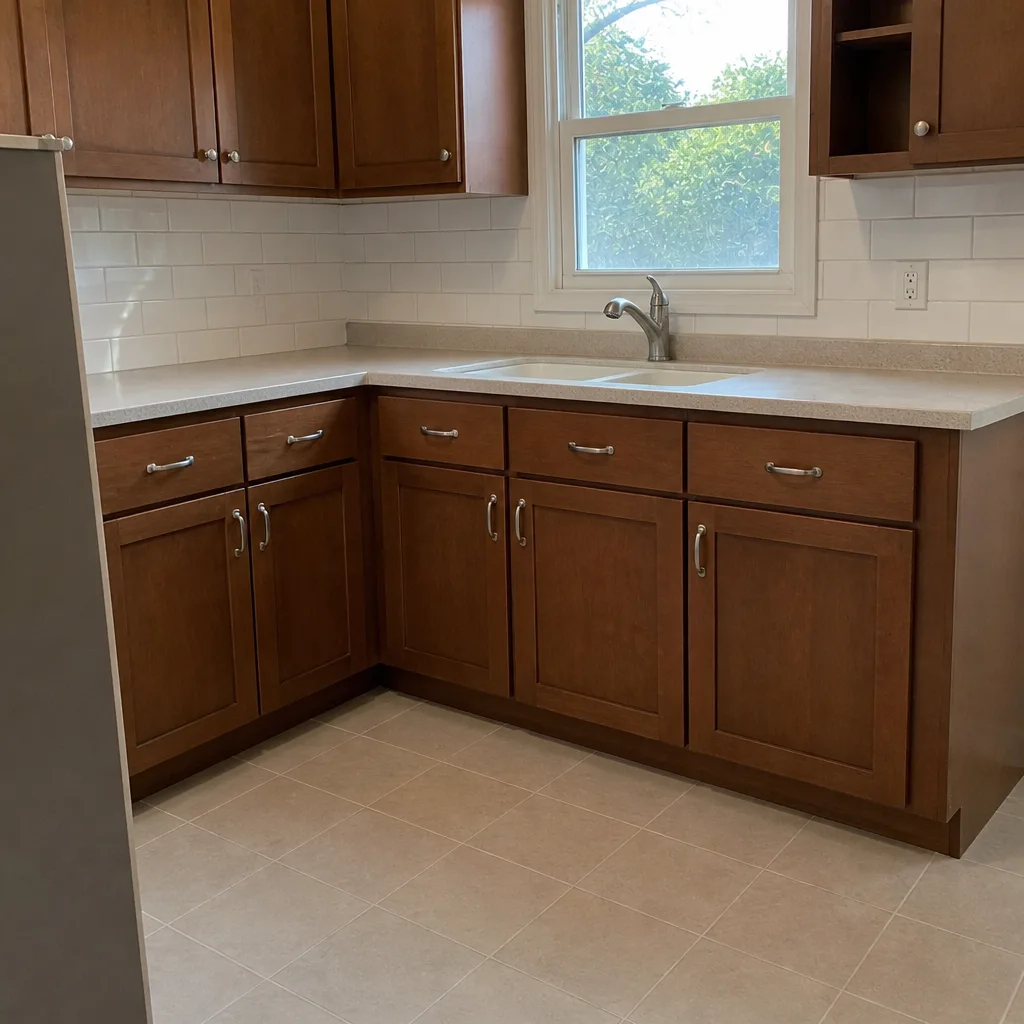 After
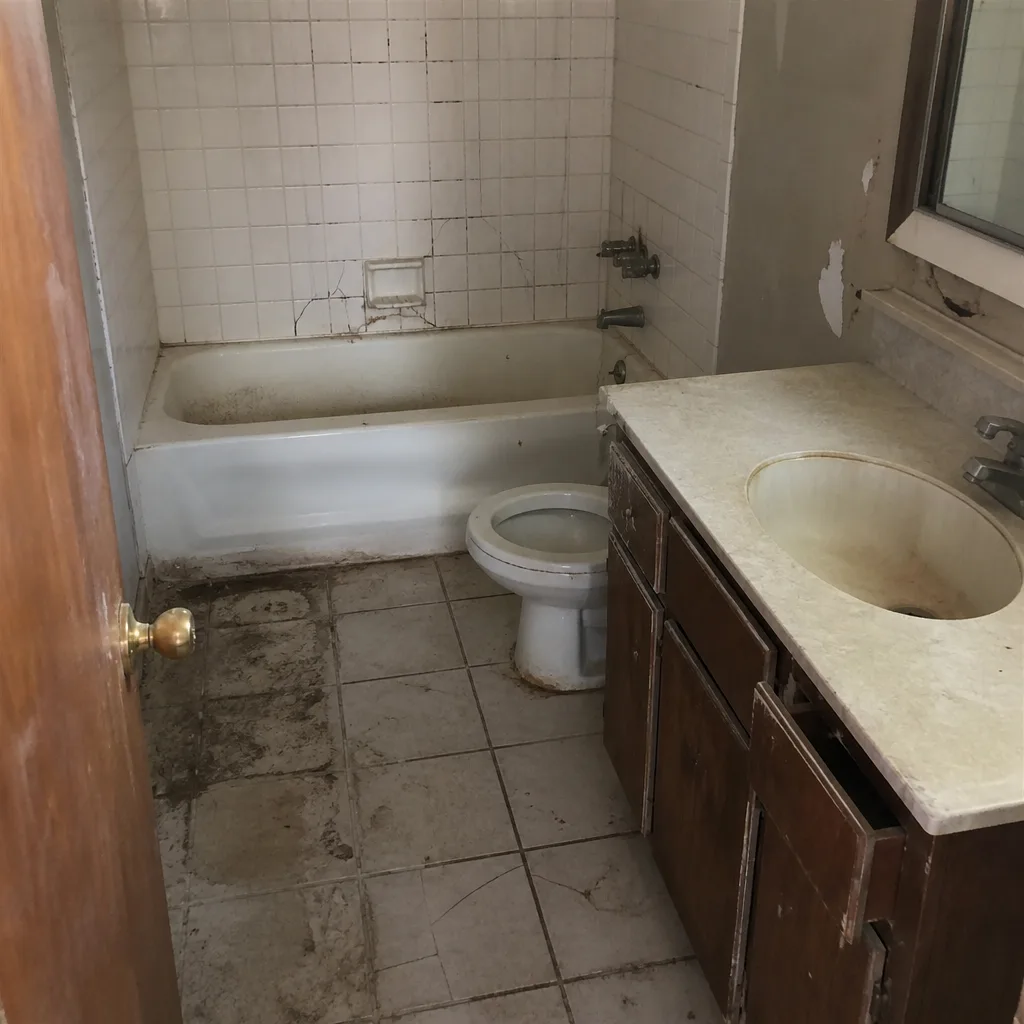 Before
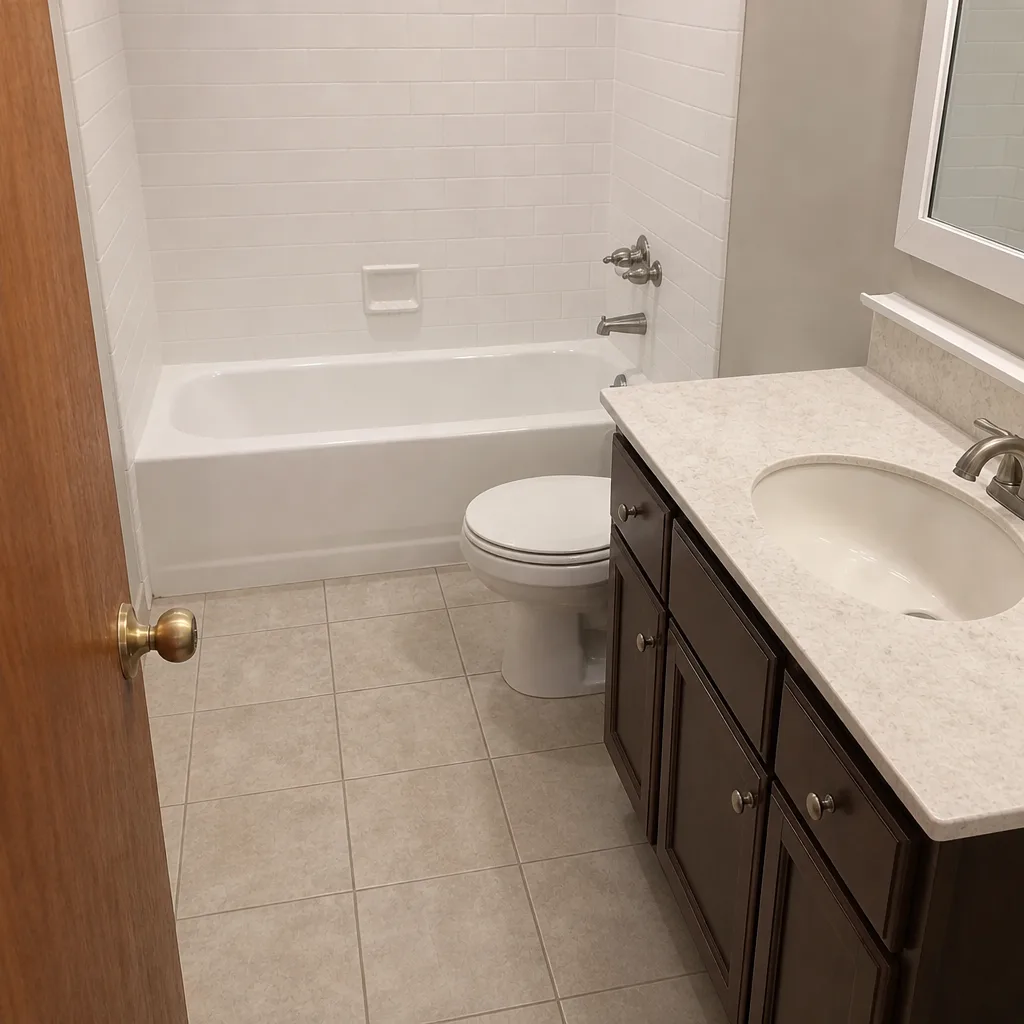 After
How Long Does a Paver Driveway Last in Lewisville, TX? The Honest Answer Is Two Numbers, Not One
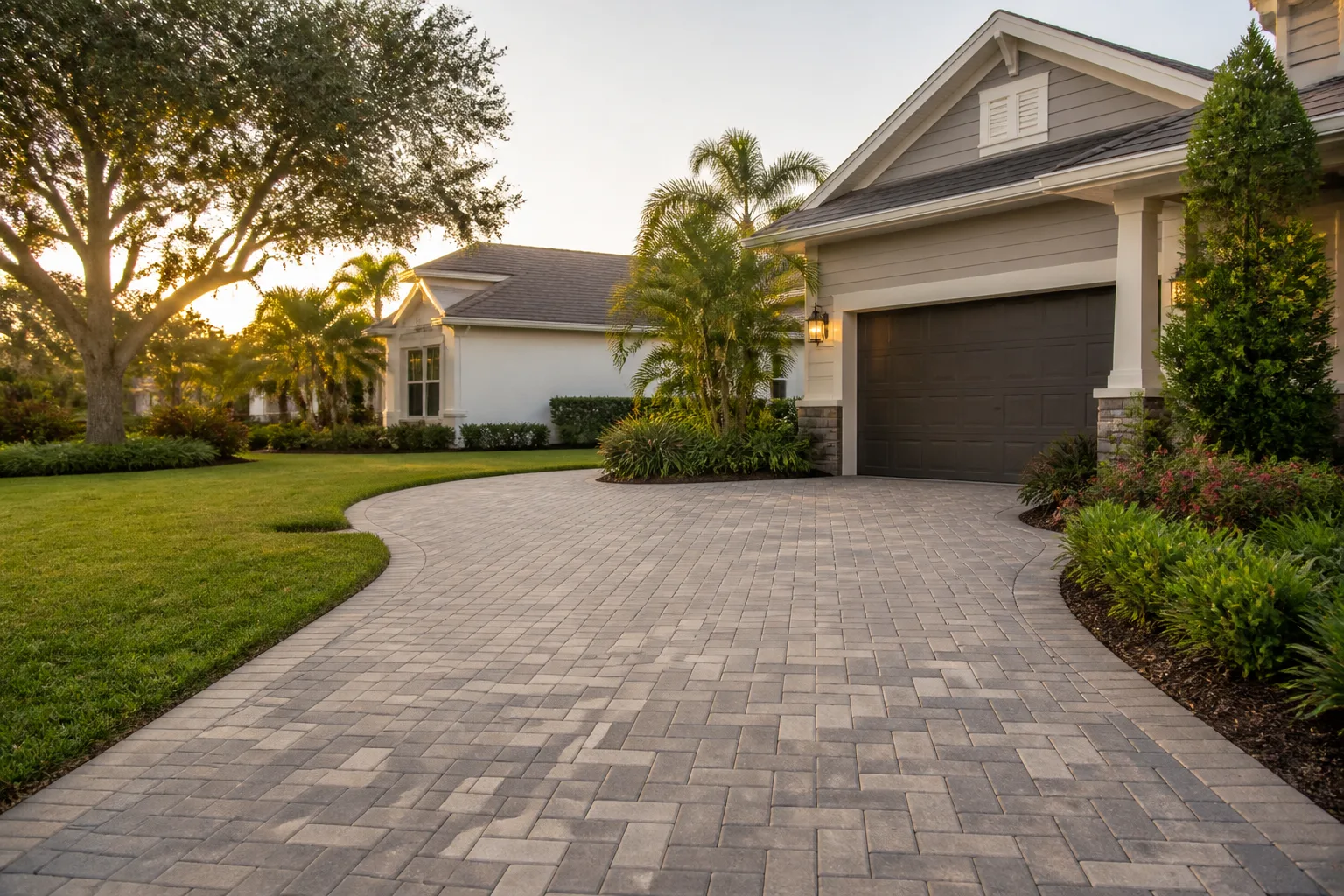
The pavers themselves can last 30 to 100 years or more. The base system underneath them, built correctly for North Texas clay, is what determines whether your driveway actually stays flat and usable past the 10-year mark. In Lewisville, we open up failed driveways every week where the pavers were premium and the base was six inches of compacted thought. If you’re weighing a paver driveway against concrete and want a straight answer on lifespan before you commit, call (844) 560-4467 and we’ll walk through it with you. No pressure, no sales script.
Here’s what most lifespan articles skip: a paver driveway isn’t a product, it’s a system. Four layers. The paver is the only one you see. The other three decide whether you’re re-sanding joints in year 12 or paying for a full lift-and-relay in year 6.
Key Takeaways
- Concrete pavers last roughly 30-50 years, clay brick pavers 50-100 years, natural stone basically indefinite.
- Base failure in Lewisville’s black gumbo clay is the leading cause of a “10-year-old” paver driveway that’s already rocking, draining wrong, or tripping hazard.
- A correct base needs joint sand top-off around year 10-15. An incorrect base can force a full re-level in 5-8 years.
- Polymeric sand washes out after DFW’s heavy spring rains and needs topping off, especially on sloped driveways.
- Mature trees near driveways in older Lewisville neighborhoods need a root barrier installed at the outset, not after the roots are under your base.
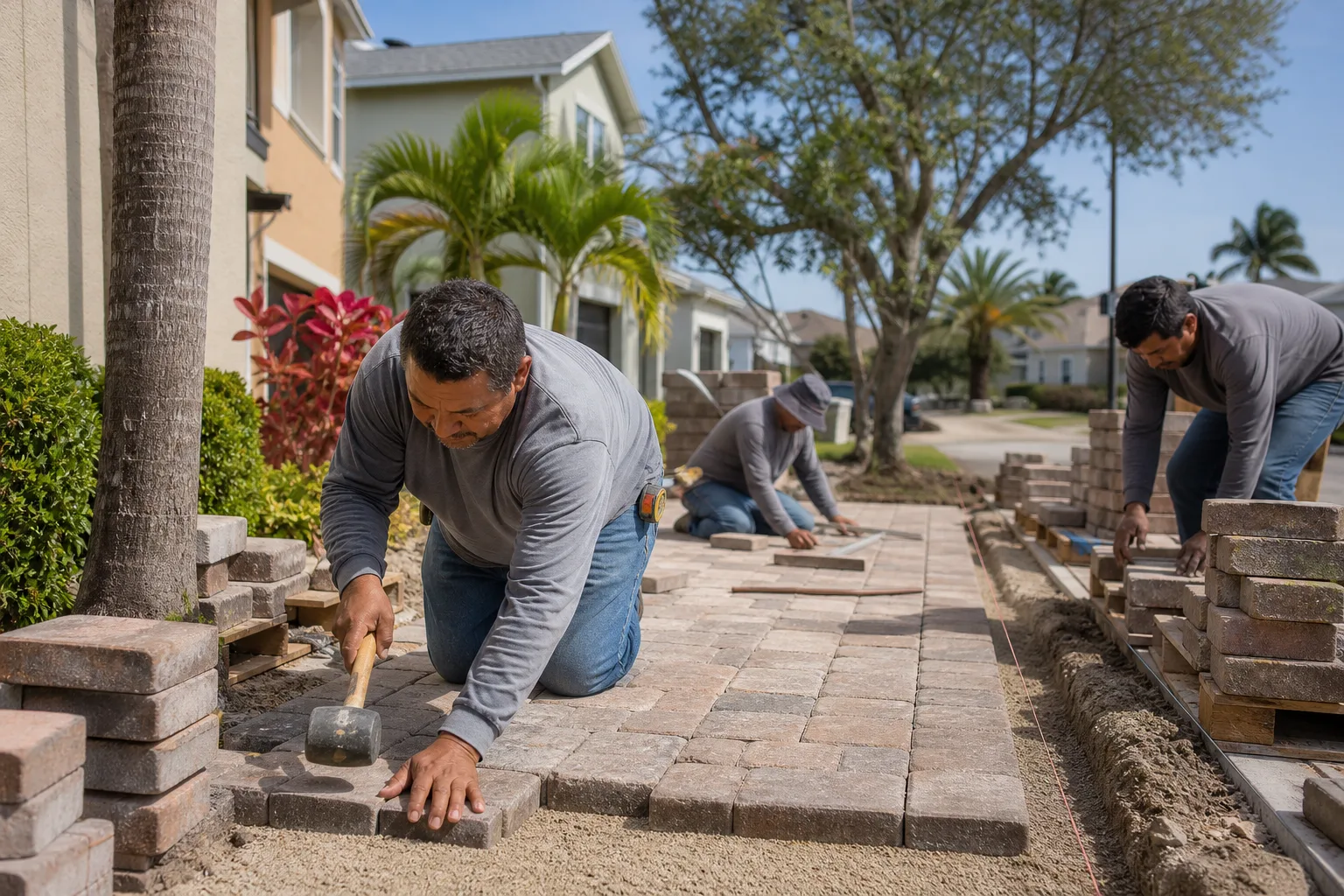
Paver Lifespan vs. System Lifespan: Two Very Different Numbers
Ask a paver manufacturer how long their product lasts and you’ll get a number that sounds great. Ask what happens when the base beneath it moves and you’ll get a different story. Both are true. That’s the whole problem with most answers to “how long does a paver driveway last.”
Material lifespan, by product type:
| Paver Type | Material Lifespan | What Actually Fails First |
|---|---|---|
| Concrete pavers | 30-50 years | Surface wear, color fade, edge chipping |
| Clay brick pavers | 50-100 years | Spalling in freeze-thaw if low-grade brick |
| Natural stone | Indefinite | Joint sand loss, base settlement, not the stone |
You’ll notice the word “base” showing up in that right-hand column. That’s not an accident. Pavers themselves rarely fail in residential use. Base systems fail constantly in Lewisville because of what’s under the soil.
The clay under most of Lewisville, especially the older core and lake-adjacent corridors, expands when wet and contracts hard during drought. Driveways built on shallow or poorly compacted aggregate get lifted and re-seated every dry-then-wet cycle, over and over, for years. Eventually the pavers stop returning to the same position. That’s when you start feeling the rocking.
The Local Failure Mode: What Black Gumbo Clay Does to a Bad Base
Lewisville sits at the confluence of Lewisville Lake and the Elm Fork Trinity River. The soil in and around that corridor is heavily clay-dominant, and clay heaves. The drought-flood cycles DFW has seen the last decade are brutal on it. A paver driveway built with proper base depth (usually 6-8 inches of compacted aggregate, plus edge restraint, depending on traffic load) rides through those cycles. A paver driveway built shallow, or compacted in one lazy pass with a plate compactor, starts moving within 3-5 years.
What does the failure look like from your side of the driveway? Watch for these in order:
- Joint sand vanishing faster than normal. A little loss after heavy rain is fine. Sand disappearing down the joints every season means the pavers are shifting and opening gaps.
- Rocking when you walk across a specific zone. Usually starts at the ends or near the transition to the garage slab, because that’s where base is thinnest.
- Ponding after storms. A correctly sloped driveway drains off the surface in one direction. Water pooling in a low spot means the pavers have settled relative to the surrounding plane.
- Edge creep. The perimeter pavers start migrating outward because the edge restraint wasn’t fastened properly into the subgrade, or was skipped.
- Trip hazards along the expansion joint. One paver lifted 1/4 inch above its neighbor sounds trivial until someone catches a toe on it.
Once you can see three or four of those signs together, you’re usually past targeted repair. That’s the moment a full lift-and-relay becomes the honest answer.
What a Properly Built vs. Improperly Built Lewisville Paver Driveway Actually Needs
Here’s where lifespan gets concrete. Two driveways, same pavers, same house, same street in Lewisville – different long-term bills.
Correct base, correct edge restraint: joint sand top-off around year 10-15. Maybe one small paver reset if a tree root has pushed up a section (more on that below). Otherwise the driveway just works.
Shallow or uncompacted base: full lift-and-relay within 5-8 years. That means pulling up the pavers, re-excavating, re-compacting the correct aggregate in lifts, re-setting the edge, re-sanding. Pavers survive. Everything under them doesn’t. It’s a reset project, and it typically adds $4,000-$8,000 in labor to what should have been a single install.
This is why Groundwork Construction Co. of Lewisville stands behind paver work with the 730-Day Done Right Promise. Any installer confident in their base design can back it for two years minimum – that’s the window where base settlement and paver movement from workmanship either shows up or it doesn’t. If it shows up on our work, we make it right. If a contractor won’t guarantee base performance past 12 months, that tells you everything about how they built it.
If you want pricing specifics for a fresh install or a reset, the Driveway & Pavers page covers the line-item ranges and material options. The number you see when we quote is the number you pay. No surprise line items after the excavation starts.
DFW-Specific Maintenance That Actually Prolongs Lifespan
Two things matter most for a paver driveway in Lewisville, and neither gets mentioned in most lifespan articles:
Polymeric sand needs a top-off after DFW’s heavy spring rains. Between March and May, we get rain events that dump more water on a driveway in 45 minutes than any week in the rest of the year. That water works its way into joints, flushes loose sand, and finds weak compaction zones. If your joints look low or sandy by mid-May, top them off. It’s a half-day job with the right products and it prevents the next failure step.
Mature trees near the driveway need a root barrier installed at the outset. This is where older Lewisville neighborhoods – the 1960s-80s ranch homes with mature live oaks and pecans – create a problem newer subdivisions don’t have. Tree roots migrate under the driveway base looking for moisture, lift pavers over time, and once they’re under the base, you can’t fix it without pulling the driveway apart. A root barrier installed during construction costs a few hundred dollars. Retrofitting one costs a full section tear-out. Ask about it before the driveway starts. Most homeowners don’t know to.
For Lewisville specifically, keep an eye on the drain path toward your driveway’s low point if your lot touches the Elm Fork floodplain corridor. Elevated storms push water faster through those lots, and drainage that looked fine in a dry year can reverse course after a single wet season if the pavers have settled even slightly.
Common Local Scenarios We See in Lewisville
Old Town, 1970s ranch with mature trees: pavers installed in the 2000s, no root barrier, oak roots lifting the middle of the driveway. We typically reset the affected section and install a barrier along the tree-side edge at the same time to prevent a repeat.
Northern Lewisville, new-build subdivision, driveway installed by the builder: paver driveway that looks brand-new, rocking along one edge at year 4. The base at the transition zone was under-compacted because the builder’s masons moved fast. Full reset of the affected zone, then it’s solid.
Lake-adjacent homes with floodplain elevation: drainage is engineered carefully at install time, but a single bad drought-flood cycle in the clay can shift the low spot. We’ll re-check slope and re-level individual pavers rather than waiting for a full failure.
If you’re comparing paver against concrete on total cost and lifespan, our Driveway & Pavers in Lewisville guide breaks down the tradeoffs with Lewisville pricing. Material choice across Belgard, Naturstone, and similar lines is included in most installs within the $7,000-$18,000 range for a standard residential driveway.
FAQs
A paver driveway in Lewisville lasts 30-50 years for concrete pavers, 50-100 years for clay brick, and effectively indefinitely for natural stone – if the base was built for North Texas clay. The pavers aren’t the limiting factor. The base is. If you’re unsure how old the base is or when the driveway was built, call (844) 560-4467 for a free assessment before you commit to any replacement quote.
A rocking paver driveway almost always means base settlement from inadequate compaction or insufficient aggregate depth, which is common in Lewisville’s clay-heavy soils. It’s not the pavers failing – it’s the subgrade moving under them. Rocking along the edges or near the garage transition is the classic early warning. Call (844) 560-4467 and we’ll diagnose whether it’s a section reset or a full lift-and-relay, with upfront pricing before any work starts.
A paver driveway in Lewisville typically runs $7,000-$18,000 for standard residential installs, depending on square footage, paver material, and site prep requirements. A full reset of an existing failed driveway can be $4,000-$8,000 more, because the original base has to be excavated and rebuilt correctly. Call (844) 560-4467 for an exact quote – estimates are free and the number you get is the number you pay.
If the pavers are still flat and stable, topping off joint sand is all that’s needed – usually around year 10-15 on a properly built driveway. If pavers are rocking, ponding, or creeping at the edges, the base is failing and sand alone won’t fix it. Full reset is the honest answer at that point. Call (844) 560-4467 and we’ll tell you which situation you’re in without trying to sell you a full replacement if you don’t need one.
Want a Straight Answer on Your Lewisville Paver Driveway?
If you’d rather have it looked at than guess from photos and symptoms, Groundwork Construction Co. of Lewisville offers a no-pressure assessment in Lewisville – we look at the base, the drainage, the edge restraint, and the tree situation before quoting anything. Call (844) 560-4467 for a free estimate, or ask about the current $1,000 off projects over $10,000 and 0% financing for 18 months if you’re planning a full install. Live person, 24/7. Upfront pricing, no surprises.
Written by the team at Groundwork Construction Co. of Lewisville, serving Lewisville, TX.