Last updated November 18, 2026
Free written scope consultation - allowances, timeline, and change-order rules on paper before a single trade is scheduled
The Complete Driveway & Pavers Guide for Lewisville Homeowners
Lewisville sits on expansive clay soil that swells up to 10% in volume when wet. That single fact never comes up during most paver sales pitches, and it’s the reason so many local driveways crack, shift, or sink long before their warranty expires. A driveway here isn’t a flat surface with pretty stones on top. It’s a structural system that has to move with the ground beneath it, drain water away from your foundation, and still pass your HOA’s design review. This guide covers what actually decides whether a Lewisville driveway lasts twenty years or fails in five: base compaction, drainage slope, material choice, permits, and the real numbers behind each option.
Quick Answer
For most Lewisville homeowners, interlocking concrete pavers set on a properly compacted 6- to 8-inch base cost more upfront than concrete or asphalt but last two to three times as long and are the only option that lets you repair a single damaged section without tearing out the whole driveway. On North Texas clay, base preparation matters more than the paver brand you pick, and drainage slope is what keeps the whole thing from heaving after a heavy spring storm. Budget roughly $12 to $22 per square foot installed for pavers versus $6 to $11 for concrete, and expect the price gap to shrink once you factor in repair frequency over a fifteen-year window.
Styles & brands we work with
- Kitchen remodeling
- Bathroom remodeling
- Home additions & ADU
- Roofing
- Windows & doors
- Driveway & pavers
- Fence
Table of Contents
- Why Lewisville’s Clay Soil Changes Everything About Driveway Design
- Base Compaction: The Step Most Installers Rush
- Pavers vs. Concrete vs. Asphalt: A Real Cost and Lifespan Breakdown
- What North Texas Clay Actually Does to a Driveway
- Drainage Slope and Lewisville’s Flood Geography
- HOA Rules in Lewisville’s Master-Planned Communities
- Permits the City of Lewisville Actually Requires
- How to Choose the Right Paver for a Lewisville Driveway
Why Lewisville’s Clay Soil Changes Everything About Driveway Design
Denton County is covered in what geotechnical engineers call expansive clay, and Lewisville sits right in the middle of it. This clay has a high montmorillonite content, which means it absorbs water into its mineral structure and physically expands. When it dries, it contracts and leaves voids. Under a driveway, that cycle repeats every season, sometimes every week during spring. A slab poured directly on unprepared clay will crack along the stress lines within a few years. Interlocking pavers handle this movement better because each unit flexes independently, but only if the base beneath them was built to accommodate that movement rather than fight it.
What separates a Lewisville driveway that lasts from one that fails comes down to three things: how deep the base was dug, how well it was compacted, and whether the soil was stabilized before anything went on top. We’ve seen driveways in the Lewisville neighborhoods near Old Town that have held for over a decade because the installer went 8 inches deep with crushed stone and compacted in thin lifts. We’ve also seen six-year-old driveways in newer subdivisions cracking at the edges because the crew used a standard 4-inch base and called it done.
If your home sits on a lot that was graded with fill dirt during construction, your driveway is at higher risk than one built on undisturbed native soil. Fill dirt compacts unevenly, and the difference in settlement between the fill and the native clay underneath will show up as a crack or a sunken corner. A contractor who knows Lewisville will ask about your lot’s grading history before quoting a price.
Base Compaction: The Step Most Installers Rush
Ask any paver installer how deep they go on the base, and you’ll get one of two answers: “four inches, that’s standard” or a number that shows they understand what they’re working with. On stable, sandy soil, four inches of compacted crushed stone is often plenty. On Lewisville’s expansive clay, it’s usually not. The base is doing two jobs: distributing the load of vehicles across the soil below and providing a stable plane that won’t shift as the clay swells and contracts underneath.
Here’s the sequence a properly built Lewisville paver base follows:
- Excavate to depth, not just width. For a residential driveway on expansive clay, that means digging 10 to 12 inches to allow for a 6- to 8-inch compacted base plus the bedding sand and paver thickness.
- Proof-roll the subgrade. Before stone goes down, run a plate compactor over the exposed clay to find soft spots. Anywhere the soil deflects gets dug out and replaced with select fill or stabilized.
- Lay geotextile fabric. A woven separation fabric keeps the clay from pumping up into the stone base during wet cycles. Skip this and your stone base slowly becomes clay-contaminated and loses its load capacity.
- Place crushed stone in lifts. Two to three inches at a time, then compact. Dumping eight inches at once and hitting it with a plate compactor leaves the bottom four inches loose.
- Compact each lift to 95% density or better. This is where a jumping-jack plate compactor or a ride-on roller earns its keep. Hand tamping won’t get there.
- Check the final grade for drainage slope. A minimum 2% slope away from the house is the baseline; on Lewisville lots with flat grading, you may need more.
- Set the bedding sand and pavers, then compact again and sweep joint sand. The final compaction is what locks the pavers into an interlocking surface.
Why does the base matter more than the paver? Because pavers are incredibly durable. A concrete paver with a minimum 8,000 psi compressive strength will outlast the base under it if the base is done wrong. The failure mode isn’t the paver cracking; it’s the driveway settling into a bowl shape or heaving at one corner. That’s a base problem, not a paver problem, and no warranty covers it if the installer cut corners on compaction.
Pavers vs. Concrete vs. Asphalt: A Real Cost and Lifespan Breakdown
Here’s the comparison most homeowners actually want, with real installed pricing for a Lewisville market and the repair costs you’ll face over time. Prices vary by site access, driveway size, and paver selection, but these ranges reflect what we see on actual quotes in the area.
- Standard broom-finish concrete driveway: $6 to $10 per square foot installed. Lifespan 25 to 30 years on stable soil, but on Lewisville clay, expect cracks within 5 to 10 years and perimeter lifting within 10 to 15. Crack repair runs $300 to $800 per incident. Full replacement when it fails: back to square one.
- Stamped or decorative concrete: $12 to $18 per square foot. Same structural lifespan as plain concrete, but any crack or patch is visible and can’t be hidden. Repairs run $500 to $1,200 because the finish has to be re-matched.
- Asphalt driveway: $4 to $8 per square foot installed. Lifespan 15 to 20 years with regular sealcoating (every 2 to 3 years at $250 to $500 per treatment). In North Texas heat, asphalt softens in summer and can rut under a heavy truck. Crack filling runs $150 to $400 per call.
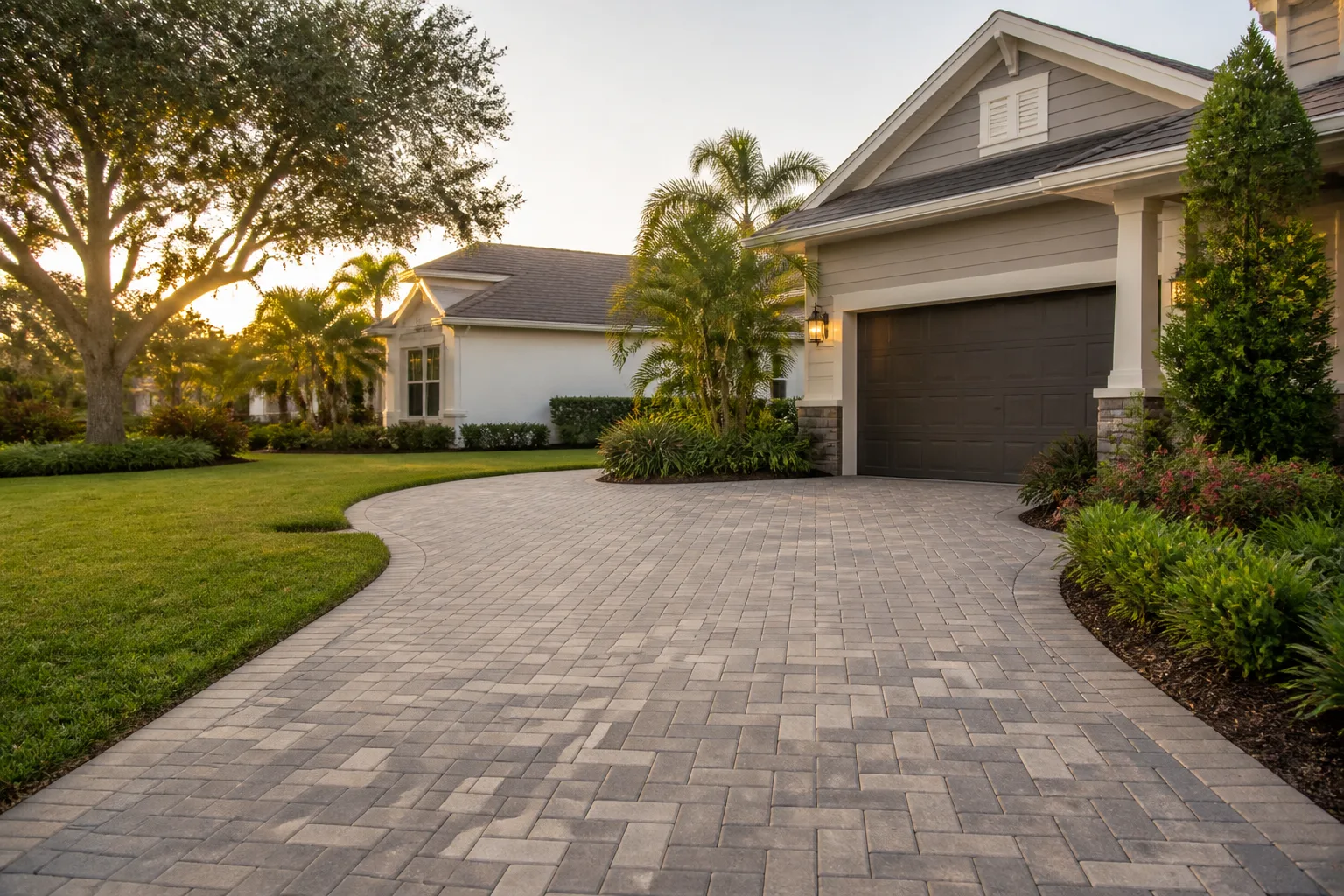
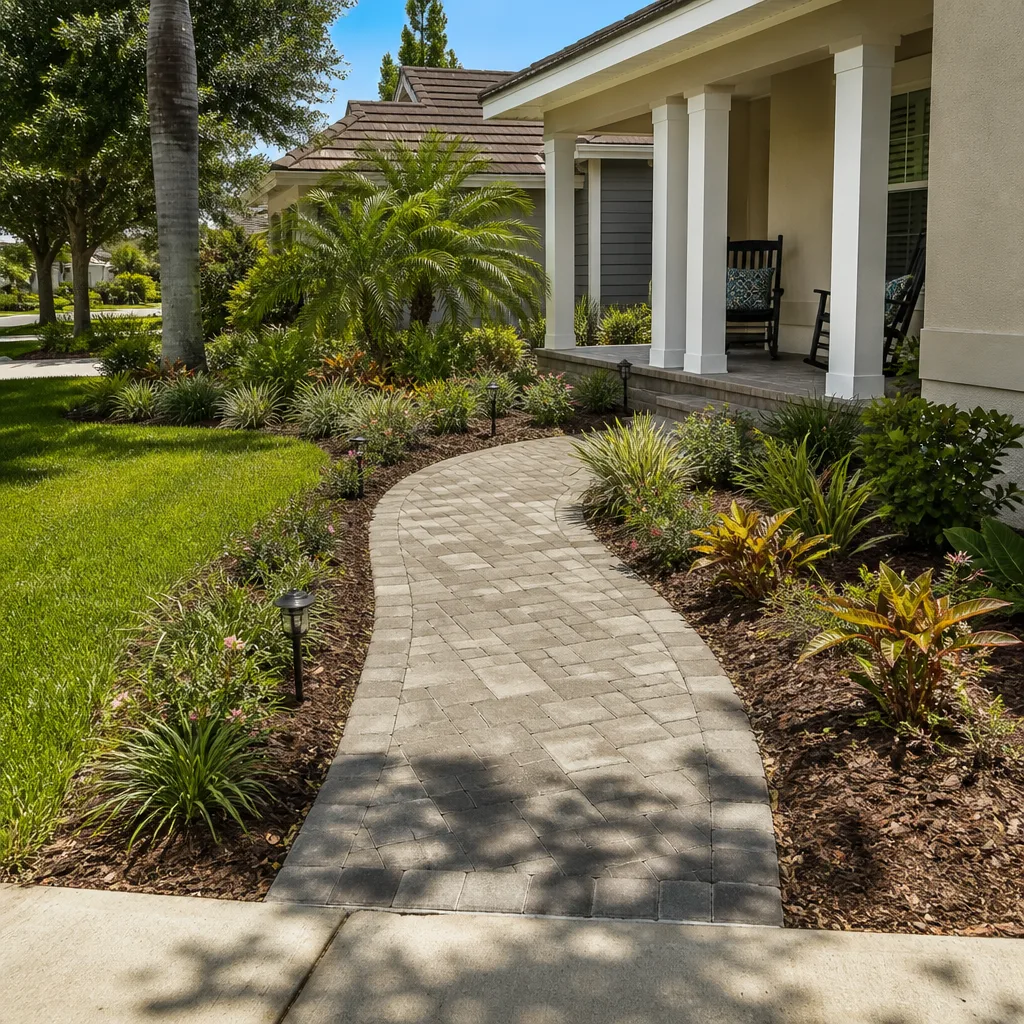
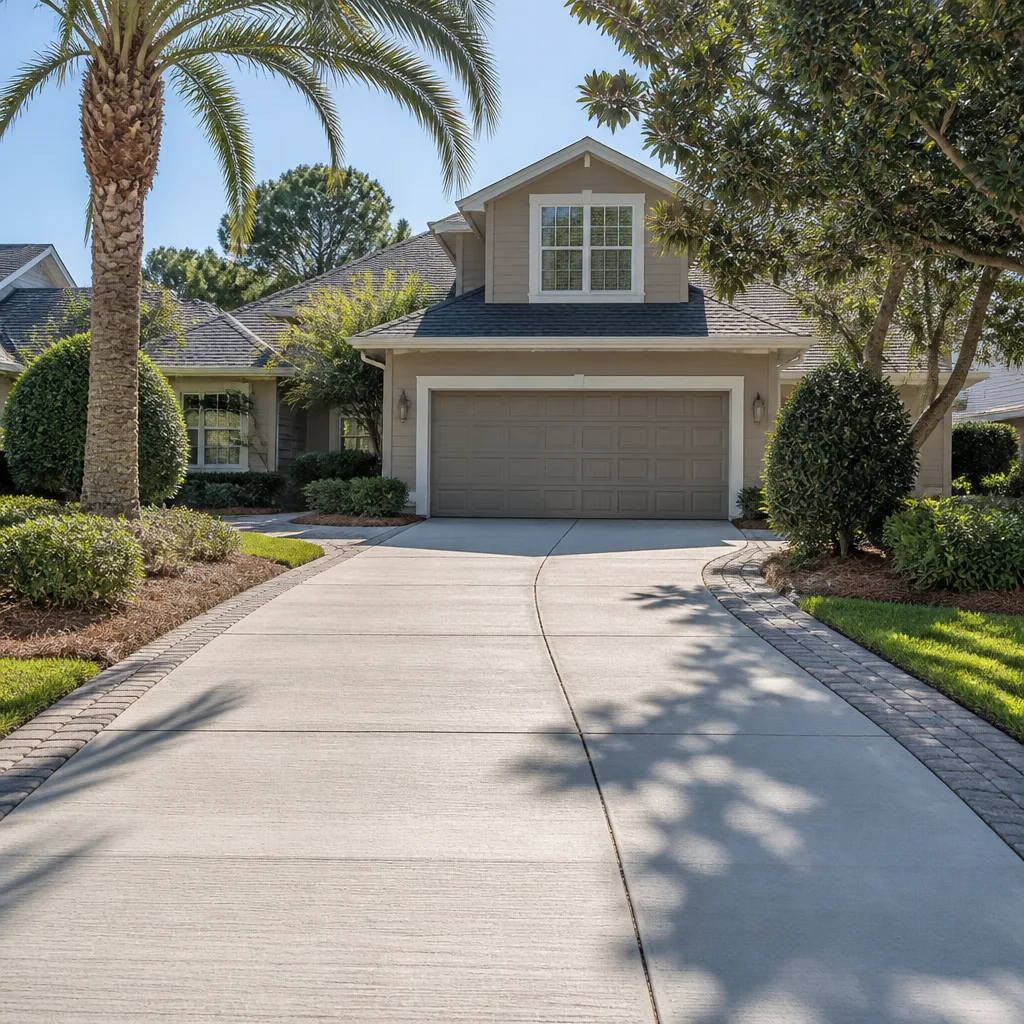
- Interlocking concrete pavers: $12 to $22 per square foot installed. Lifespan 30 to 50 years on a properly built base. Individual pavers can be pulled and reset if a utility line needs access, and a single sunken paver can be lifted, the base re-compacted, and the paver reinstalled for under $200. No surface cracking like concrete, no sealcoating like asphalt.
- Clay brick pavers: $18 to $28 per square foot installed. Most durable in terms of surface wear, but also the heaviest, which puts more demand on the base. In a Lewisville freeze-thaw cycle, a small percentage of clay pavers can spall at the edges over decades.
Do the math over twenty years. A concrete driveway installed at $8 per square foot on a 600 square foot drive runs about $4,800. Add two crack repairs at $600 each and one partial replacement at $2,500, and you’re at roughly $8,500 over two decades. A paver driveway at $16 per square foot runs about $9,600 upfront with no major repairs expected if the base was right. The gap closes, and the pavers look better the entire time.
The other hidden cost of concrete on Lewisville clay is the visual. A crack in a stamped concrete driveway is a permanent scar because you can’t re-pour a section without a visible seam. With pavers, you pull out the affected units, fix the base, and relay them. If you keep a few spare pavers from the original install stored in the garage, the repair is invisible. That’s a significant advantage in a neighborhood where curb appeal drives resale value.
What North Texas Clay Actually Does to a Driveway
Lewisville soil sits in the Blackland Prairie belt, and the clay content runs high enough that builders have been dealing with heaving foundations for decades. The soil here doesn’t just settle; it moves in both directions. In a wet spring, the clay under a driveway can swell enough to lift the surface at the edges. In a dry August, it contracts and leaves a gap. A rigid slab resists this movement by cracking. A flexible paver surface absorbs it by moving with the soil, which is why paver driveways are the dominant choice in newer Lewisville subdivisions built on graded lots.
Two things happen when the clay expands under a driveway that wasn’t built for it:
- Edge heave. The clay at the perimeter of the driveway, where it has access to surface water and landscaping irrigation, swells more than the clay under the center. The edges lift, the surface tilts toward the house, and water starts running the wrong way. This is why we see so many Lewisville driveways with a low spot right at the garage door threshold.
- Sub-base pumping. Without separation fabric, the wet clay migrates up into the stone base. The stone loses its load-bearing capacity, the pavers settle unevenly, and you get a wavy driveway. This is the most common failure we see in Lewisville, and it’s entirely preventable.
There’s also the seasonal freeze issue. Lewisville gets a handful of hard freezes a year, and water that gets trapped in the base or under a slab expands when it freezes. If your driveway has a masonry edge restraint, an improperly compacted base will cause that restraint to heave and separate. Every winter it gets worse.
What this means practically is that a paver driveway built for Lewisville conditions is not the same as a paver driveway built for a sandy Florida lot. The base needs to be deeper, the compaction has to be verified, and the drainage has to account for how much water this soil sheds during a heavy storm.
Drainage Slope and Lewisville’s Flood Geography
Lewisville drains toward the Elm Fork of the Trinity River and Lake Lewisville, and much of the city sits on relatively flat terrain with a high water table after heavy rain. During a major storm, neighborhoods near the lake and along low-lying streets see standing water where you might not expect it. If your driveway is graded to shed water toward your foundation, or worse, toward a low spot in the middle, a storm event turns that flat surface into a small pond. Standing water on a paver driveway isn’t just a visual issue; it accelerates the deterioration of the joint sand and eventually undermines the base.
Standard installation slope for a driveway is a minimum 2% away from the structure, which equals about a quarter inch of drop per foot. On tight Lewisville lots, that’s usually enough to reach a swale or the street. But on lots with a fence-line grade that doesn’t cooperate, the driveway may need to shed toward a French drain or a channel drain at the garage door threshold. A good installer will check your lot’s grade before quoting, and if the existing grade is wrong, the quote should include regrading or a drain. If it doesn’t, ask why.
What happens when slope is skipped: water pools in the joints, the joint sand washes out, and the pavers start to separate. Water gets under the edge restraint, the restraint loosens, and the entire edge of the driveway opens up. In a Lewisville August thunderstorm that drops two inches in an hour, this can happen in a single season. We’ve seen it on driveways that looked perfect on day one. The fix involves removing the affected pavers, re-compacting the base, resetting the edge, and re-sanding. Doable, but avoidable if the slope is right from the start.
If your property has a severe grade issue or the driveway drains toward a retaining wall or fence line, that’s a case where proper planning saves thousands. Our fence installation in Lewisville crew regularly coordinates with driveway installs on the same lot, because the grading of one affects the other. A fence post set in waterlogged clay rots; a driveway aiming water at that fence accelerates the decay.
HOA Rules in Lewisville’s Master-Planned Communities
If you live in Castle Hills, Riverchase, Lakeland, Old Town, or any of the master-planned communities around Lewisville, your HOA has design guidelines that affect what paver you can install. These aren’t just suggestions. In many Castle Hills sections, the architectural review committee has to approve the color, finish, and pattern before a single paver goes down, and installations that don’t match the surrounding homes get flagged.
The restrictions vary by community, but the common ones we see in Lewisville include:
- Color palettes. Historic districts and higher-end communities often require pavers in muted earth tones (tan, buff, gray) and prohibit bright reds or high-contrast multi-color blends.
- Finish. Smooth or semi-tumbled finishes are usually allowed, but heavily tumbled old-world pavers can be denied if they clash with neighboring homes.
- Pattern. Running bond and herringbone are almost always approved. Random ashlar patterns sometimes require additional review.
- Driveway apron and edge treatment. Some HOAs require a contrasting border, others prohibit it as inconsistent.
- Width and coverage. Many Lewisville communities cap the percentage of front yard that can be hardscaped, and some restrict driveway widening even when the lot allows it.
The workaround is straightforward: pull the community’s design guidelines before you buy pavers, and submit your material sample to the architectural review committee with a stamped site plan. In our experience, most committees approve standard concrete pavers in earth tones within two to three weeks when the submission is complete. If you pick the paver first and then find out it’s prohibited, you’re stuck with a restocking fee and a schedule delay. The order of operations is: read the guidelines, pick a palette that fits, get approval, then order.
For homeowners planning major work, it’s worth thinking about the whole property at once. If you’re considering an ADU or home addition in Lewisville, the driveway may need to change to serve the new parking access, and coordinating the HOA approval for both projects in one submission saves time and avoids conflicting designs.
Permits the City of Lewisville Actually Requires
Here’s a distinction that matters and often gets glossed over: replacing a residential driveway, one that serves a single-family home, typically does not require a building permit in Lewisville. Overlay work, resurfacing, and paver installation on an existing residential driveway almost never trigger a permit. But there are important exceptions that do.
You do need a permit or approval when:
- You’re changing the driveway’s footprint. Widening an existing driveway, adding a new approach, or cutting a new curb requires a right-of-way permit from the city, because the driveway apron and any curb cut are in the public right-of-way.
- You’re altering drainage. If your new driveway changes the grading so that water now flows differently toward the street or a neighbor’s property, the city’s stormwater division may require a review.
- Your lot is in a floodplain. Properties near Lake Lewisville or in designated flood-prone areas have additional requirements for impervious surface coverage.
- You’re in a historic district. Old Town Lewisville has historic overlay requirements that affect exterior hardscape.
- The driveway serves a commercial or multi-family property. Non-residential driveways sit under different rules.
Even when a permit isn’t required, the city’s engineering division sets minimum slope and drainage standards for driveway work, and an inspector can flag a job that doesn’t meet them if a neighbor complains. Any contractor who tells you “permits don’t matter for driveways in Lewisville” isn’t wrong for the simplest replacement, but that same contractor should also know how to pull a right-of-way permit when the job calls for one. We walk through the permit question with every Lewisville homeowner before quoting, so there’s no surprise mid-project.
How to Choose the Right Paver for a Lewisville Driveway
Color and pattern are the fun part, but there’s a functional filter to run first. Pavers vary in compressive strength, water absorption rate, and freeze-thaw rating, and on Lewisville’s clay, those three factors matter more than the aesthetic. Here’s the order we recommend:
- Start with compressive strength. Look for a minimum 8,000 psi rating for a residential driveway. Most quality concrete pavers from established manufacturers (Belgard is a brand we source regularly) exceed this, but always ask for the spec sheet.
- Check water absorption. ASTM C936 sets the standard for concrete pavers; look for a maximum water absorption rate of 5%. Higher absorption means a paver that holds water and is vulnerable to freeze-thaw damage during North Texas winter cycles.
- Match the HOA palette. As covered above, pick within the approved color family before you get attached to a specific product. Bring the actual sample to the review submission, not a photo.
- Choose a thickness that matches the job. Standard 2 3/8-inch-thick pavers handle residential driveway traffic. For a driveway shared with RVs or heavy trucks, step up to 3-inch or thicker units.
- Choose a pattern that locks the surface together. Herringbone and 90-degree herringbone are the strongest interlocking patterns for a driveway. Running bond works well for standard residential traffic. Basketweave is decorative but less effective for vehicle loads.
- Pick a color that hides Lewisville soil. North Texas red clay stains light pavers at the edges and joints. A tan or buff paver with a semi-tumbled finish hides the soil migration better than a light gray smooth paver.
- Bundle the seal. A penetrating sealer applied 30 to 60 days after install protects against oil stains, reduces water absorption, and extends the life of the joint sand. Plan for re-sealing every 3 to 5 years.
One piece of advice that surprises homeowners: the most expensive paver on the catalog is not necessarily the longest-lasting. A mid-range paver with an 8,000 psi rating, installed on an 8-inch properly compacted base with separation fabric and a 2% slope, will outperform a premium paver installed on a rushed 4-inch base every single time. The base is the investment. The paver is the finish.
Common Mistakes to Avoid
- Choosing the paver before the base spec. The material selection is important, but it’s the last decision in the process, not the first. If your contractor starts with samples and never mentions compaction depth or geotextile fabric, your base is going to be built to generic soil standards, not Lewisville clay.
- Skipping the drainage check. A paver driveway that holds standing water after a storm will lose its joint sand within one or two wet seasons. Make sure your contractor checks the existing grade and addresses any low spots or drainage issues in the plan before install.
- Overlooking HOA pre-approval. Buying pavers before the architectural review committee approves the color is the most common source of preventable delay we see in Castle Hills and Lakeland. Submit the sample first, order second.
- Assuming a permit is never needed. Straight replacement on an existing residential driveway usually doesn’t need one, but driveway widening, new curb cuts, or drainage changes in Lewisville require a right-of-way permit. Ask your contractor directly.
- Skipping the separation fabric. A geotextile layer between the clay and the stone base costs a few hundred dollars and prevents the single most common failure in North Texas paver driveways. It’s not optional on our installs, and it shouldn’t be optional on yours.
- Not keeping spare pavers. Store 20 to 30 extra pavers from your original order in the garage. When a utility line needs access or a corner paver needs re-setting in five years, the replacement color will never match a new production run off the shelf.
- Treating the driveway as a finish product, not a structure. A paver driveway done right is a $9,000 to $15,000 investment that lasts decades. The work that determines whether it lasts is invisible after install, which is exactly why you want a contractor who puts it in writing before the first paver goes down.
See the difference
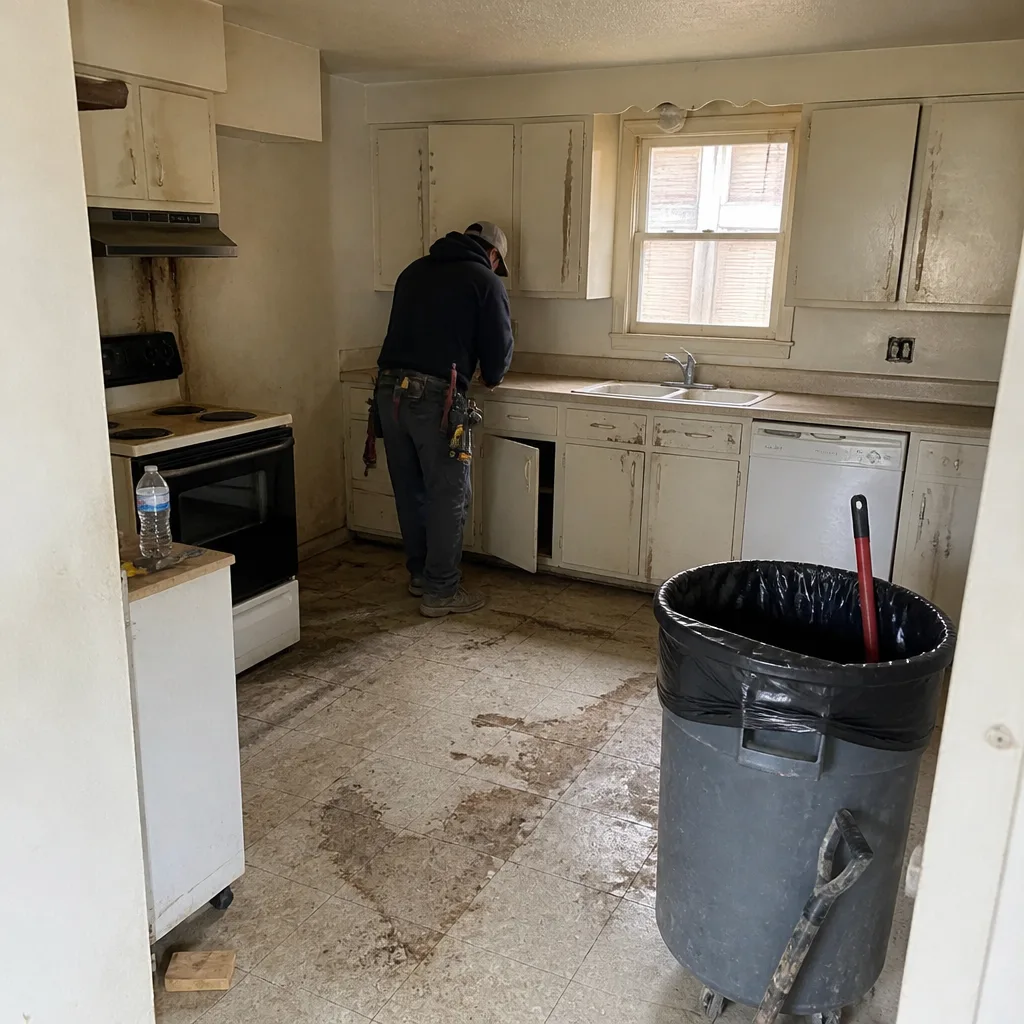 Before
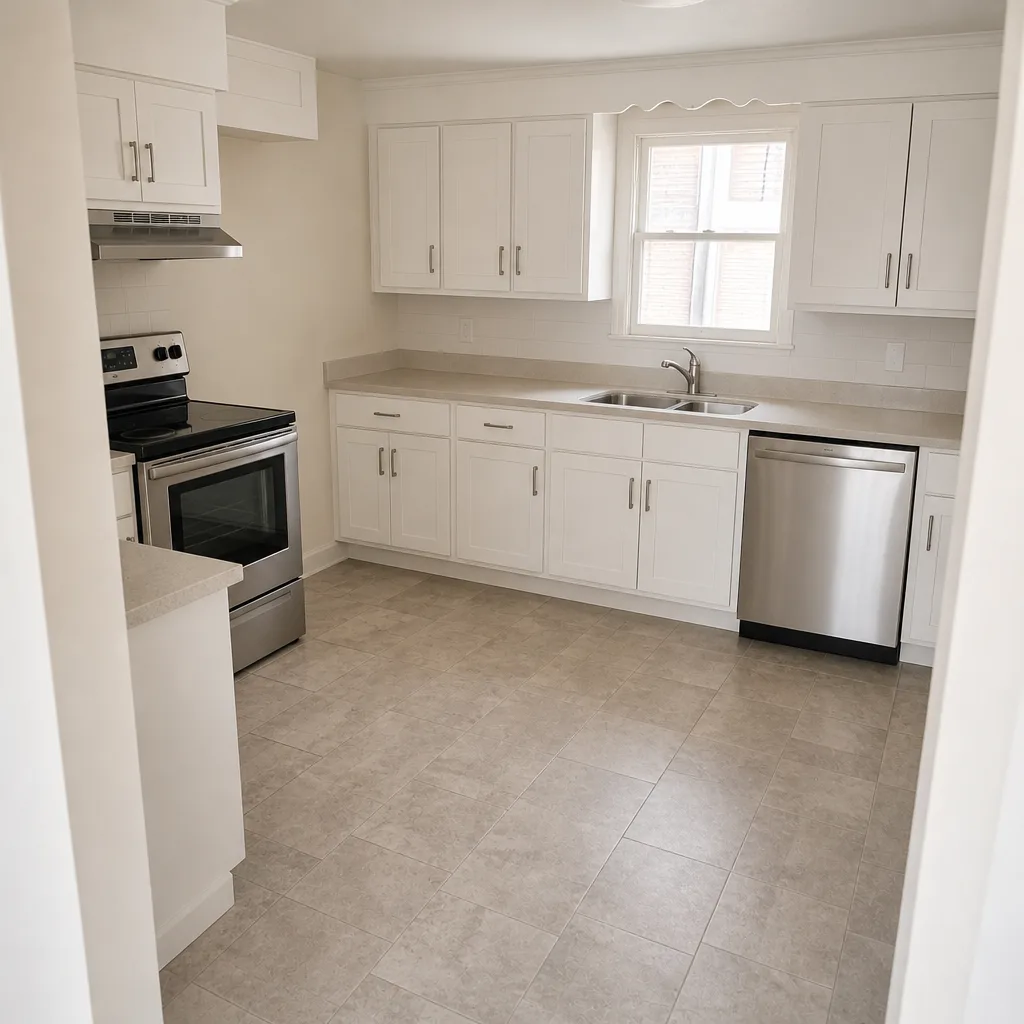 After
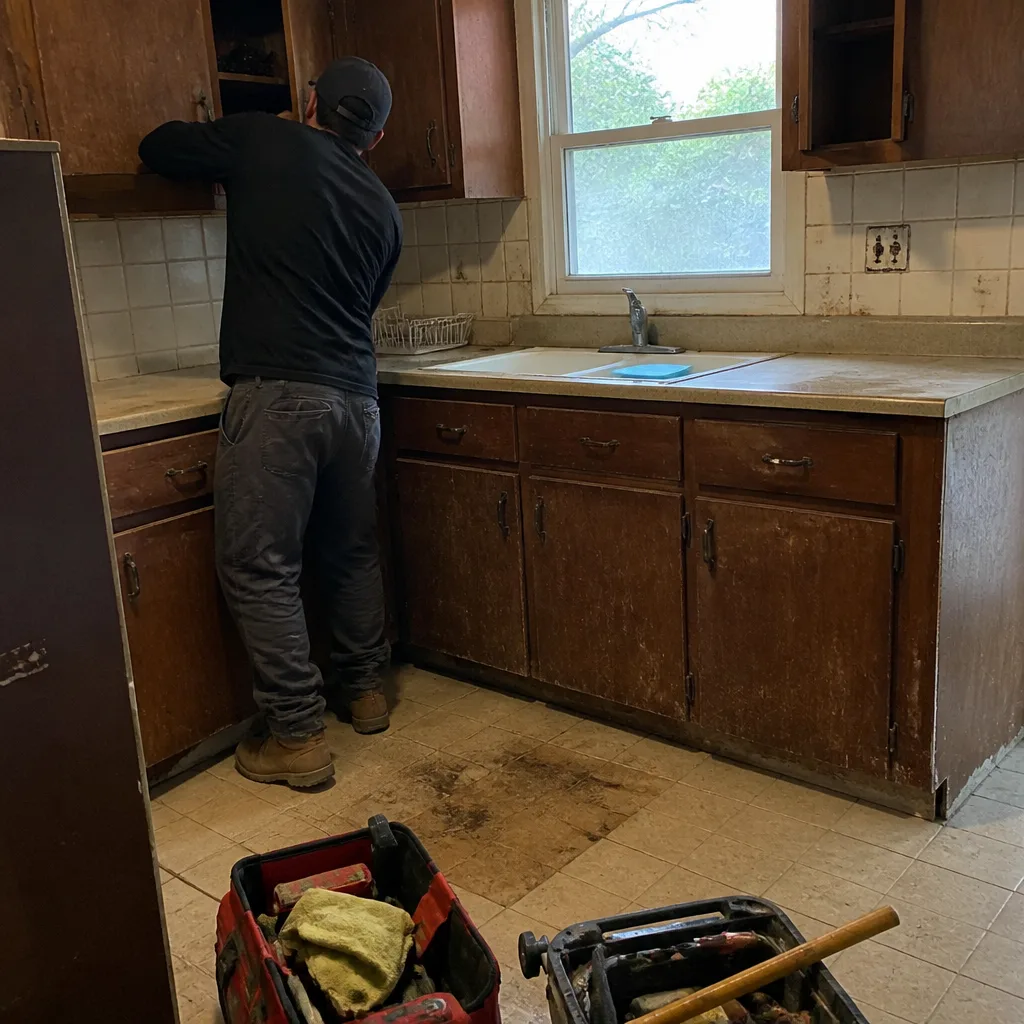 Before
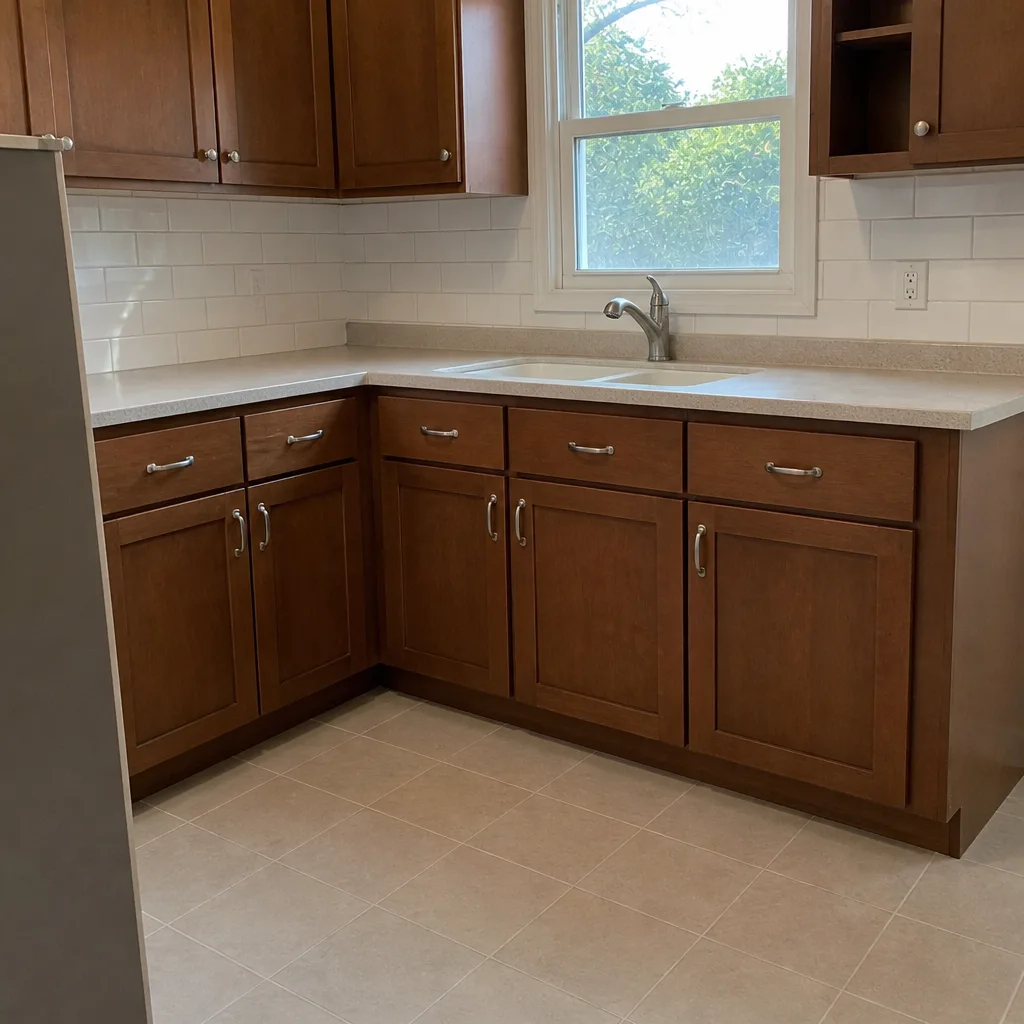 After
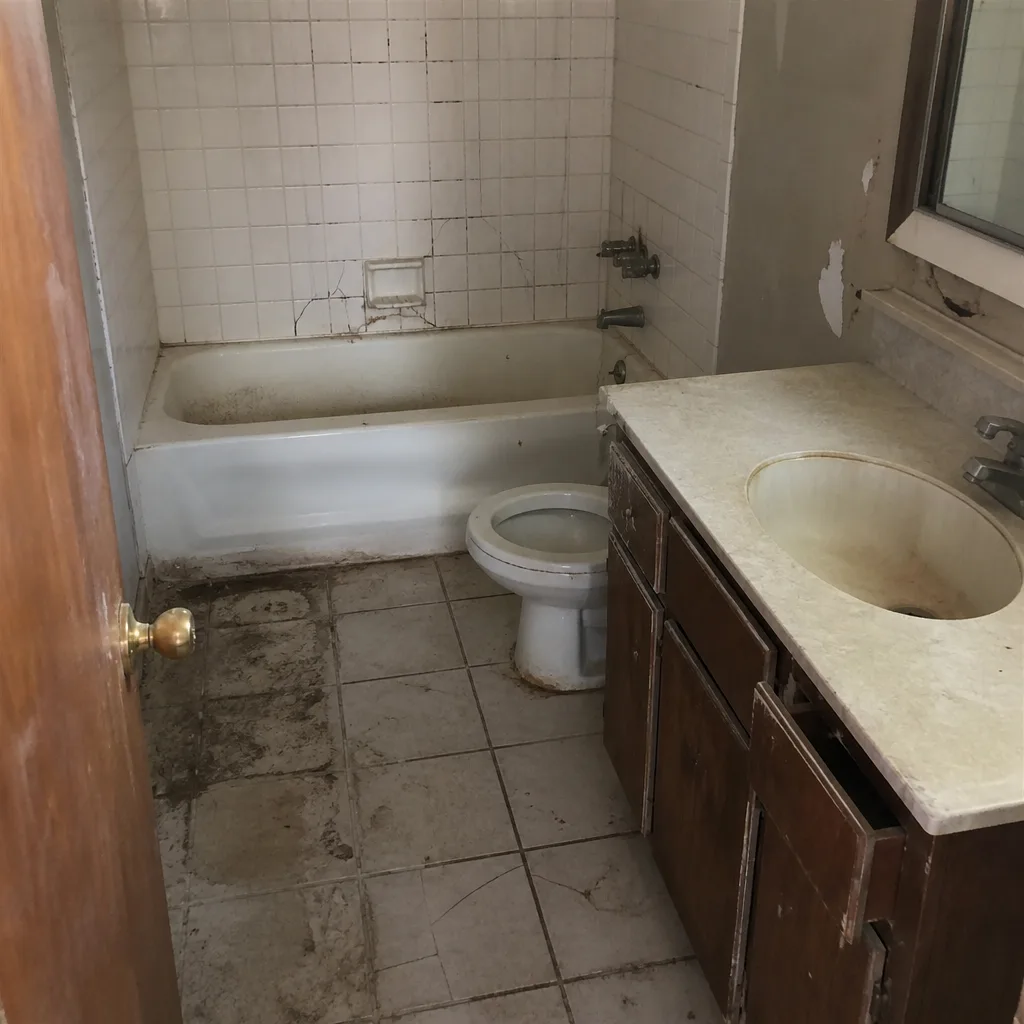 Before
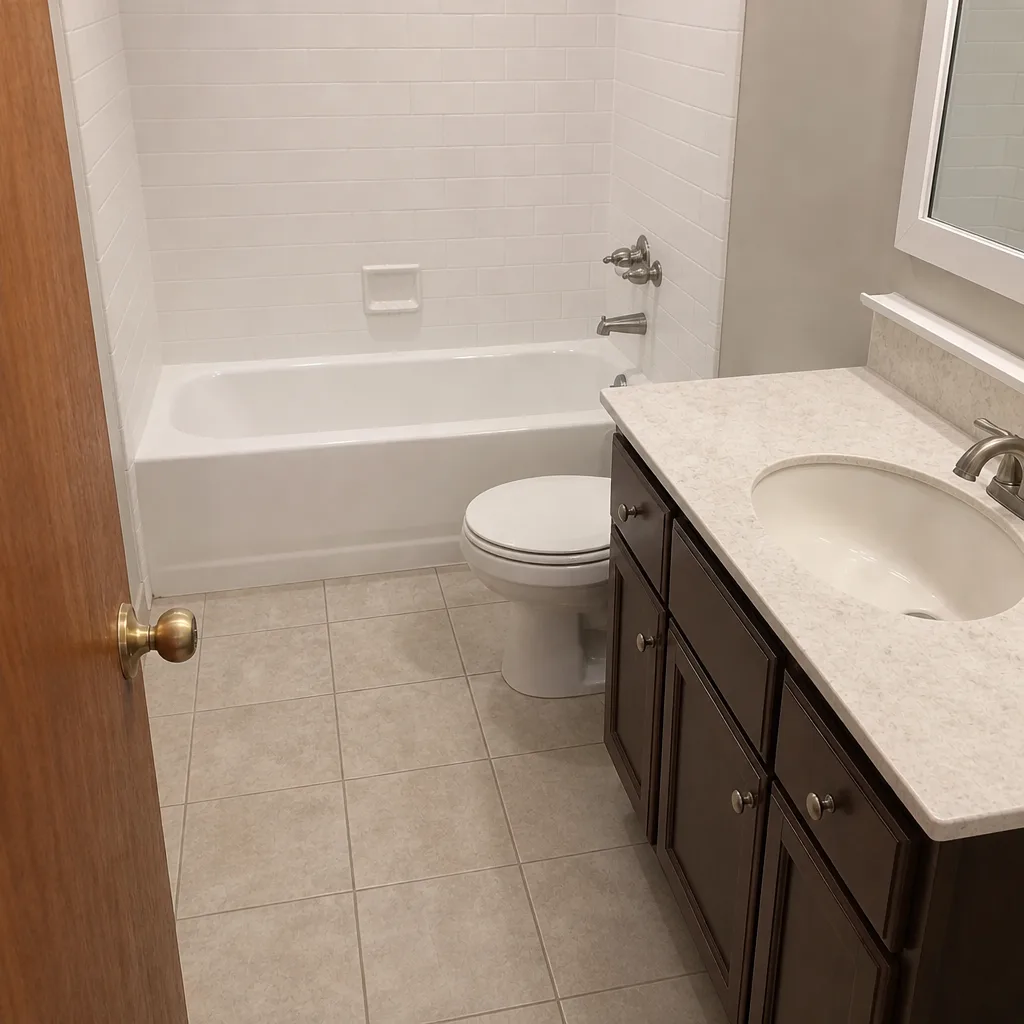 After
When to Call a Professional
Some jobs are worth a phone call before you pick up a shovel. If your current driveway has any of these issues, get a professional assessment before addressing the surface: pavers or concrete sections that have sunk more than half an inch in the middle, cracking that runs the full width of a slab, standing water after moderate rain, a visible gap between the driveway edge and the garage floor, or an edge restraint that has separated and exposed the base. These aren’t cosmetic. They’re signs that the base or drainage is failing, and re-surfacing without fixing them is throwing money at the symptom.
Groundwork Construction Co. of Lewisville offers free estimates in Lewisville. Every driveway project comes with an upfront price in writing, a full material specification so you know exactly what’s going under the pavers, and our 730-Day Done Right Promise: if it’s not done right, we make it right. You can explore the full driveway and pavers service in Lewisville to see how we handle base preparation, material selection, and permit coordination for local properties. Call (844) 560-4467 to schedule your free estimate and design consult. If you want the full picture of what we do across every trade, our Groundwork Construction Co. of Lewisville home page walks through it.
Frequently Asked Questions
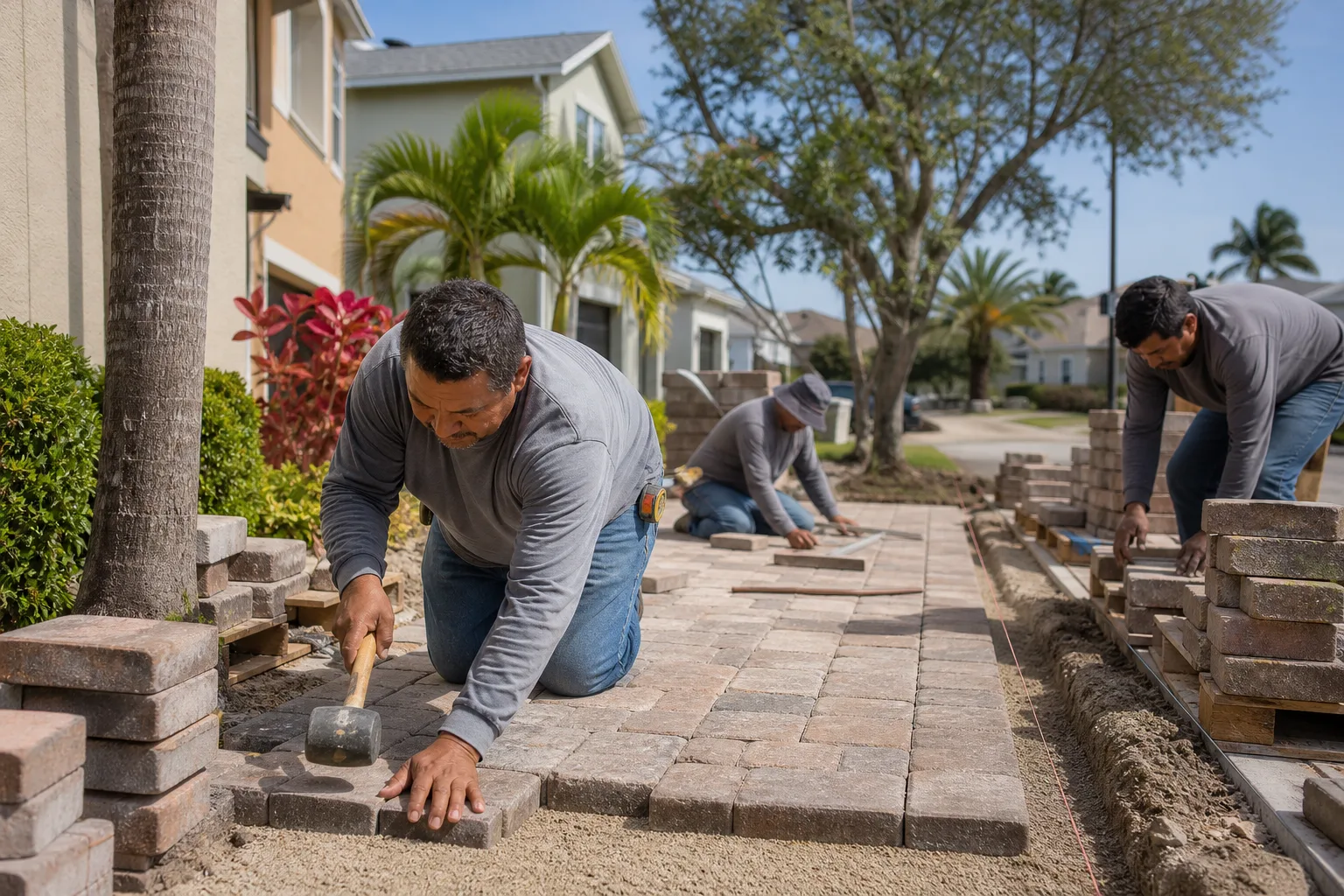
Interlocking concrete pavers in Lewisville typically run $12 to $22 per square foot installed, with the final price depending on paver selection, the depth of base required for your specific lot, and site access. A standard two-car driveway of roughly 600 square feet lands in the $7,200 to $13,200 range for concrete pavers. Clay brick pavers run higher, about $18 to $28 per square foot. Call (844) 560-4467 for an exact quote; estimates are free.
Straight replacement of a residential driveway on an existing footprint generally does not require a building permit in Lewisville. However, driveway widening, new curb cuts, driveway approach modifications in the right-of-way, and drainage changes do require permit approval from the city. If your home is in a floodplain or a historic district, additional review applies. Any contractor who handles the permit questions for you is saving you weeks of delay. Call (844) 560-4467 and we’ll walk through your specific property.
Lewisville’s expansive clay soil swells when wet and shrinks when dry, and that movement stresses any rigid driveway surface. Cracks usually happen because the driveway was built on a base that couldn’t accommodate the movement, or because water wasn’t properly routed away from the slab. Pavers handle clay soil better than concrete because they flex, but only if the base was correctly built to Lewisville conditions. Call (844) 560-4467 to have your driveway evaluated before the next wet season.
A properly installed concrete paver driveway on an adequate base lasts 30 to 50 years in North Texas. The pavers themselves often outlast the base if maintenance lags, so the installation quality under the surface is the actual limit on lifespan. Re-sanding the joints every few years and re-applying penetrating sealer every 3 to 5 years keeps the driveway in top condition. Call (844) 560-4467 to discuss what a project on your specific property will involve.
Yes, in many cases a paver overlay on top of a structurally sound concrete driveway is possible and costs less than a full tear-out. It requires the existing concrete to be free of major cracks, properly sloped, and thick enough to support the added weight. On Lewisville clay, if the existing concrete has visible heaving or settlement, an overlay will inherit those problems, so a full replacement is usually the better long-term call. Call (844) 560-4467 for a free assessment of whether your current driveway qualifies.
In most master-planned Lewisville communities, muted earth tones (tan, buff, light gray, and blends of those) are approved automatically, while bright reds and high-contrast multi-color blends often need additional review. Castle Hills, Lakeland, and Riverchase each have slightly different palette guidelines, so check your community’s architectural documents before selecting. Submitting a physical sample to the review committee rather than a photo almost always speeds approval. Call (844) 560-4467 for guidance on what we’ve seen approved recently in your neighborhood.
The Bottom Line
A Lewisville driveway is a structural decision before it’s an aesthetic one. The clay under your lot will move, and the only question is whether the driveway you install moves with it or breaks trying to fight it. Get the base depth and compaction right, include separation fabric, slope the surface so water goes where it should, check your HOA palette before you buy, and understand the permit question for your particular lot. On materials, pavers cost more upfront than concrete or asphalt but repay that gap within fifteen to twenty years through repairs avoided and longevity gained. Whether your next project is a driveway, a new fence, or a full home addition or ADU, the same principle holds: the preparation under the finish is what you’re really paying for. Call (844) 560-4467 to schedule your free estimate and design consult. Upfront pricing, live person on the line, and the 730-Day Done Right Promise standing behind every job.
Written by the team at Groundwork Construction Co. of Lewisville.