Last updated November 18, 2026



Free written scope consultation - allowances, timeline, and change-order rules on paper before a single trade is scheduled
Construction Warning Signs: A Lewisville Homeowner’s Reference Guide
A hairline crack running diagonally from the corner of a door frame isn’t cosmetic. In Lewisville’s expansive clay soil, that crack is one of the earliest readable signs of differential foundation movement – and most homeowners patch it with caulk and move on. That single decision can add five figures to a repair bill years later. The warning signs that actually matter in North Texas construction are quiet, early, and easy to misread. This guide walks through the subtle indicators we’ve learned to spot across Lewisville: how clay soil moves foundations, how drainage fails before water ever reaches your drywall, how bad mortar joints announce themselves before a wall fails, and how to surface corners a previous contractor cut before they cost you.
Quick Answer
The most important construction warning signs for a Lewisville homeowner are diagonal cracks wider than 1/8 inch near door and window corners, pooling water against the foundation after rain, powdery or crumbling mortar joints, materials that look worn after only 2 – 3 years, and any covered work you can’t verify with a permit record or photo documentation. Catching these early, before they turn into interior water damage or structural movement, routinely saves tens of thousands in repair costs.
Styles & brands we work with
- Kitchen remodeling
- Bathroom remodeling
- Home additions & ADU
- Roofing
- Windows & doors
- Driveway & pavers
- Fence
Table of Contents
- Settlement Cracks vs. Structural Warning Cracks in Lewisville
- Early Drainage Failure Signs in Landscaping and Flatwork
- How to Spot Substandard Mortar Joints and Masonry Work
- Builder-Grade Material Substitution After 2 – 3 Years of Texas Weather
- Warning Signs a Previous Contractor Cut Corners on Covered Work
- A Homeowner’s Walk-Through Checklist Before You Buy
- What Permit Records Tell You About Hidden Work
Settlement Cracks vs. Structural Warning Cracks in Lewisville
Almost every home in Lewisville has some cracking. The question that matters is whether the crack is normal settlement or a structural warning. We use three measurements to tell the difference: direction, width, and location.
Normal settlement cracks run vertically or horizontally along a wall surface, stay under 1/16 inch wide, and appear in drywall or plaster without tracking through brick, tile, or foundation. They often show up in the first two years after construction and then stop growing. Warning cracks are different in every dimension.
- Diagonal direction: A crack running at roughly 45 degrees from the corner of a door or window is the classic pattern of foundation movement. In Lewisville, that angled crack typically signals one corner of the foundation lifting or dropping relative to the rest.
- Width over 1/8 inch: Any crack you can slide a nickel into is a professional inspection trigger. Cracks that have widened since you last looked deserve the same.
- Stair-step masonry cracks: Cracks that zig-zag through brick mortar joints like a staircase are a hallmark of differential settlement and rarely cosmetic.
- Cracks that repeat across rooms: If the same corner in three different rooms is cracking, the foundation is moving, not the drywall.
- Doors and windows that stick seasonally: A door that sticks in summer and frees in winter is telling you the frame is racking as the soil expands and contracts.
Lewisville sits on the Blackland Prairie belt, where the clay soil expands when wet and shrinks when dry. The soil movement is real and it’s seasonal. The North Texas drought-to-flood cycle every few years drives more foundation movement than almost any other weather pattern. The counterintuitive truth is that most dramatic foundation damage doesn’t come from one bad year – it comes from years of alternating extremes with no moisture control around the perimeter.
If you’re seeing multiple warning patterns, it’s time to get a foundation inspection before you book any cosmetic work. Patching drywall over a moving foundation just delays the diagnosis.
Early Drainage Failure Signs in Landscaping and Flatwork
Water damages a home from the outside in, and the first symptoms almost always show up in the yard and driveway before they show up in the living room. If you learn to read the exterior clues, you’ll catch drainage failures months before the first interior sign.
Outdoor Signs of Drainage Failure
- Soil erosion channels in the yard: Visible grooves running downhill toward the house mean water is running in a concentrated path instead of dispersing. Over a season, that channel becomes a small riverbed fed by every rainstorm.
- Pooling within 4 feet of the foundation: Water that sits against the slab for more than a day after rain is infiltrating the soil the foundation sits on. In Lewisville, that pooling is the single most common precursor to foundation movement.
- Mulch floating away: Beds that empty out after heavy rain mean the grade is pitched toward the house, not away.
- Efflorescence on brick or concrete: A white, chalky powder on exterior masonry is the residue left after water moves through the material. It’s not dirt and it’s not cosmetic – it’s telling you where water is traveling.
- Driveway and sidewalk gaps: Separation between a driveway slab and the foundation wall, or between the sidewalk and the yard, means soil under one side has settled or washed away.
- Soggy patches that never dry: A persistently damp spot on otherwise dry land often points to a clogged or broken irrigation line or a buried downspout dumping water underground.
The Grading Rule of Thumb
Ground should slope away from your foundation at roughly 6 inches of fall in the first 10 feet. If you can lay a 10-foot board from the base of the house out into the yard and it doesn’t slope, water has nowhere to go except toward the slab. In Lewisville, the shallow soil depth over limestone in some parts of the city makes this pitch even more critical.
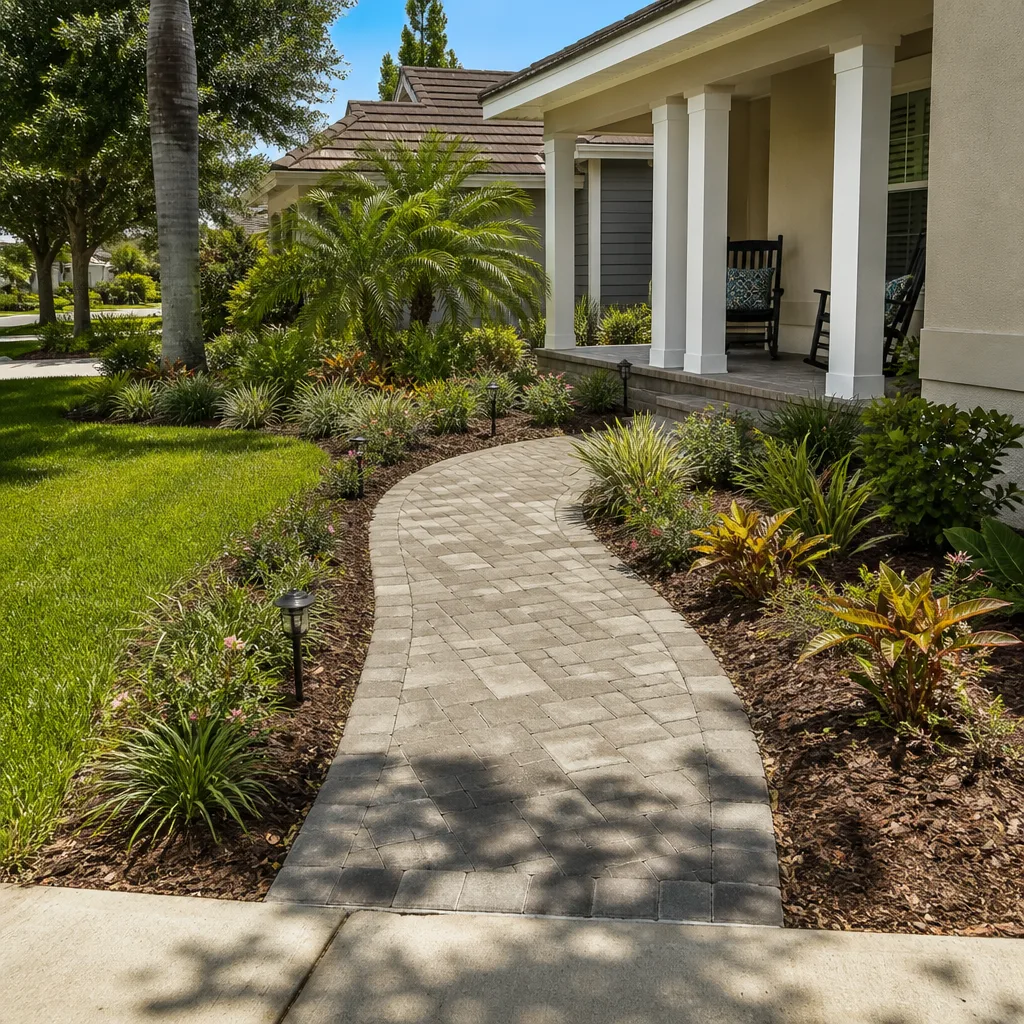
If a drive or paver surface is channeling water against the house, that’s an early warning to address drainage before it becomes a foundation problem. A properly built Driveway & Pavers in Lewisville installation includes grade and slope work – not just the visible pavers.
How to Spot Substandard Mortar Joints and Masonry Work
Brick and stone work looks identical from a distance. From three feet away, the mortar joint quality is the whole story. Substandard mortar is one of the most common – and most overlooked – construction warning signs in homes across North Texas.
The Visual Cues to Check
- Joint depth: Tooled mortar joints should sit slightly recessed from the brick face with sharp, defined edges. Mushy, ragged, or barely-there joints usually mean the mason slapped mortar in without finishing it.
- Consistent joint width: A well-built brick wall has joints between 3/8 and 1/2 inch wide, consistent across the wall. Joints that vary dramatically from one brick to the next look sloppy now and telegraph fire risk or structural weakness later.
- Powdering or crumbling within 3 – 5 years: Mortar that’s already chalky, friable, or crumbling on newer construction usually points to the wrong mix ratio or too much sand filler to save money.
- Hairline cracks following the joint line: Cracks running along the mortar (not through it) can indicate shrinkage from a wet mix, which weakens the entire wall.
- Efflorescence lines: White powdery staining tracing mortar joints means water is migrating through, which over five or ten years will freeze-thaw the wall apart.
- Weep holes: Every well-built brick veneer wall has small gaps at the base for water drainage. Missing weep holes mean the mason skipped a critical detail.
We’ve walked hundreds of homes in Lewisville where a 3-year-old brick wall was already showing the failure pattern masons call “washed joints” – mortar applied too soft, never compressed, and now vulnerable to every rainstorm. The cost to repoint a wall correctly is dramatically less than the cost to rebuild after it fails.
Builder-Grade Material Substitution After 2 – 3 Years of Texas Weather
Builder-grade is not a dirty word, but it is a specific category. Builder-grade materials are the cheapest product in each trade that still meets code. They’re acceptable. What they aren’t is durable. And the gap between what a builder promised and what a builder installed is often invisible on day-one but visible by year three.
What Properly Specified vs. Builder-Grade Looks Like Over Time
- Roofing: A 30-year architectural shingle still looks tonally consistent after three North Texas hail seasons. Builder-grade 3-tab shingles are already fading, curling at edges, and losing granules on the ground. If your neighbor’s roof built at the same time still looks new and yours is worn, the material is the tell.
- Siding: Fiber cement siding from brands like James Hardie holds paint surface and joints cleanly for years. Builder-grade vinyl tends to warp, crack at nail heads, and chalk within three summers in Lewisville’s heat.
- Windows: A properly specified Andersen or Pella unit still seals tight and opens smoothly after a few years. A builder-grade window under the same conditions often shows condensation between panes by year three, a sign the seal has already failed.
- Fence material: Cedar or quality composite holds stain and structure through 5+ Texas seasons. Pine builder-fence starts sagging at the rails within two.
- Exterior doors: A solid-wood or fiberglass core door doesn’t warp. A hollow builder door warps visibly within one summer in direct sun.
Lewisville’s particular weather accelerates this. The combination of intense UV, warm nights above 80 degrees, and seasonal flooding puts more stress on exterior materials than most of the country. What holds up in Atlanta for seven years gets sun-cooked in Lewisville in three.
If you’re comparing a material option, ask specifically for the product line and manufacturer warranty – not just “it’s a shingle” or “it’s siding.” The difference between a builder-grade and a fully specified product is often $800 – $2,400 on a $30,000 project, and it changes the timeline from failure to failure by a decade.
Warning Signs a Previous Contractor Cut Corners on Covered Work
Bad work doesn’t always reveal itself. Sometimes it’s buried under drywall, tile, or landscaping where it can hide for years. But buried work leaves telltale clues at the surfaces above it. Here’s how to spot the signs before your own next renovation opens it up – or before you purchase a home with these problems.
Interior Signals
- Fresh paint in only one room or one wall: A single freshly painted patch or a recently painted room that doesn’t match the wear on the floor or trim often hides a water stain, drywall patch, or drywall-taped crack.
- Trim that doesn’t sit flush: Baseboard or crown that pops away from the wall or leaves a visible shadow line can mean the wall behind it was patched poorly after a repair.
- Uneven or drummy tile: Tap a hollow-sounding tile and you’re over an install that probably skipped the right thin-set or backer board.
- Non-standard outlet or switch placement: Outlets mounted in unusual spots with no visible wiring context often mean a wall was added late, or electrical was rerouted outside the original plan.
- Water staining under sinks or behind toilets: Any dried staining pattern on cabinetry or painted base is a mask over a currently leaking or previously flooded joint.
Exterior Signals
- Landscaping installed flush against the house: Soil and mulch piled against the foundation with no visible grade is a red flag for how the original exterior was finished.
- Gutters that terminate against the wall: Downspouts that dump straight at the foundation are the single most common exterior shortcut.
- Fence posts that seem shorter than the neighbors’: Posts sunk only 18 inches instead of the 2-3 feet required for fence stability in North Texas soil tip over within two or three windy seasons.
Exterior work is where shortcuts get expensive. A Fence Installation in Lewisville done with quality materials like Barrette or Ameristar steel posts behaves differently from a builder-grade install that skimped on footings. If a fence built two years ago is already leaning, the installation depth is the cause.
A Homeowner’s Walk-Through Checklist Before You Buy
Before you sign a purchase contract on a Lewisville home, run this checklist. It takes about 45 minutes and surfaces most of the early warning signs a general inspector might miss.
- Walk the perimeter and look up: Note any diagonal cracking in brick, step-cracking in mortar joints, or stains tracing down walls.
- Look at the roofline: From the street or yard, check for sagging ridgelines, uneven shingle courses, or visible granules in the gutter.
- Check every door and window: Open and close each one. Anything that sticks, drags, or has a visible gap at the frame is a settlement signal.
- Walk every room with a flashlight: Look at drywall corners, above door frames, and ceilings for staining, patches, or fresh paint in isolated spots.
- Check under every sink and behind every toilet: A small flashlight will show past leaks that paint hides.
- Look at exterior drainage: Where does water go when it hits the downspouts? Where does the yard slope after a storm?
- Request the permit history: Every permitted structural, electrical, plumbing, or addition project should have a record with the city of Lewisville.
- Look for the contractor’s mark: A quality builder always leaves some paper trail – a sticker on the electrical panel, a work order in the attic, a permit card in the garage.
- Give special attention to fence and paver work: These are the most frequently DIY’d or shortcut installations. Toe-test every post – it shouldn’t wiggle more than a quarter inch.
What Permit Records Tell You About Hidden Work
Permits exist for a reason: to give you a paper trail of what’s covered, what was inspected, and what was done to code. When you buy an older Lewisville home, the permit history is one of the strongest signals of whether the work behind the walls was done right.
Two signal patterns tell you the most:
- A permit was pulled and was closed out with a passed final inspection. This is the gold standard. The work was inspected by the city, at the time it was installed, under the code that applied then.
- A major project exists with no permit on record at all. A second-story addition, an electrical panel replacement, a gas line extension, a new bathroom – if any of these were done without a permit, you can’t assume the work met code, and your insurance may decline to cover it if it fails.
Covered, unpermitted work is where homeowners get hurt financially. Electrical work behind drywall with no permit, plumbing that feeds a new bathroom without inspection, or an Home Additions & ADU in Lewisville built without permit oversight: these aren’t saved by time. They’re time bombs. Lewisville code enforcement can require retroactive permits and open inspection on any of it, and the cost to open walls to prove compliance is real.
If you’re buying, ask for the permit history. If you’re planning a project of your own, insist on it. Quality contractors welcome permit inspection because it confirms the work. The ones who resist it are the reason this section needs to exist.
Common Mistakes to Avoid
- Caulking a diagonal crack and moving on. Cosmetics hide the diagnosis. In Lewisville’s clay soil, patching without fixing the moisture problem around the perimeter means the crack widens behind the patch.
- Assuming “newly renovated” means well-renovated. Fresh paint and tile can be a mask for shortcuts underneath. Ask for the permit history and photograph the work in progress.
- Ignoring the ends of your downspouts. Water dumped against the house is the single most common preventable cause of foundation problems in North Texas.
- Accepting verbal-only scopes from contractors. If the scope isn’t written down with specific brands and models, you’re getting whatever is on the truck that day.
- Not checking the manufacturer warranty term. A shingle, window, or siding product that fails in three years costs twice – once to buy, once to replace. Know what you’re buying before it’s up on the wall.
- Letting a landscaping project change your drainage without asking for a grade plan. New planting beds and paver patios installed without regard to pitch are the number-one cause of new foundation movement we see across Lewisville.
- Ignoring the small stuff during your walk-through. Every early warning sign you skip at inspection is a decision to pay for it later. Your 45 minutes with a flashlight is worth more than a week of foundation work.
See the difference
 Before
 After
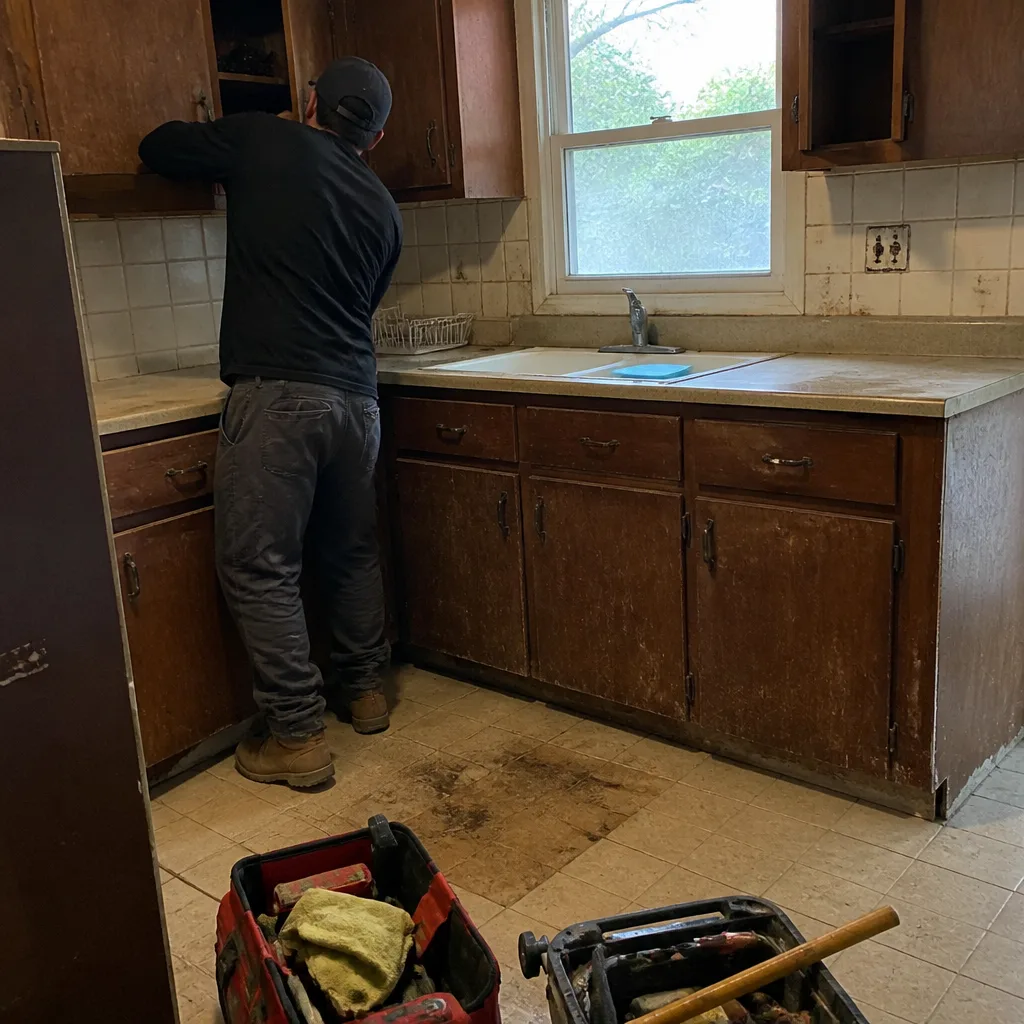 Before
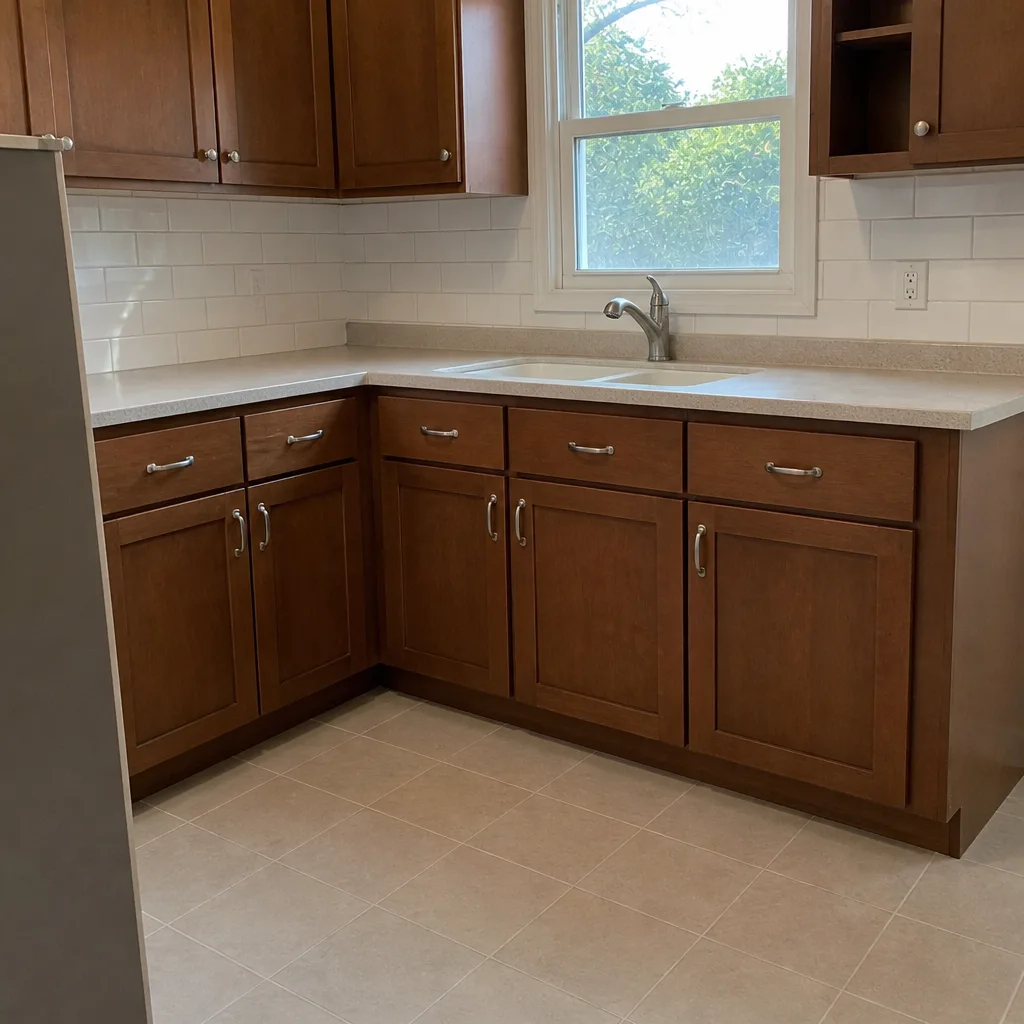 After
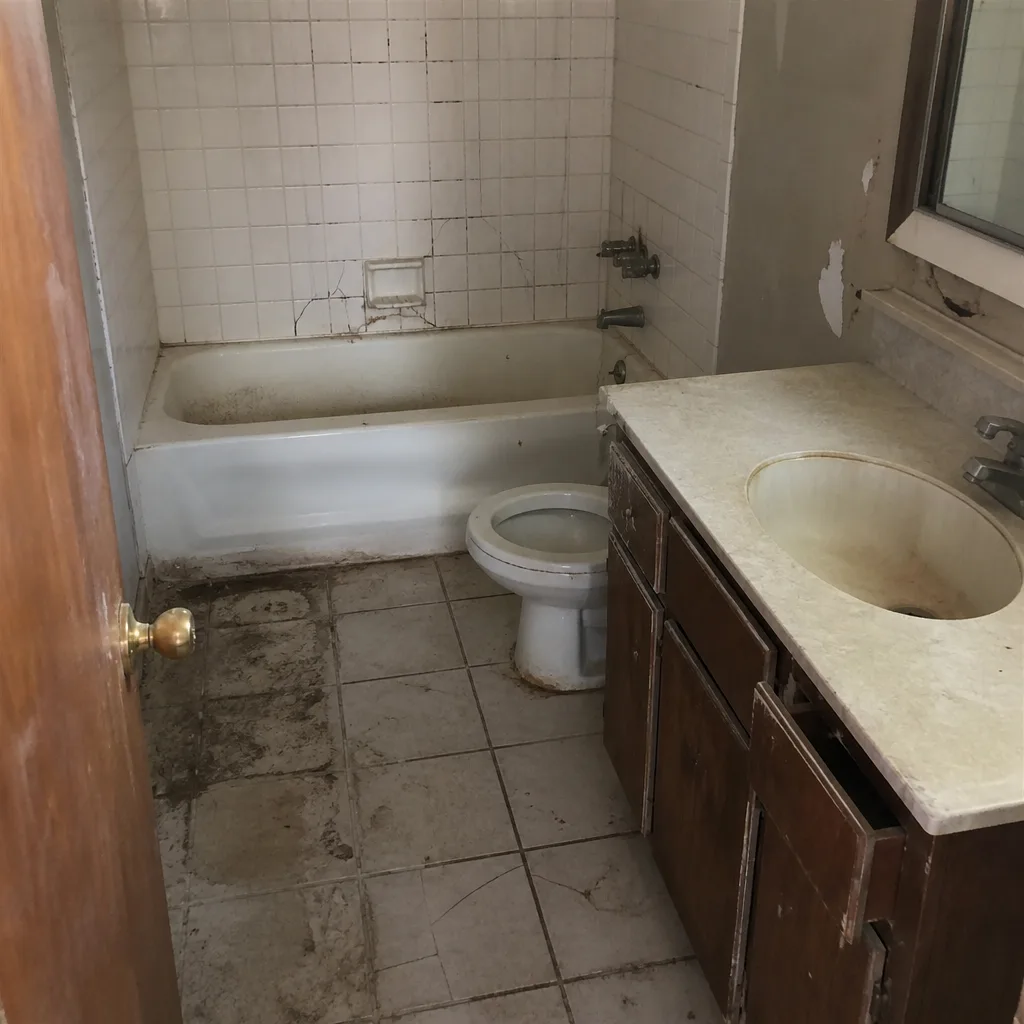 Before
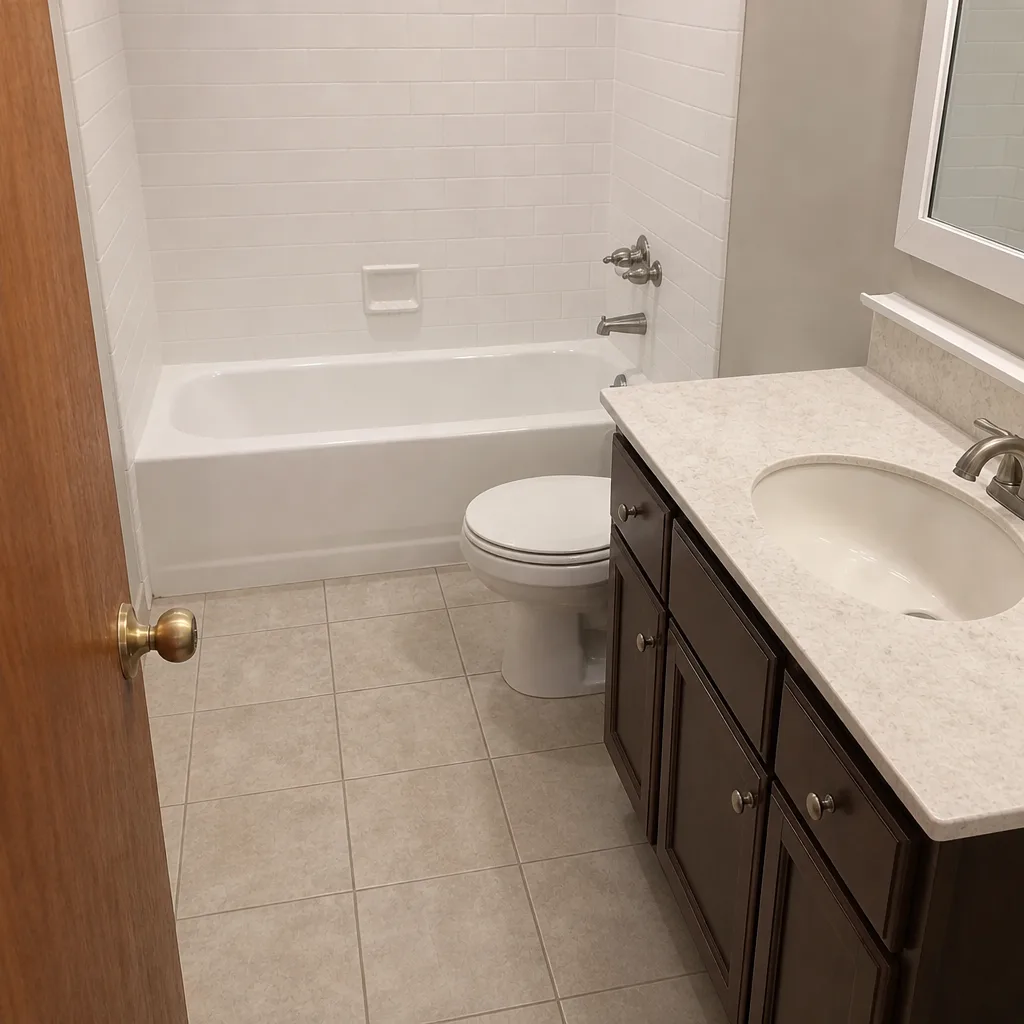 After
When to Call a Professional
Some warnings are safe to read yourself. Others are the kind that should trigger a call. If you’ve found any diagonal crack wider than 1/8 inch, a step-crack in brick, or a section of mortar crumbling on a wall less than 10 years old, call for a professional evaluation before you book cosmetic work. If drainage is flowing against your foundation, if a door frame has racked visibly in the last year, or if you’ve spotted a fresh patch behind trim in a freshly purchased home, the same. High-tension structural questions, foundation repairs, and any covered electrical or gas line work are not DIY territory – get a trained professional on site. Groundwork Construction Co. of Lewisville offers free estimates in Lewisville – call (844) 560-4467. Our technicians have up to 12 years of experience, and every project is backed by the 730-Day Done Right Promise.
If your project is larger, from a full kitchen overhaul to a new roof or addition, the Groundwork Construction Co. of Lewisville home page outlines how we scope multi-trade work. For the full guide to how we build, our free project estimate and design consult is where most homeowners start.
Frequently Asked Questions
Any crack wider than 1/8 inch near a door or window corner is worth a professional inspection, and any crack you can slide a nickel into should be evaluated quickly. Diagonal direction, repeating patterns across multiple rooms, and cracks that have widened since your last check all raise the urgency. Call (844) 560-4467 for a free evaluation in Lewisville.
Lewisville sits on expansive clay soil that swells when wet and shrinks when dry, and the North Texas drought-to-flood cycle moves foundations more than any single weather event. Poor drainage at the perimeter, downspouts dumping against the house, and landscaping that slopes toward the slab are the top three controllable causes. Call (844) 560-4467 if you’re seeing movement.
Builder-grade 3-tab shingles show fading, curling edges, and granule loss in the gutters by year three to five, while a properly specified architectural shingle from a brand like GAF or CertainTeed holds its color and surface much longer under the same weather. If your roof looks noticeably more worn than comparable homes nearby, the material is the difference. Call (844) 560-4467 for a free roof inspection.
Yes. Any structural addition, ADU, electrical panel change, gas line, or plumbing extension in Lewisville requires a permit and final inspection. Work done without a permit can create insurance problems and, if discovered, may need to be opened and retrofitted to code. Call (844) 560-4467 to discuss a permitted design and build.
Skipping proper base prep on driveways and pavers is the shortcut that’s most invisible on day one and most obvious by year two. Pavers set on thin base, without proper compaction, sink and shift within one or two Lewisville rainy seasons. Upfront pricing from a quality contractor includes the base prep – it’s the first thing to ask about. Call (844) 560-4467.
A well-written workmanship warranty covers defects for a defined term, and at Groundwork Construction Co. of Lewisville the term is the 730-Day Done Right Promise: if it isn’t done right, we make it right. Manufacturer warranties are separate and vary by product, so ask for both. Call (844) 560-4467 to see a sample.
The Bottom Line
The construction warning signs that cost homeowners the most are the ones that look small. A diagonal crack you patched. A downspout you didn’t redirect. A fresh patch of paint on a wall you didn’t question. Every one of those small signals, caught early, is a repair. Ignored, it becomes a project. Get in the habit of a 45-minute walk-through of your home twice a year – once in spring and once in fall. Photograph what you see. If anything looks like it’s growing or moving, call a professional to take a look. It’s the cheapest insurance a Lewisville homeowner can buy, and it’s the reason we’ve built our whole company around catching the detail work before it fails.
For estimates, design consultations, or any of the services in this guide, contact Groundwork Construction Co. of Lewisville. We answer our phone 24/7 – a live person, no voicemail – and every estimate comes with no-hassle upfront pricing: the number you see is the number you pay. New projects over $10,000 get $1,000 off, and 0% financing for 18 months makes the big jobs manageable. From foundation to finish line, we handle kitchen, bath, roofing, windows, fence, pavers, and additions under one project lead. Call (844) 560-4467 to schedule your free project estimate and design consult. Built to last, backed in writing.
Written by the team at Groundwork Construction Co. of Lewisville.