Last updated November 18, 2026




Free written scope consultation - allowances, timeline, and change-order rules on paper before a single trade is scheduled
How Long Does Fence Installation Take? Timelines and What to Expect
The average homeowner is told “2 to 3 days” for fence installation. What that estimate leaves off the calendar is the part that actually ruins your schedule: permit processing in Denton County alone can add 10 to 15 business days before ground is ever broken. Then there’s the legally required utility locate wait, material lead times that swing by weeks depending on the material you pick, and the North Texas clay that punishes anyone who rushes post curing. In Lewisville, we’ve watched homeowners plan a weekend fence project and end up three weeks out because nobody explained the front half of the timeline. This guide breaks the whole schedule into real phases, so you know what drives the clock and how to hold a contractor accountable for it.
Styles & brands we work with
- Kitchen remodeling
- Bathroom remodeling
- Home additions & ADU
- Roofing
- Windows & doors
- Driveway & pavers
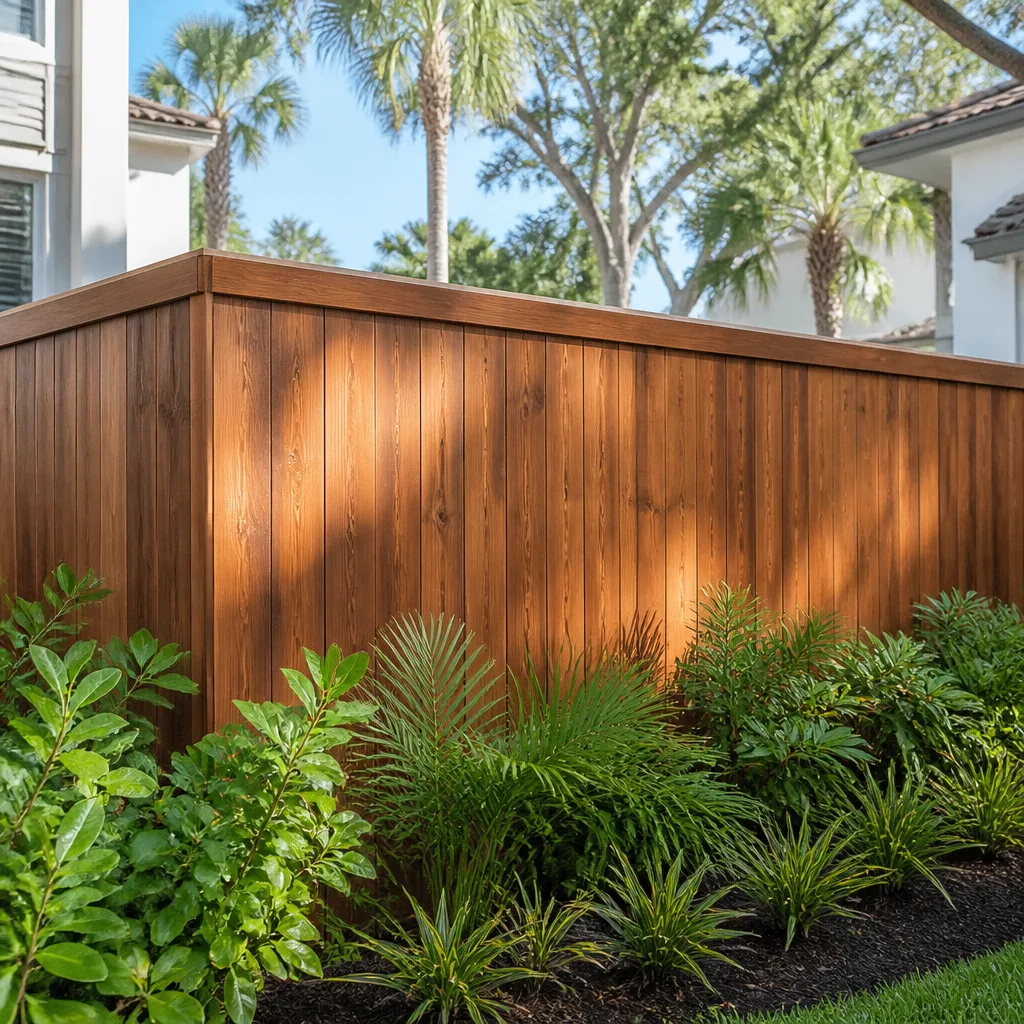
- Fence
Quick Answer
Most residential fence installations in Lewisville take 2 to 5 days of actual on-site labor for a typical 150 to 200 linear foot yard, but the full project timeline from signed contract to finished fence usually runs 2 to 4 weeks. That gap comes from permit approval (roughly 10 to 15 business days in Denton County), the Texas 811 utility locate wait (48 to 72 hours), and material delivery lead times. Wood and chain-link move fastest; vinyl and ornamental iron add the most scheduling variance.
Table of Contents
- The Real Timeline, Phase by Phase
- Why the 811 Utility Locate Adds Days You Can’t Skip
- How North Texas Expansive Clay Affects Post Curing
- What Multiplies Labor Days: Length, Gates, and Corners
- Timeline by Material: Wood vs. Vinyl vs. Chain-Link vs. Iron
- Scheduling Around a Lewisville Summer
- Common Mistakes to Avoid
- Frequently Asked Questions
The Real Timeline, Phase by Phase
When you call for a fence installation in Lewisville, the clock starts well before a single post hole is dug. Here’s the sequence a well-run project actually follows, broken into phases so you can see where the days go.
- Estimate and design (1 to 5 days). A site visit, measurements, material selection, and a written line-item quote. If you’re moving fast, this can happen inside a day or two.
- Permit application and review (10 to 15 business days in Denton County). Most Lewisville fences over a certain height or on a corner lot require a permit. Fence height limits, setback rules, and HOA overlays all get checked here. This is the single biggest schedule item and the one most estimates skip.
- Utility locate (48 to 72 hours). Texas law requires a call to 811 before anyone digs. Crews must wait for the marks. Cutting this corner risks a gas or fiber strike that shuts your project down for weeks.
- Material delivery (3 to 21 days). Depends entirely on material. Standard cedar or pressure-treated pine is often stocked locally and arrives in days. Vinyl and ornamental iron are frequently made to order and take longer.
- Installation (2 to 5 days). The visible part. Actual days depend on linear footage, gate count, terrain, and how much old fence has to come out first.
- Concrete curing (24 to 48 hours before the fence is load-bearing). The posts set in the ground, but the concrete takes time to cure hard enough to resist wind and leaning.
Total up the phases honestly and a typical Lewisville project runs 2 to 4 weeks from contract to final walkthrough. Anyone telling you “we’ll have it done this weekend” is either skipping permits, skipping the locate, or both.
Why the 811 Utility Locate Adds Days You Can’t Skip
In Texas, calling 811 before you dig isn’t a recommendation. It’s the law, and it forces a genuine waiting period of 48 to 72 hours between the request and the first shovel in the ground. On a fence job, that wait is real because fence lines run along property boundaries where irrigation lines, low-voltage lighting, gas, and communication cables often sit.
Why homeowners underestimate this phase:
- It’s calendar time, not work time. You can’t compress it by paying more or hiring faster crews. The locators have to come out and mark.
- Missed marks cost far more than the wait. Striking an unmarked gas line or fiber trunk can shut down an entire block and shift your project by weeks while it’s investigated and repaired.
- Some properties have private utilities the public locate doesn’t cover. Irrigation, septic, and low-voltage landscape lighting are considered private lines, and the free 811 service may not mark them. A good installer asks about these before digging, which can add a day for a private locate.
In neighborhoods around Lewisville Lake and the older subdivisions near Old Town, we regularly see properties with buried irrigation and landscape wiring that the public locate won’t touch. Getting a private locate before the dig saves far more time than it costs. If a contractor tells you the locate “isn’t needed” for a fence, that’s your cue to look elsewhere.
How North Texas Expansive Clay Affects Post Curing
Here’s a fact that doesn’t show up in most fence timeline guides. The soil across Lewisville and much of Denton County is expansive clay, and it behaves differently than the sandy or loamy soils in other parts of the country. Expansive clay swells when wet and shrinks when dry, and it can move a poorly set post enough to lean within a single season.
That means the concrete-a-set time is not optional. A rushed install that lets wind load bear on green concrete is why you see fences leaning after the first hard rain. In our experience, the fix usually means pulling posts and redoing the run, which adds days and dollars you never planned for.
What a proper install accounts for:
- Post depth. Posts need to go below the active clay layer, not just below the surface. Shallow posts are the number one cause of leaning fences in North Texas.
- Concrete, not just soil compaction. Dirt-backfilled posts work fine in stable soil but fight a losing battle against expansive clay.
- A cure window before panels and gates get loaded. For a wood or vinyl fence, that’s typically 24 to 48 hours before the fence starts taking wind stress.
- Drainage at the base. Standing water against clay accelerates shifting, so installers who grade away from the posts do you a favor.
If a crew finishes a 200-foot fence in one afternoon and the posts still wobble in the wind, they skipped the cure time. That’s not speed, it’s a callback waiting to happen.
What Multiplies Labor Days: Length, Gates, and Corners
Per-linear-foot pricing makes fence jobs look simpler than they are. Two 150-foot fences at the same price per foot can take noticeably different numbers of days depending on layout. Here’s what actually drives install time.
Fence length
More posts means more digging, more concrete, and more panel assembly. A 100-foot run and a 300-foot run aren’t linearly different in time; the longer job has proportionally more cuts, more corner treatment, and more cleanup.
Gate count and gate complexity
Each gate is its own sub-project: heavier posts, reinforced framing, hinges, latches, and a swing that has to clear the ground with a consistent gap. A single wide driveway gate can eat half a day by itself. Three gates can add a full day to the schedule.
Corners and irregular layouts
Lots that are perfectly rectangular are rare in Lewisville. Most yards have side-yard setbacks, an offset, or a jog around a mechanical unit or a mature tree. Every corner and offset means the crew stops, sets a corner post, and fights to keep the fence rails plumb. A yard with ten corners is a very different job than a simple rectangle.
Demo and haul-away
Removing an old fence adds half a day to a full day depending on material and condition. Concrete-set posts in hard ground are slow to pull. Hauling away old panels and rails adds a trip to the dump.
Lay all that out and you can see why an installer who prices per linear foot might underestimate a Lewisville yard with four gates and eight corners. Ask for the quote broken out this way, and you’ll know exactly what you’re paying for. Our own up-front pricing gives you a line-item breakdown so the number you see is the number you pay.
Timeline by Material: Wood vs. Vinyl vs. Chain-Link vs. Iron
The single biggest driver of variance on any fence schedule is material choice. Here’s an honest comparison of real timelines, not marketing minimums.
- Pressure-treated pine or cedar: 2 to 4 days of labor for a typical yard, with material lead times often 3 to 7 days if stocked locally. The most predictable choice. Wood also fits nicely with the exterior palettes we see on Lewisville homes paired with James Hardie siding and similar finishes. Expect to budget for staining or sealing.
- Vinyl: 2 to 4 days of labor, but material lead time is the wild card. Custom vinyl panels are often made to order at 10 to 21 days. Popular white and tan lines are sometimes stocked, which cuts the wait. Vinyl is fast to assemble once it’s on site.
- Chain-link: 1 to 3 days of labor, and the shortest material lead times. The fastest total timeline. Best for pet containment or security more than curb appeal.
- Ornamental iron and steel: 3 to 5 days of labor, 14 to 21 days of material lead time for custom panels. Iron demands the most precision on leveling and gate alignment, and welded assemblies take longer per section. Beautiful and long-lived, but not a rush option.
If schedule speed matters to you more than anything, chain-link wins conditional on the locate and permit. If material matching and long-term durability are priorities, wood and vinyl are the better bets with a slightly longer lead time. If you want the exterior to read as a single design, a premium fence pairs well with the same quality-first material approach we bring to other trades, where partners like Wellborn, Cambria, Silestone, and Caesarstone anchor the selections.
Scheduling Around a Lewisville Summer
North Texas weather is a schedule factor of its own. Summer in Lewisville regularly runs above 100 degrees, and that affects both concrete cure and crew output.
- Concrete cure in heat. Concrete cures by a chemical reaction, not by drying, so extreme heat actually speeds the surface set while the core continues to cure. A crew that pours in 105-degree afternoon sun without adjusting mix or covering the post tops risks surface cracking. Morning pours protect the cure.
- Crew efficiency. Post hole digging in July clay is punishing work. Realistic schedules account for shorter effective work windows in the middle of the day. Asking a crew to grind through 8 straight hours of hole digging in July is how you get sloppy setting and faster worker fatigue.
- Rain and clay. North Texas spring and fall storms can turn clay into a paste overnight. A crew that digs on wet clay then backfills will see the posts shift as the ground dries. The right move is to wait a day or two after heavy rain, which can add days to a tight schedule.
- Heat and material expansion. Vinyl and wood both expand in heat. Installing on a cool morning allows the panels to be tight now and still move seasonally without buckling.
Schedule the install in the early morning where possible. It’s the single easiest improvement to both workmanship and timeline on a Lewisville summer job.
Permit Costs and What They Add to the Calendar
Permit costs are a line item, but permit processing is the calendar item that surprises homeowners. In Lewisville and the surrounding Denton County jurisdiction, a typical residential fence permit can run $75 to $250 depending on height, corner-lot rules, and whether the fence is on a property line. The dollar cost is modest. The calendar cost is where the time actually gets spent.
Here’s the sequence most estimates skip:
- Application submitted with a site plan and fence spec (1 day).
- Review by the city or county planning office (10 to 15 business days for a typical residential fence).
- Any revisions requested (2 to 5 business days per round).
- Permit issued, and the install can proceed. Inspections afterward are common where permits were required.
That’s the 10 to 15 business day gap so many homeowners only learn about at the end of the first week of waiting. A contractor who pulls the permits for you has this calendar covered. A contractor who tells you no permit is necessary when one arguably is leaves you holding that timeline, and the potential enforcement problem, alone. We pull permits and get inspections passed as a standard part of the job, not an add-on.
Common Mistakes to Avoid
- Book the install before the permit clears. A crew that shows up the day after you sign can dig first and get shut down by the city mid-project. Sequencing matters.
- Skip the 811 call to save time. Cutting the required 48-to-72-hour utility locate often turns a 3-day job into a 3-week investigation if something gets struck. Always call 811 first.
- Choose vinyl or iron on a 2-week timeline expectation. Custom vinyl and ornamental iron are made-to-order in many lines. If schedule is tight, confirm lead time in writing before you sign.
- Dig into wet clay after heavy rain. Posts set in saturated expansive clay will shift as the ground dries, and within a season you’ll have a leaning fence line. Wait a day or two.
- Accept a per-linear-foot quote with no corner or gate accounting. Two gates plus eight corners can add a full labor day. Get the estimate broken down into posts, panels, gates, and demo.
- Let the crew load green concrete posts with gate swing. Gate posts take the most dynamic load. A green post under a heavy gate leans within a season.
- Ignore HOA and corner-lot rules. Several Lewisville subdivisions have front-yard fence restrictions and sightline rules at corners. A permit that meets city code can still fail an HOA review.
When to Call a Professional
Some fence jobs are genuinely a weekend DIY project: a small, low, unattached garden fence on open ground with no permit requirement and no buried utilities. Beyond that, the calculation shifts toward a professional. Anything involving a property-line fence, corner-lot setbacks, gates, concrete-set posts, or a material with a long lead time is worth doing right the first time. Post depth versus North Texas clay is the part DIY installs most often get wrong, and the leaning-fence callback is expensive.
The other reason to call is accountability. When a crew with permit responsibility tells you the fence is ready, you want a fixed quote and a guarantee behind it. Groundwork Construction Co. of Lewisville offers free estimates in Lewisville. Call (844) 560-4467. Our technicians have up to 12 years of experience, arrive background-checked and in uniform, and every project is backed by our 730-Day Done Right Promise. If it’s not done right, we make it right.
Frequently Asked Questions
A typical residential fence takes 2 to 5 days of on-site labor, with the full project running 2 to 4 weeks from contract to finished fence once you account for permit review in Denton County, the required 811 utility locate, and material delivery. For an exact timeline on your yard, call (844) 560-4467 for a free estimate.
Many Lewisville fences require a permit, especially taller fences and fences on corner lots, and permit review typically adds 10 to 15 business days. The exact requirement depends on height, location on the lot, and whether an HOA overlay applies. Call us at (844) 560-4467 and we can walk through what applies to your property.
Texas law requires calling 811 before digging, and the locate wait is typically 48 to 72 hours. Private utilities like irrigation, landscape lighting, and septic are not part of the public locate and may need a separate private locate, which can add a day. Call (844) 560-4467 if you’re unsure what’s buried on your property before a fence install.
Leaning posts are usually caused by setting them too shallow into expansive clay, backfilling with soil instead of concrete, or loading the fence before the concrete cures. North Texas clay swells and shrinks with moisture, and shallow posts lose that fight fast. Call (844) 560-4467 for a proper install quote with the right post depth for Lewisville’s soil.
Yes, and it’s done all the time, but the schedule should account for morning pours to protect the concrete cure and realistic work windows in extreme heat. A crew that grinds through a 105-degree afternoon risks rushed setting and faster fatigue. Call (844) 560-4467 to plan a summer install around the weather rather than against it.
Fence costs in Lewisville vary widely by material and length, and the honest way to price it is a line-item quote rather than a per-foot guess. We quote up front with no surprises and back every project with the 730-Day Done Right Promise. Call (844) 560-4467 for a free estimate.
The Bottom Line
A fence goes in fast. Getting to the install day is what takes time, and that’s the part most estimates leave on the cutting room floor. In Lewisville, work backwards from your target finish date: permit review runs 10 to 15 business days, the 811 locate takes 48 to 72 hours, material lead times range from a few days on wood to three weeks on custom iron, and the install itself runs 2 to 5 days. North Texas clay and Lewisville summers add their own schedule pressure. The best way to protect the calendar is to hire a contractor who pulls permits, calls 811, and quotes line-item pricing up front. Call (844) 560-4467 for a free estimate from Groundwork Construction Co. of Lewisville. From foundation to finish line, our team is backed by the 730-Day Done Right Promise, live-person phone coverage 24/7, and up-front pricing with no surprises.
Written by the team at Groundwork Construction Co. of Lewisville.
See the difference
 Before
 After
 Before
 After
 Before
 After