Last updated November 18, 2026





Free written scope consultation - allowances, timeline, and change-order rules on paper before a single trade is scheduled
DIY vs Professional Bathroom Remodeling: What’s Safe to Do Yourself
The most expensive DIY bathroom mistake isn’t a crooked tile. It’s a shower pan that was never properly waterproofed, discovered two years later when the subfloor has rotted through and the joists underneath have started to soften. We’ve pulled enough failed pans in Lewisville to know the pattern: the tile looked great on day one, and the homeowner did everything the video told them. What the video skipped was the pre-slope, the pan liner details, and the flood test. This guide draws the line clearly: what any handy homeowner can safely do, what takes skill but no license, and what legally or structurally needs a pro. You’ll learn how to score your own ability honestly, what Texas permitting means for resale, and what to say when you want to keep part of the job yourself.
Quick Answer
Safe DIY bathroom work includes demolition, painting, swapping fixtures like faucets and showerheads, installing vanities on existing plumbing, and hanging hardware. Work that touches waterproofing, the shower pan, electrical circuits, gas lines, or structural framing is where amateurs cause damage that costs far more to fix than hiring out would have. In Lewisville, plumbing and electrical changes also require permits, and unpermitted work can surface as a problem during resale.
Styles & brands we work with
- Kitchen remodeling
- Bathroom remodeling
- Home additions & ADU
- Roofing
- Windows & doors
- Driveway & pavers
- Fence
Table of Contents
- The Three Tiers of Bathroom Work: What You Can Do, What Takes Skill, What Needs a Pro
- How to Honestly Score Your Own Skill Level
- Why Texas Permits Make “Simple” DIY a Resale Liability
- The Hidden Labor Costs That Make Pro Pricing More Competitive Than You Think
- The Shower Pan Problem: The One Job You Should Never DIY
- How to Split the Work: What to Tell Your Contractor When You Want to DIY Part of It
- Lewisville-Specific Considerations: Climate, Housing Stock, and Code
- When DIY Actually Saves Money (and When It Doesn’t)
The Three Tiers of Bathroom Work: What You Can Do, What Takes Skill, What Needs a Pro
Not all bathroom work is equal. The smartest approach is to sort every task in your project into one of three tiers based on what happens if you get it wrong. A blown caulk line is a Saturday afternoon fix. A failed shower pan is a five-figure tear-out. That gap is where the real decision lives.
Tier 1: Safe for Any Handy Homeowner
These jobs have low consequence if you make a mistake. You can do them yourself with basic tools and patience, and the worst outcome is doing them again.
- Demolition: Pulling old tile, removing a dated vanity, tearing out carpet or vinyl flooring. Wear eye protection, seal off doorways with plastic, and have a dumpster scheduled before you swing the sledgehammer.
- Painting: Bathroom paint needs a mold-resistant formula for walls and a proper semigloss for trim. Sand, prime, two coats. This is the single most cost-effective upgrade to a bathroom, and worth doing well.
- Fixture swaps on existing plumbing: Replacing a faucet, showerhead, or towel bars where the rough-in already matches. Shut off the water first, use thread sealant on connections, and check for drips over 24 hours.
- Vanity replacement on existing plumbing: If you’re swapping a vanity at the same width and the supply and drain lines are already in place, this is a manageable weekend job. It becomes a Tier 3 job the moment you move the drain.
- Hardware, mirrors, accessories: Hanging a medicine cabinet, a new mirror, light sconces on an existing switched circuit, and towel rings.
- Caulking and grout refresh: Removing old caulk and re-sealing joints is easy, satisfying, and prevents the slow water damage that ruins subfloors.
- Toilet replacement: Removing and reinstalling a toilet is a two-hour job for most homeowners. The trick is the wax ring and the flange. If the flange is cracked or rotted, that’s when you call someone.
Tier 2: Takes Skill but Not a License
These are jobs a motivated, patient homeowner can learn, but the consequences of getting them wrong range from “redo it” to “call a pro anyway, and now the materials are wasted.” The key is honestly assessing your patience and precision, not your confidence.
- Tiling floors and walls: Setting tile straight, level, and correctly spaced takes practice. A sloped floor with a bad first row will look wrong forever. The good news: this is a skill you can build on a small project before tackling a whole bathroom.
- Vanity installation with slight relocations: If you’re moving a drain a few inches within the same wall cavity, a skilled DIYer can do it. Any larger move involves permitting and inspection.
- Replacing a bathroom exhaust fan: If you’re swapping a fan for one of the same size on the existing wiring and duct run, most homeowners can handle it. Cutting a new hole in the ceiling and running new duct to the exterior is a different project.
- Flooring installation: Luxury vinyl plank and sheet vinyl are both beginner-friendly on a flat subfloor. Subfloor prep is the skill. Never install over a soft, uneven, or water-damaged subfloor.
Tier 3: Legally or Structurally Requires a Pro
These are the jobs where a mistake can cause injury, code violations, structural failure, or thousands in water damage. It’s not about whether you’re capable. It’s about whether the risk-reward math works in your favor.
- Shower pan and waterproofing: Any new shower build, curbless entry, or full tile surround. This is the highest-consequence job in a bathroom.
- Moving plumbing supply or drain lines: Relocating a toilet, sink, or shower requires permits in Lewisville and almost all of North Texas.
- Electrical circuit changes: New outlets, GFCI additions, dedicated circuits for a heated floor or a larger fan. Anything beyond swapping a fixture on an existing circuit needs a licensed electrician.
- Structural changes: Removing or modifying a wall, widening a doorway, adding a window.
- Gas lines: If your bathroom has a gas connection for a water heater or heated towel rack, that work requires a licensed plumber with gas certification.
The honest take: Tier 3 work is not a reflection of your ability. It’s a reflection of the cost of being wrong. That’s the criterion.
How to Honestly Score Your Own Skill Level
Confidence is a poor guide. Plenty of homeowners are confident, and plenty of professionals have cleaned up the results. The better metric is risk-consequence: for any given task, ask how much it costs to fix if you get it wrong the first time. If the answer is “less than the cost of hiring a pro,” it’s a good DIY candidate. If the answer is “five times more,” it stays in the pro column.
Try this scoring exercise before you commit to any task. Score each job 1 – 5 on each row, and multiply the two numbers. A score of 12 or higher means hire a pro.
- Consequence if you get it wrong (1 = cosmetic annoyance, 5 = water damage, injury, or code violation)
- Likelihood you get it right (1 = you’ll nail it, 5 = you’re guessing)
Two examples. Replacing a bathroom faucet: consequence is 1 (a leaky drip you can fix). Likelihood you get it right is 2 (you’ve done one before or can follow a video). Score 2. DIY. Tiling a shower wall over a new pan: consequence is 5 (a failed shower pan is a tear-out). Likelihood you get it right is 3 (tiling is learnable, but the pan underneath is the real risk). Score 15. Hire a pro.
The “One Wall Away” test
Another honest check: if the task fails, does the damage stay in the bathroom or travel? A failed tile job fails in the bathroom. A failed shower pan leaks into the ceiling below, rots the subfloor, and starts growing mold in the wall cavity. In our experience, that distinction – does the consequence stay contained, or does it travel – is what separates manageable DIY from five-figure regret.
The redo test
Ask yourself: if I have to pay a pro to redo this from scratch, does the total cost (your materials plus their labor) exceed the cost of hiring a pro from the start by more than 40%? If yes, hire the pro. If you’re unsure, hire the pro. The homeowner who calls after a failed attempt pays more than the homeowner who calls first.
Why Texas Permits Make “Simple” DIY a Resale Liability
Here’s the part most bathroom DIY tutorials skip: in Texas, plumbing and electrical work on fixtures and circuits requires permits through the local authority – in Lewisville, that’s the city’s building department. This isn’t theoretical. It shows up at resale.
When you sell your home, a buyer’s inspector will look at the bathroom. If the shower valve, the drain location, or the electrical panel feeding the bathroom has been changed, the inspector may flag “unpermitted work.” At that point, you have three choices: disclose it and take a price reduction, pay for a retroactive permit and inspection (which may require opening walls to prove the work), or remove and redo the work to code. None of those are cheap.
What actually requires a permit in Lewisville
The line is roughly this:
- Cosmetic work (paint, tile, flooring over existing subfloor, fixtures swapped at existing supply and drain locations) typically doesn’t need a permit.
- Plumbing work (moving a drain, relocating a valve, adding a shower, replacing a water heater) requires a permit and a licensed plumber.
- Electrical work (new circuits, new outlets, moving switches, adding GFCI protection) requires a permit and a licensed electrician.
- Structural work (removing or altering a wall, cutting into framing, changing a window or door) requires a permit and possibly engineered drawings.
One more layer: Texas requires licenses for plumbers and electricians, and insurers may decline claims related to unpermitted, unlicensed work if the work causes water damage or fire. If your DIY shower valve leaks and damages the ceiling below, your homeowner’s insurance has an argument that the work was unpermitted and improperly performed. That’s not a fun phone call.
A proper bathroom remodel in Lewisville pulls the permits, does the work, and passes inspection. The paperwork is part of the job, not an inconvenience. If a contractor offers to skip permits on a shower rebuild, take that as a warning sign about how the rest of the project will go.
The Hidden Labor Costs That Make Pro Pricing More Competitive Than You Think
YouTube tutorials make bathroom work look fast. They’re edited to run ten minutes. Here’s what actually eats a DIY project’s savings, and why the price gap between “I’ll do it myself” and “I’ll hire a pro” is often smaller than it looks.
- Tool costs: A tiling job needs a wet saw ($300+ for a decent one), trowels, floats, a tile spacer system, and mixing buckets. A plumbing job needs a PEX crimper or a soldering kit, a torch, and wrenches. The tools aren’t gone after one project, but the cost of buying them all is real, and it’s often 30 – 50% of what a pro’s labor would have been on a small bathroom.
- Material waste from learning: A pro cuts tile once. Most DIYers cut tile twice, three times, and waste 15 – 25% more material on a first tiling job. That’s a real cost on any tile over $3 per square foot.
- Redo time: The most expensive line item on any failed DIY job is the second attempt. Homeowners who set a 3-week timeline usually exceed it – a full bathroom remodel taking 8 – 10 weeks of weekends happens.
- Mistakes that compound: A poorly sloped shower bench, a shower valve installed at the wrong depth, a backerboard edge that doesn’t line up. Every fix opens a new fix. Each one is discovered only when it becomes visible, often after tile is set.
- Time cost you don’t price in: Weekends and evenings spent on a bathroom, missing time with family, and slower progress than expected. That’s real. If your time is worth $40 an hour, a 60-hour DIY project is $2,400 of labor “saved” on paper, but only if you actually finish it at 60 hours.
- Codes and inspection delays: If a permit is required and you don’t pull one until resale, the retroactive permit, inspection, and potential wall opening to prove the work can erase the entire savings of the DIY effort.
On a small bathroom – say 40 square feet of a half bath – the numbers often favor DIY for the cosmetic work. On a full bath with a shower rebuild, the numbers usually favor a pro once you price materials, tools, and the risk of redo. Texas market rates for full bath labor tend to run $6,000 – $12,000 on mid-grade finishes, and the gap between that and a DIY full bath closes faster than most homeowners expect.
The Shower Pan Problem: The One Job You Should Never DIY
If you take one thing from this guide, make it this: the shower pan and waterproofing is not a beginner job, and it’s not really an intermediate job either. It’s the one place where a small mistake becomes a five-figure repair.
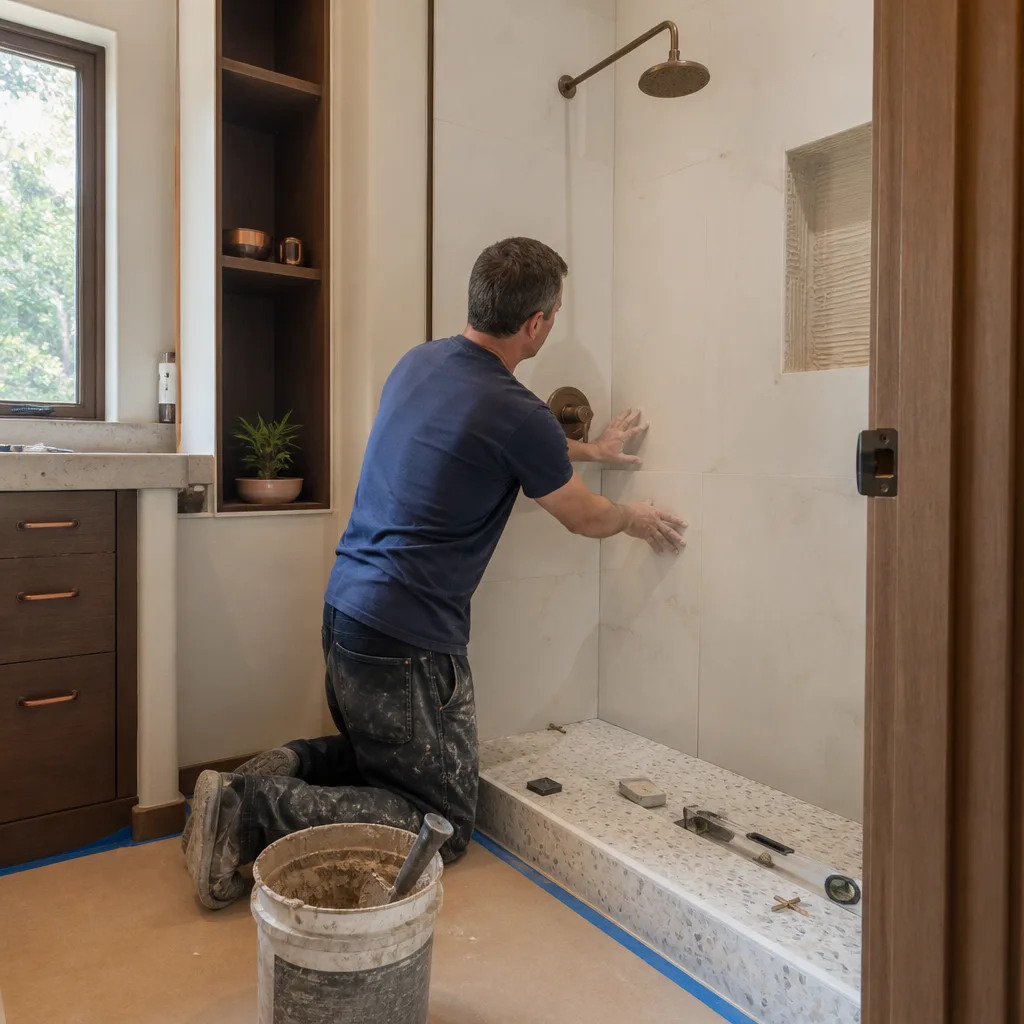
A correctly built shower requires, at minimum, a presloped mortar bed, a pan liner set with proper folds at the corners, a clamping drain installed at the right height, a flood test to prove the pan holds water, a second mortar bed over the liner, and a vapor barrier behind the cement board. Every one of those steps has a “looks fine but isn’t” version. The most common failure we see in Lewisville bathrooms is a pan where the liner is flat (no preslope), so water sits on the liner instead of flowing to the drain, and the subfloor rots from standing water. The owner doesn’t notice for 1 – 2 years, when the ceiling below starts to stain.
The safety caveat
Shower builds involve a mix of cutting cement board, working with mortar, and potentially cutting into framing to install a new curb. These aren’t inherently dangerous tasks in the way that electrical or gas work are, but a properly built pan is a construction project. The safe posture is this: hire the shower build as a unit. Either a pro builds it or you don’t build it. There’s no safe middle ground where a homeowner builds it partway.
What to look for in a shower contractor
Ask three questions before you sign:
- What’s your waterproofing system? (Schluter, liquid-applied membrane, or a traditional liner – all work if installed correctly, but you want a clear answer.)
- Do you flood-test the pan? (The answer must be yes.)
- What’s your workmanship warranty on the shower? (The answer should be measured in years, not months.)
The 730-Day Done Right Promise is a good benchmark: if a contractor can’t back the shower build in writing for at least a couple of years, walk away. That work is either built to last or it isn’t, and the warranty should say which.
How to Split the Work: What to Tell Your Contractor When You Want to DIY Part of It
You don’t have to choose between all-DIY and full-turnkey. A hybrid project is legitimate – if you’re honest with your contractor up front and clear about the boundaries. Here’s what a workable split looks like, and what to expect from a contractor who takes you seriously.
Jobs that split cleanly
- You demo, they build: You handle the tear-out and haul-away, they do the plumbing, waterproofing, and tile. This saves real labor hours and is the most common split we see in Lewisville.
- You paint, they tile: You take the walls and trim after the tile is done. Painting is low-risk and easy to schedule around.
- You install fixtures, they hang the vanity: Once the plumber is out and the walls are finished, swapping the faucet and adding the accessories is a Tier 1 job you can do.
Jobs that should not split
Shower waterproofing, anything on electrical or plumbing permits, and structural changes. A contractor who agrees to let you do your own shower pan is either not carrying a workmanship warranty on that scope or doesn’t understand the liability. Legitimate contractors won’t split waterproofing work because they can’t stand behind a warranty on a shower they didn’t build.
What a legitimate contractor’s response looks like
When you tell a good contractor “I want to do X myself,” you should hear these things back:
- “Here’s what that means for your warranty. The scope I’m responsible for is covered in writing; the scope you’re responsible for is on you.”
- “Here’s the schedule impact. If your piece runs late, mine shifts.”
- “Here’s what I need from you before I can start my scope – a clear demo, a sound subfloor, an accessible valve.”
- “Here’s what I’ll do if I see something wrong in your work – I’ll stop and tell you, not tile over it.”
If the contractor instead says “sure, do whatever you want” and doesn’t touch any of those points, you’re not getting a partnership. You’re getting a proposal with a handshake and no boundary. That’s usually a preview of how change orders will go.
Lewisville-Specific Considerations: Climate, Housing Stock, and Code
Bathroom work in Lewisville isn’t the same as bathroom work in, say, Phoenix or Denver. A few local realities shape how you should think about DIY.
Humidity and venting
North Texas summers run humid, and Lewisville bathrooms – especially in older neighborhoods like Old Town and the stretches near Lewisville Lake – tend to be small and under-vented. A bathroom without a properly sized exhaust fan ducted to the exterior will grow mold on the ceiling and behind the paint within 18 months of a remodel. If your current fan is louder than a conversation and the mirror fogs over in five minutes, the fan is undersized for the bathroom (100 CFM minimum for most full baths, 150+ for larger). Replacing a fan on the existing wiring is a Tier 2 job; adding a new duct run to the roof is a Tier 3 job. Improper venting isn’t just a comfort problem. It’s a structural one – wood rot starts at the framing level and reaches the sheetrock last.
Older housing stock
Many Lewisville homes built between 1970 and 2000 still have original bathroom plumbing and electrical inside the walls. That changes the risk calculus on “small” projects. A vanity swap that looks straightforward can turn into a full wall opening if the shutoff valve behind the old vanity is seized or the drain is PVC solvent-welded without a removable trap. Budget time for surprises on any home older than about 25 years, or bring in a pro to open the wall first so you know what’s there.
Lewisville code and permitting
Permits for plumbing and electrical run through the City of Lewisville. Turnaround is generally measured in days, not weeks, but it’s part of the project schedule. Pulling a permit and passing inspection is part of a real bathroom project, not a formality. If you’re doing a full bath remodel, the inspection is also a good independent check on the work.
Where Lewisville fits in the wider DFW market
Lewisville bath remodel budgets tend to track slightly below the Plano and Frisco averages on mid-grade finishes, and a bit above older nearby towns where full gut renovations are more common. The important point isn’t a specific number – it’s that Lewisville pricing is competitive enough that the “DIY to save money” argument has a thinner margin here than it does in higher-cost markets. Get a real number before you assume the savings.
When DIY Actually Saves Money (and When It Doesn’t)
The clearest way to decide: map your project into tasks and put each one through the “is this a labor decision or a risk decision?” filter.
DIY wins here
- Repainting the bathroom: $60 in paint, a weekend, and a clear improvement. Pro pricing for a bathroom paint job runs $300 – $600. Save the labor, buy the better paint.
- Demolition: A pro will charge $600 – $1,500 to demo a bathroom. If you have a dumpster and a free weekend, do it yourself. Wear gloves, eye protection, and a mask (especially on any tile work, which generates silica dust).
- Fixture and accessory swaps: Faucets, towel bars, mirrors, showerheads. These are simple and low-consequence, and you can choose exactly what you want.
- Caulk and grout refresh: $50 in materials. Extends the life of your existing tile significantly.
- Small flooring jobs: A 40-square-foot half bath in luxury vinyl plank is genuinely DIY-friendly.
DIY loses here
- Shower pan and waterproofing: Not a savings. A failed pan is a $5,000 – $12,000 fix.
- Plumbing relocation: The permit, inspection, and liability math turns this into a loss even when the actual pipe work is manageable.
- Electrical circuit changes: Same logic. GFCI, dedicated circuits for heated floors, fan replacement on new wiring – pro territory.
- Full bath remodels on an 8-week timeline: The DIY version of a full bath typically runs 2 – 3x longer than the estimate, adds hidden costs, and eats weekends. A real number from a real contractor before you commit to either path is worth doing.
Common Mistakes to Avoid
- Building a shower pan without a preslope. This is the single most common failure we see in Lewisville bathrooms. The tile looks fine for months; the subfloor rots for years.
- Installing tile over a wet or uneven subfloor. Tile needs a flat, sound substrate. A 1/8-inch dip becomes a visible lip on a 12-inch tile. A soft spot means the tile will crack within a year.
- Replacing a vanity without checking the shutoff valves. Old valves seize. If you’re not prepared to shut off the main water, this is not a DIY job for your home.
- Skipping the permit to “save time.” In Lewisville, that shortcut can cost you at resale, and insurers can decline related claims. Permits take days, not weeks.
- Buying cheap waterproofing materials. Cement backer board, pan liners, and seam tape are not commodity items. Skimping there is where the failure happens.
- Undersizing the exhaust fan. A small fan in a humid Texas bathroom means mold on the ceiling within a year of remodel. Size the fan for the room, not for the price tag.
- Not budgeting for surprises inside the walls. On any home older than 25 years, expect to find something. The homeowner who budgets 10% contingency finishes the project. The one who doesn’t, runs out of money mid-build.
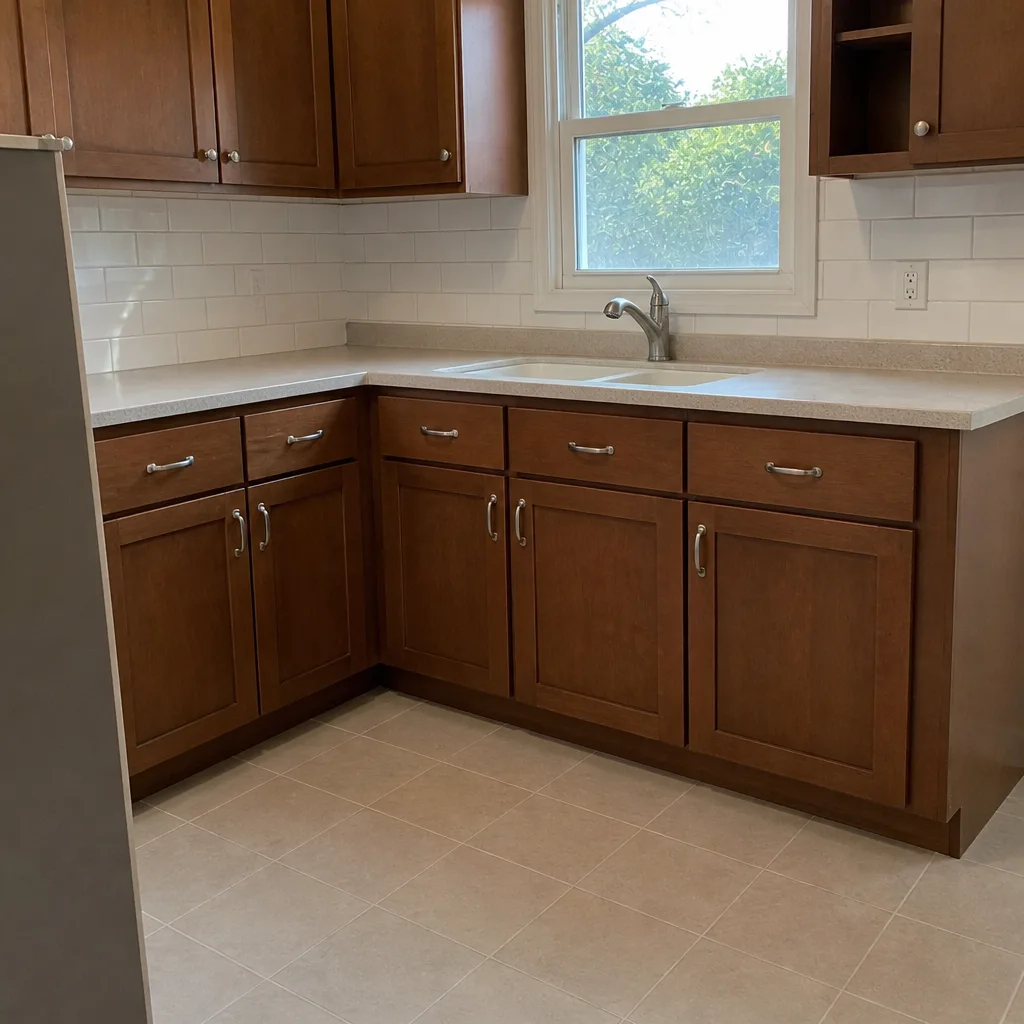
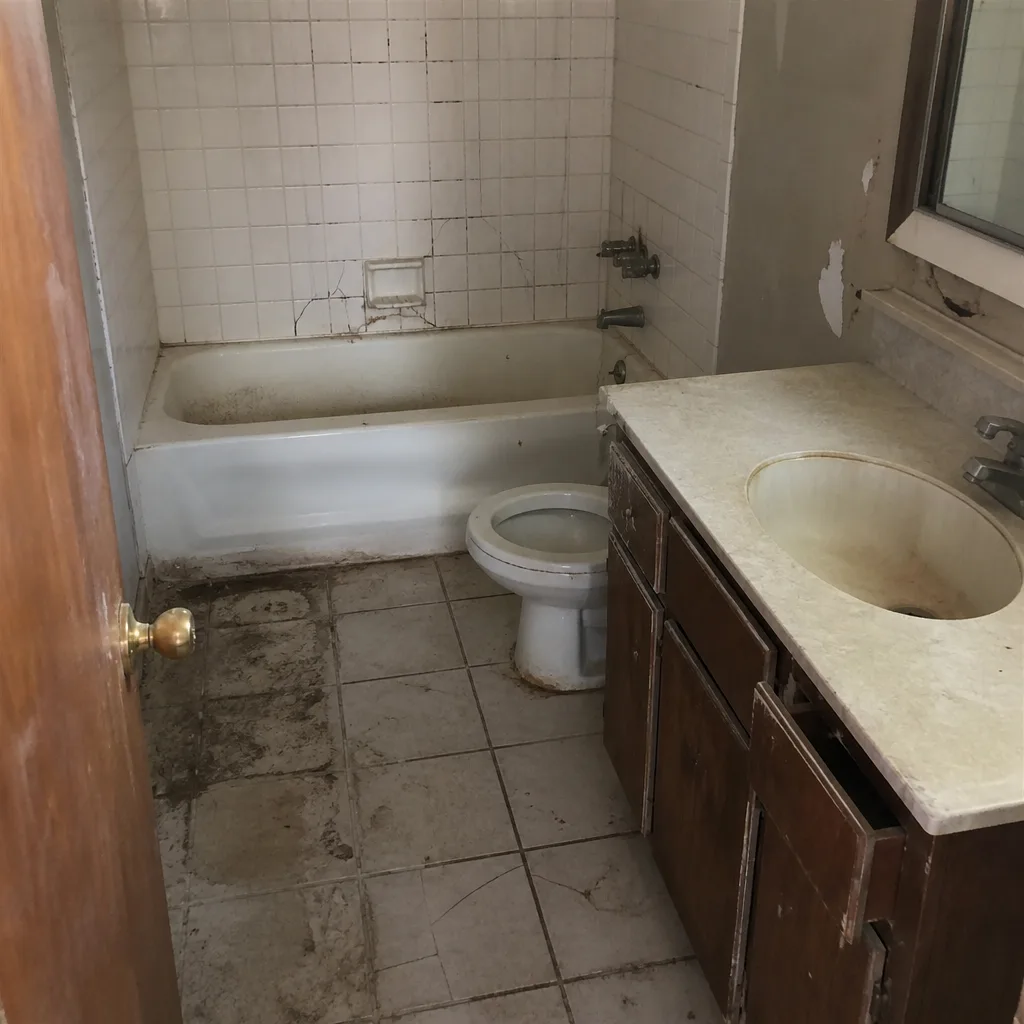
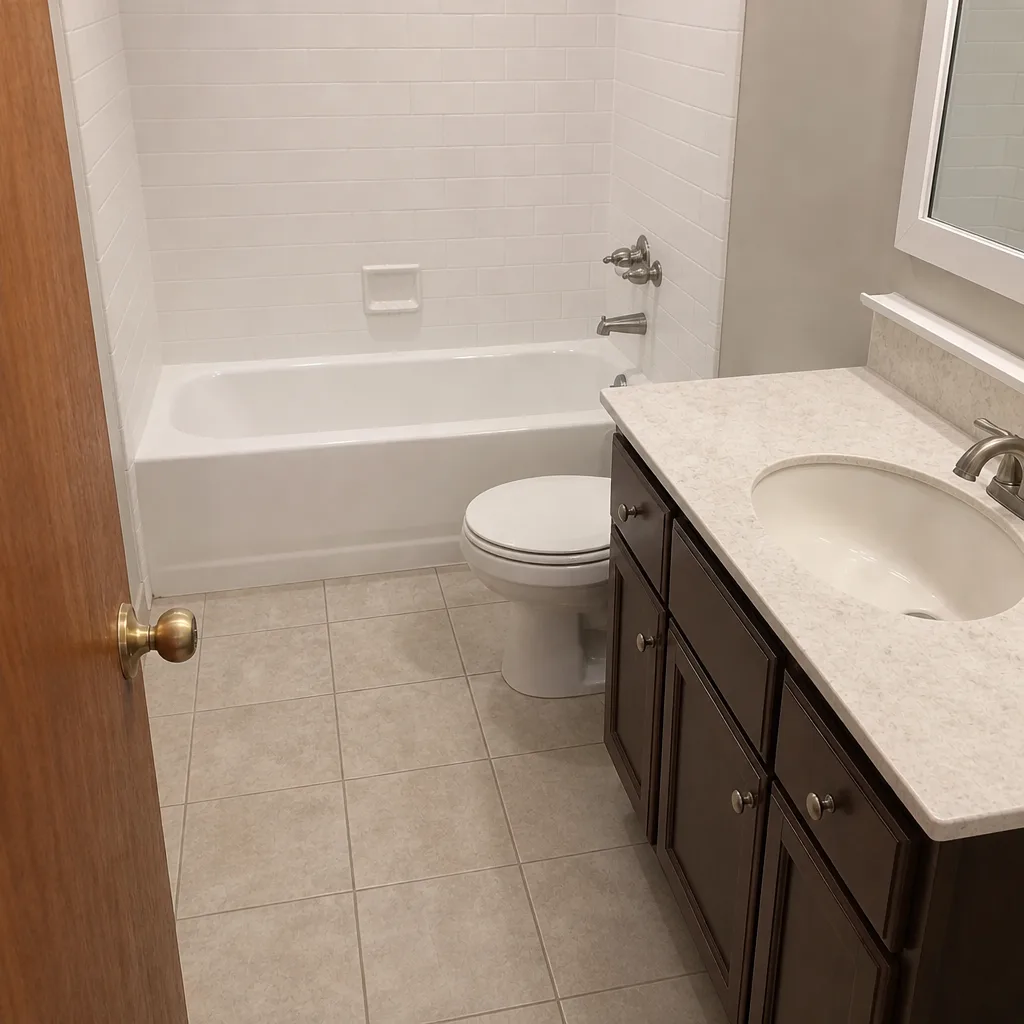
See the difference
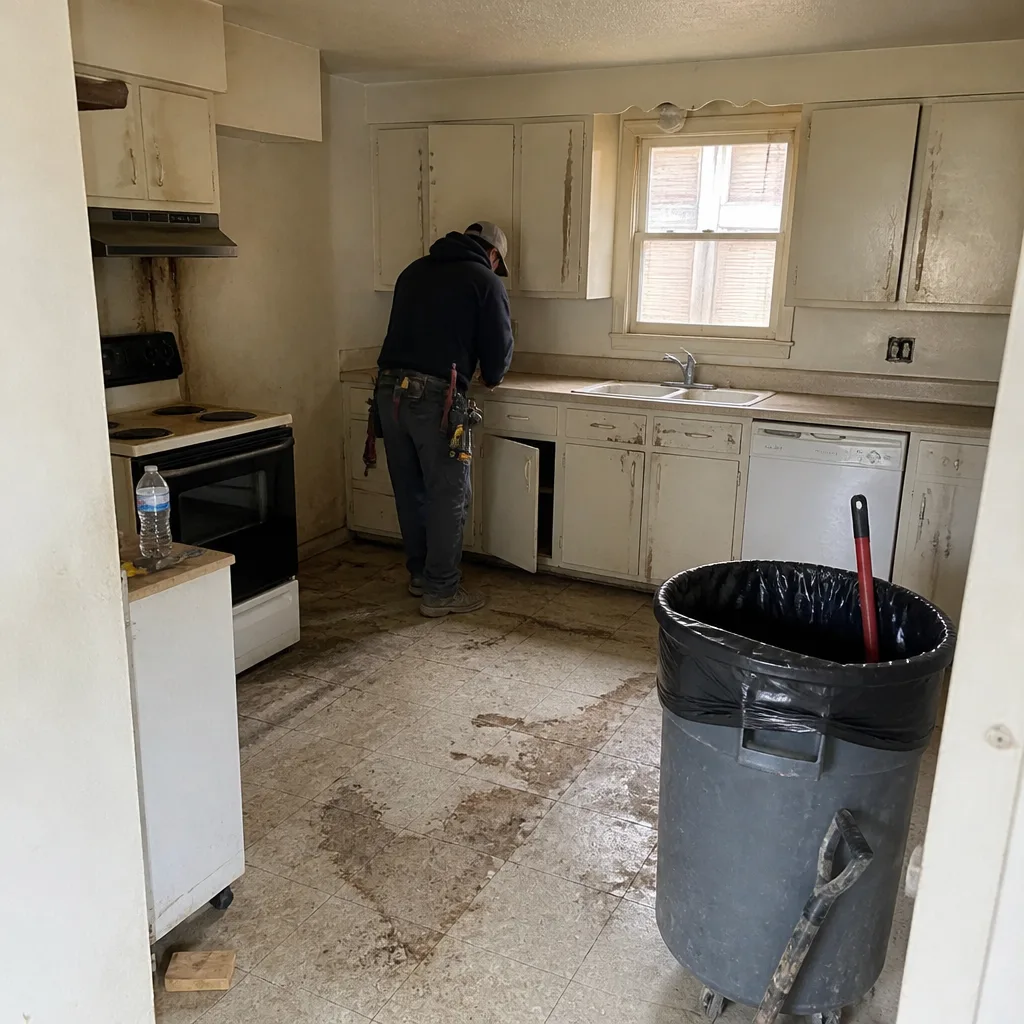 Before
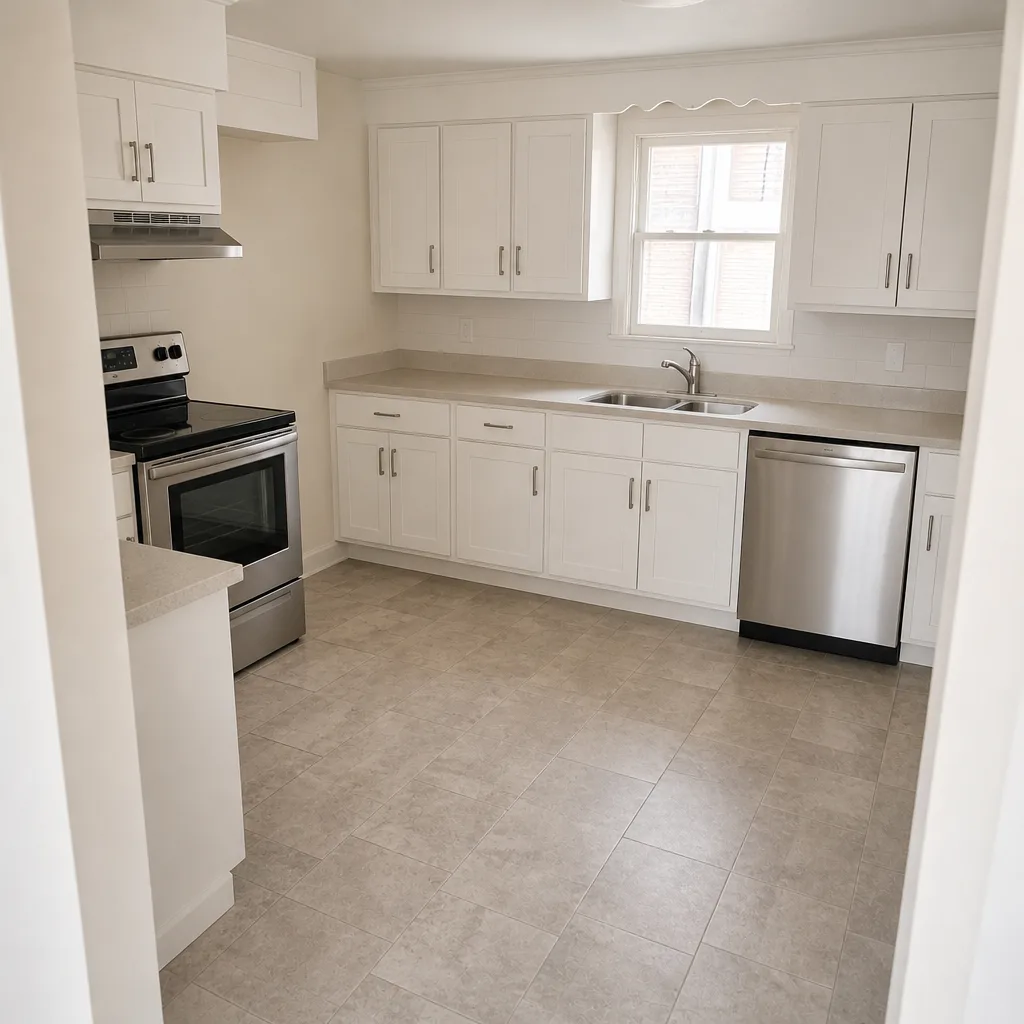 After
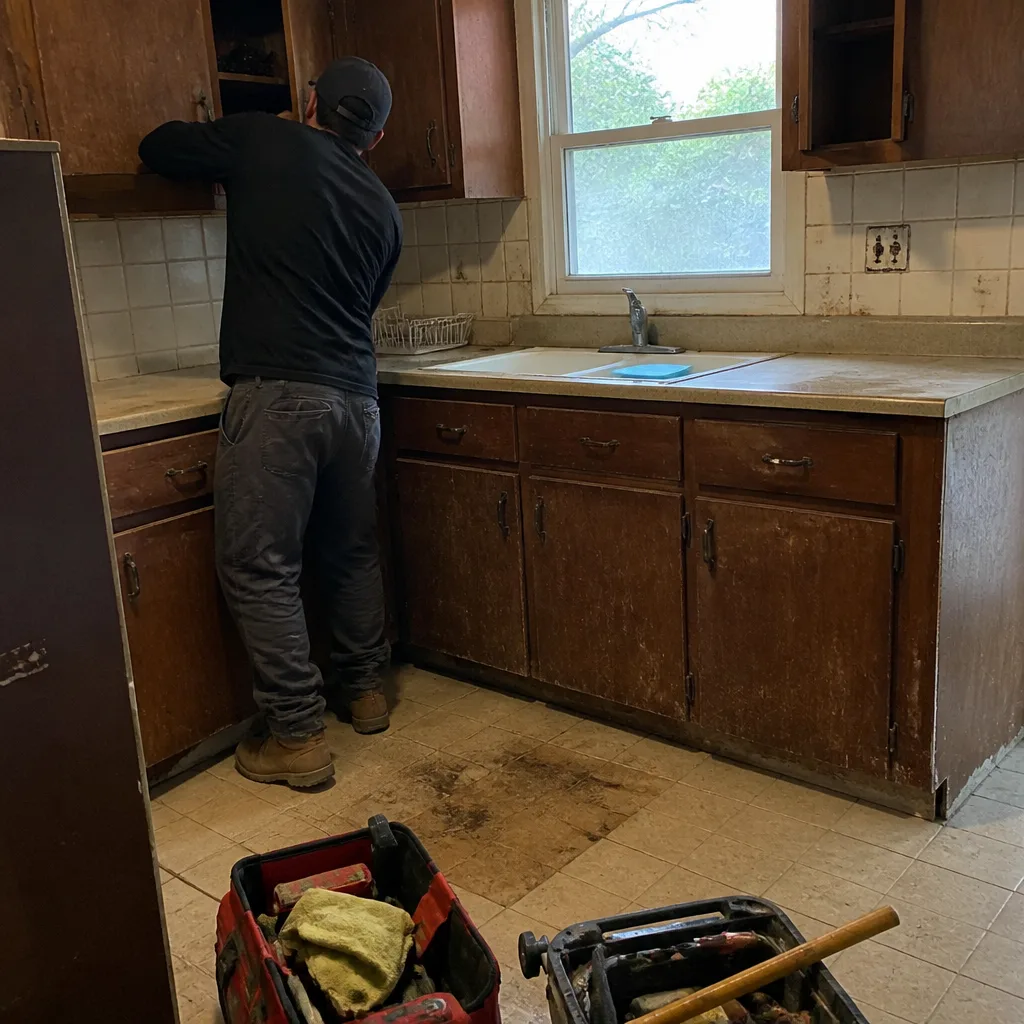 Before
 After
 Before
 After
When to Call a Professional
Call a pro when the work touches waterproofing, plumbing relocation, electrical circuits, structural framing, or gas. Call a pro if you’re building a new shower, moving a toilet or sink, opening a wall, or pulling a permit. Call a pro if you’re on a real timeline and a bathroom out of commission for months isn’t workable. And call a pro for the shower pan – every time. Groundwork Construction Co. of Lewisville offers free estimates in Lewisville – call (844) 560-4467. The estimate should come in writing, line by line, with a clear scope, a fixed price, and a workmanship warranty measured in years. You’re not committing to the job. You’re getting the number so you can decide.
If your project is part of a wider home improvement plan, we also handle Groundwork Construction Co. of Lewisville home projects end to end, from Driveway & Pavers in Lewisville to Fence Installation in Lewisville and Home Additions & ADU in Lewisville.
Frequently Asked Questions
Cosmetic work – paint, tile, flooring over existing subfloor, fixture swaps at existing locations – typically doesn’t require a permit in Lewisville. Anything that moves plumbing, changes electrical circuits, or alters structure does. Unpermitted work can surface at resale, and insurer claims on related damage can be declined. Pull the permit or hire someone who will. Call (844) 560-4467 for a free estimate on the scope that requires one.
A hybrid remodel – where you do demo and painting, and the pro handles plumbing, waterproofing, and tile – typically saves 10 – 20% off a full turnkey price, depending on how much you take on. The savings don’t come close to the risk when you try to split the shower pan or the electrical work. Call (844) 560-4467 for a free estimate – the number is free and it’s the easiest way to decide.
Tiling a shower wall looks easy and is often done badly, because the visible tile is not where the shower fails. The failure point is the waterproofing under the tile – the pan liner, the seams, the flood test. If the pan is built by a pro and passes a flood test, a careful homeowner can learn to tile. If the pan is DIY, the answer is no. Call (844) 560-4467 for an estimate on the pan and waterproofing; you can still handle the finish work.
The buyer’s inspector will often flag it, and you’ll face three options at resale: disclose it and take a price reduction, pay for a retroactive permit and inspection (which may require opening walls), or remove and redo the work to code. None of those are cheap. The clean path is to pull the permit before the work starts. Call (844) 560-4467 for a free estimate on the electrical scope if you want a pro to handle it correctly.
Say it up front, in writing: which tasks you’re taking, which you’re handing off, and what your timeline is. A legitimate contractor will respond with warranty language (what they cover, what they don’t), a schedule, and a clear handoff plan. If they don’t, that’s your signal. Call (844) 560-4467 for a free estimate and a straight answer on how a hybrid project would work.
The 730-Day Done Right Promise covers the workmanship on the scope the contractor performs. DIY scope isn’t a warranty item for any contractor. That’s not a limitation – it’s what makes the warranty real. The written scope should clearly separate the two. Call (844) 560-4467 for a free estimate and a written scope that spells out exactly what’s covered.
The Bottom Line
The DIY vs professional bathroom remodel decision isn’t about whether you’re handy. It’s about whether the work you’d do touches systems – waterproofing, plumbing, electrical, structure – where a small mistake costs five times more to fix than hiring out would have cost. Demolition, paint, fixtures, and hardware are safe DIY territory. The shower pan, plumbing relocations, and circuit changes are not. In Lewisville, permits are part of the project, and unpermitted work surfaces at resale. Score each task on its consequence if you get it wrong, not on your confidence going in. If you want a real number before you decide, call (844) 560-4467 for a free estimate from Groundwork Construction Co. of Lewisville – fixed pricing in writing, work backed by the 730-Day Done Right Promise, and a live person on the phone, day or night.
Written by the team at Groundwork Construction Co. of Lewisville.